









Gulf Art Events in Early 2027: Doha, Sharjah & Dubai
Early 2027 offers three very different reasons to visit the Gulf: a new edition of Art Basel Qatar in central Doha, a continuing biennial framework across Sharjah’s locations, and Art Dubai in April. Their proximity on a regional map might suggest a single art circuit, but in practice, each requires a different amount of time and a distinct way of viewing.
Doha and Sharjah overlap in late January. Dubai follows later, while the biennial continues. These relationships provide two possible travel windows rather than one continuous festival. This selection outlines the dates and artistic differences so readers can choose a journey with a clear purpose.
Gulf Art Calendar for Early 2027
|
Event |
Public dates |
Location |
What to plan around |
|
Art Basel Qatar 2027 |
28–30 January; private previews 26–27 January |
M7, Barahat Msheireb and Doha Design District, Msheireb Downtown Doha |
A focused fair visit with timed public admission |
|
Sharjah Biennial 2027 |
21 January–13 June |
Multiple venues across Sharjah emirate |
A longer curatorial visit with distinct venue routes |
|
Art Dubai 2027 |
9–11 April; previews 7–8 April |
Madinat Jumeirah, Dubai |
A spring fair window that can be compared with the ongoing biennial |
Each event name links to its full guide. Private previews are included for clarity, not as a promise of public access. Flights, border entry, and local travel must be planned independently of the exhibition calendar. No shared ticket covers these three programmes.
Doha A Fair Encounter in the City Centre
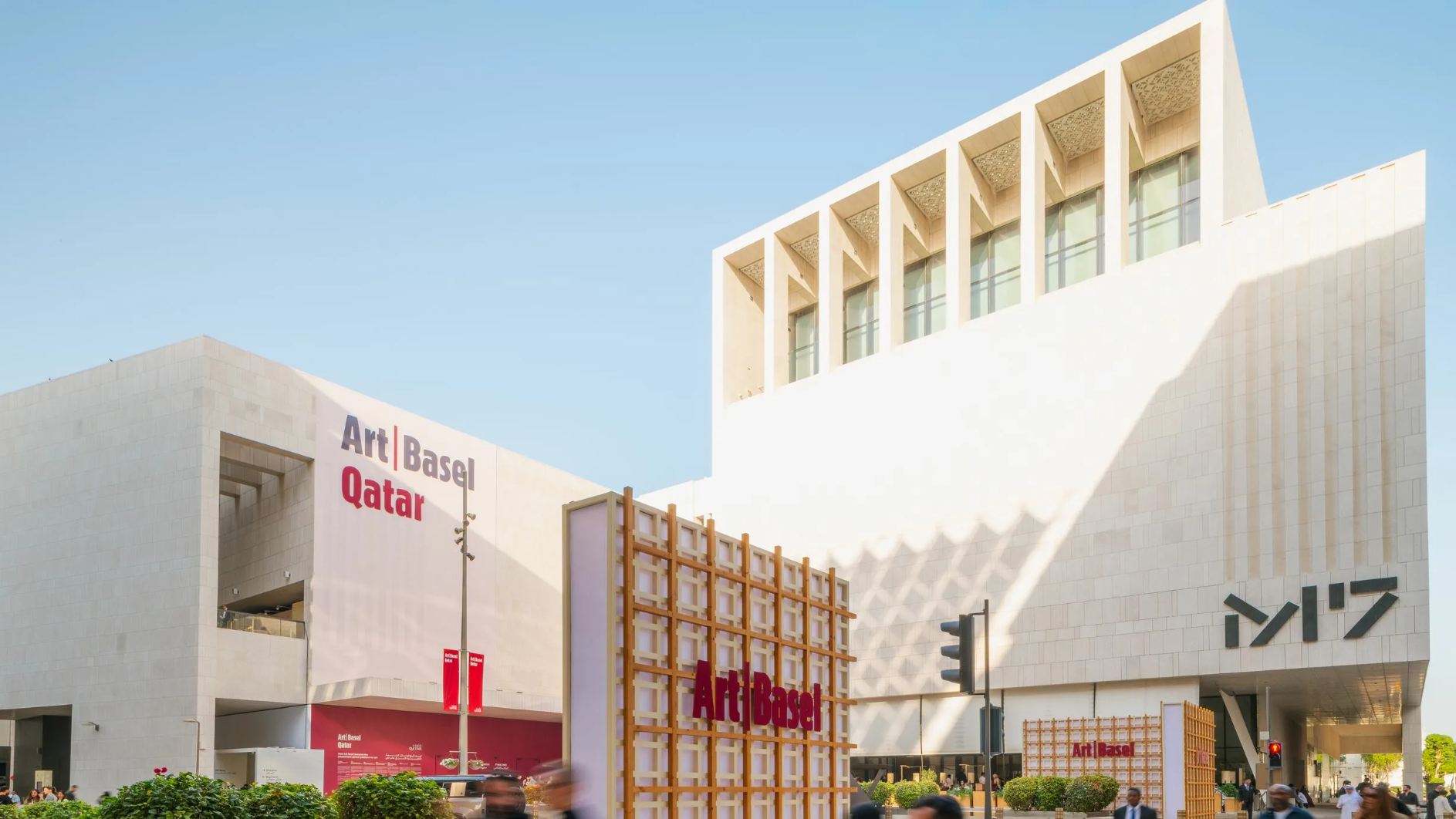
Art Basel Qatar’s second edition opens publicly on 28–30 January 2027, following the inaugural edition in February 2026. Its announced theme, between / بين, provides the new artistic director Wassan Al-Khudhairi with a framework to develop the presentation. The gallery roster and individual projects will determine how that framework becomes visible in the works.
The programme takes place at M7, Barahat Msheireb, and Doha Design District within Msheireb Downtown Doha. This setting makes movement between indoor presentations and the surrounding urban spaces part of the visit.
Public admission is scheduled from 13:00 to 21:00 on each of the three days, with ticket sessions from 13:00–17:00 or 17:00–21:00. Earlier VIP access on Thursday and Saturday should not be confused with public opening hours. The private preview days have their own invitation and admission categories.
The organiser also announces an expanded Special Projects programme. Until the full list appears, expansion is a stated direction rather than proof of a specific artistic outcome. Consider the projects as individual propositions: what does each enable at its chosen site, and what relationship does it establish with the gallery presentations?
Sharjah A Biennial Route With More Time
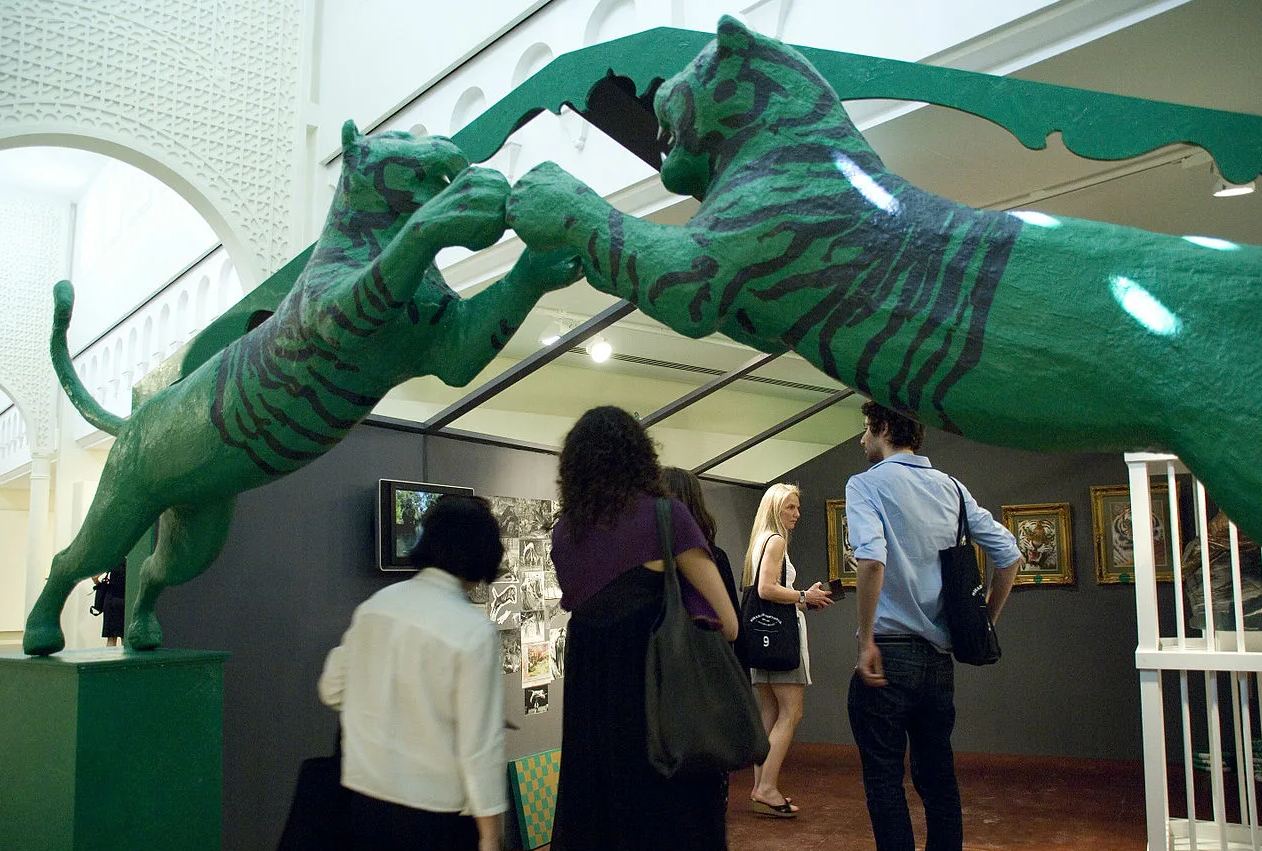
Sharjah Biennial opens on 21 January and continues until 13 June 2027. Its duration allows visitors to choose a route beyond the opening period. This is particularly useful for works requiring sustained attention, repeated viewing, or travel to locations beyond the most immediately accessible central venues.
A biennial’s participants differ from a fair’s exhibitor list. Artists contribute within a curatorial structure, and a work’s relationship to a building or landscape may be fundamental to the encounter. The practical question concerns the route through the exhibition; the critical question concerns what that route allows the work to express.
The announced network spans several locations across the emirate. Do not assume every venue is reachable on foot between central galleries. Identify the sites most relevant to your interests, confirm their opening arrangements, and allow sufficient time for travel between them. A distant venue deserves more than the leftover hour after a busy morning.
Free admission removes one cost but does not resolve every access question. Timed activities, transport, capacity, and individual venue conditions still need checking. The absence of a ticket price invites spending more time with the programme where possible, rather than rushing through its entire geography.
Dubai A Different Spring Comparison
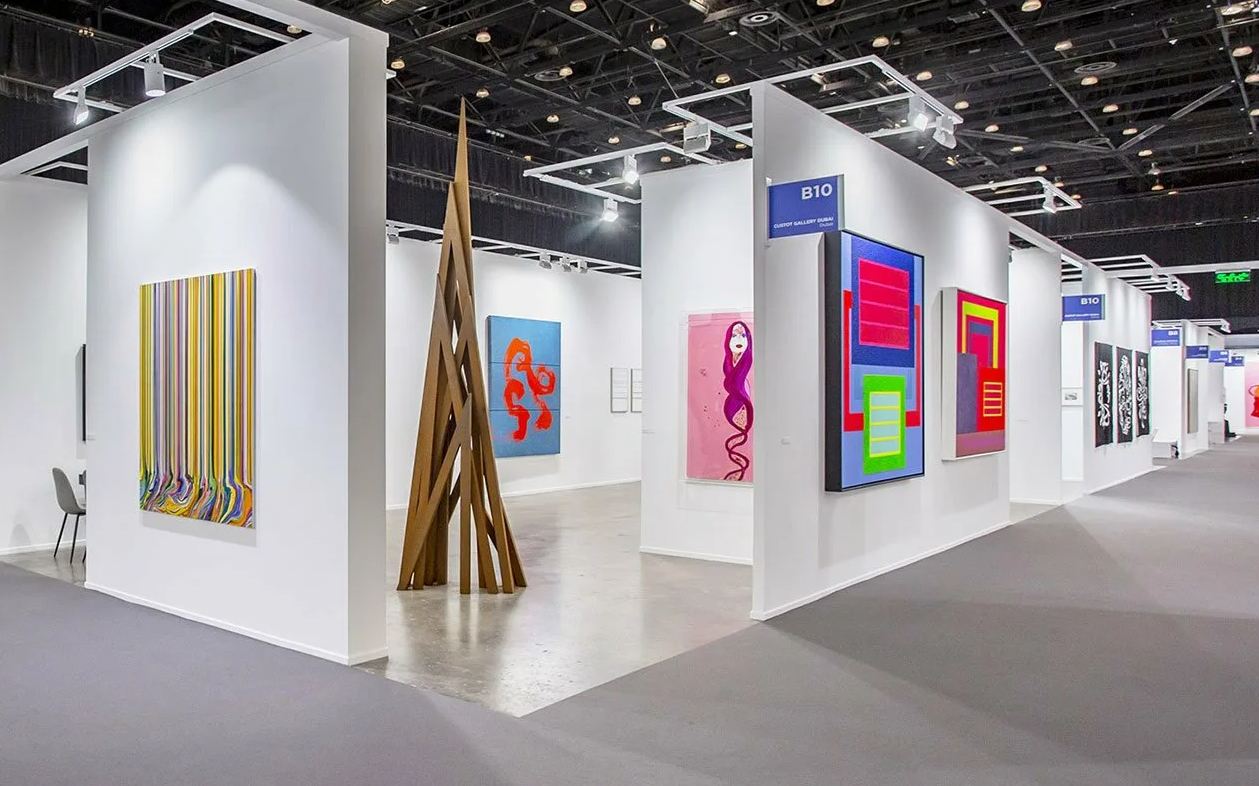
Art Dubai’s public dates are 9–11 April 2027 at Madinat Jumeirah, following previews on 7–8 April. The gap from late January makes it a separate travel decision. Readers planning an April trip can consider how the fair relates to the Sharjah biennial while that exhibition remains open.
The fair format concentrates gallery presentations into a limited period. Start with the artists and programmes that interest you, then allow the wider exhibition to shift those priorities. A gallery’s selection can reveal a particular history or material inquiry, but no single booth should represent an entire region.
Dubai and Sharjah are neighbouring cities with different exhibition geographies. Traveling between them requires attention to actual departure points and time of day. Build each exhibition day around its main destination, especially when a biennial venue lies beyond central Sharjah.
An April comparison can be productive precisely because the formats differ. A work seen through a gallery’s presentation and another developed for a curatorial exhibition may ask related questions under different conditions. Preserve those conditions in your notes rather than flatten both experiences into a single list of highlights.
Choosing Between the January and April Windows
Late January supports a visit to the Doha fair and, for readers with enough additional time, the opening phase of the Sharjah biennial. This involves separate cities and countries. Allow a realistic travel day rather than scheduling a flight and a substantial exhibition visit as if they formed one continuous afternoon.
April supports a Dubai fair visit alongside the ongoing Sharjah exhibition. It may suit readers who prefer to experience a biennial after its opening concentration.
For an intermediate comparison, our international art fairs in March 2027 selection examines another part of the season. It is useful for deciding whether the enquiry begun in the Gulf should continue through a different fair model. March belongs to a separate trip unless the reader is deliberately planning a much longer stay.
Admission Accommodation and Daily Planning
The three events operate independently. Doha’s official information includes a QAR16,500 Premium Discovery package, which is a specific premium product rather than the standard entry price. A complete standard admission tariff was not visible in the official materials reviewed for this selection. Do not use the premium package to estimate what a general visitor must pay.
Dubai’s public days and previews likewise require attention to the correct category. For admission assistance, use the enquiry form on the relevant event page. Confirmation for one event does not grant access to another, and no external ticket purchase is required to read or compare the full guides.
Choose accommodation based on the journey you actually plan to make. A base convenient for Msheireb serves a different purpose from one chosen for Madinat Jumeirah or central Sharjah venues. Anyone requiring step-free access should inquire about exact exhibition entrances and transport conditions, especially for routes involving several buildings.
Questions to Carry Between the Events
Ask how a presentation establishes its relationship to place. Sometimes that relationship is conveyed by a material, a language, or an image; sometimes it emerges through the work’s position within a building. A curatorial theme and a regional location provide context, while the artistic decisions still require close examination.
Also note the differences between historical reference and lived continuity. A work may invoke an inherited form while changing what that form does in the present. Another may make the museum, market, or city itself part of its subject. These distinctions offer a more precise route through the region than a search for one common visual identity.
Editor’s Note
We approach this season through the relationship between exhibition structure and artistic focus. Doha’s developing fair, Sharjah’s extended curatorial programme, and Dubai’s concentrated gallery encounter each create a different context in which a work can be seen. The formats shape the encounter without predetermining its quality.
The most useful regional comparison will give individual practices enough space to go beyond the stories commonly told about the Gulf. An artwork’s relation to migration, trade, language, or landscape becomes persuasive through particular decisions, rather than the mere presence of those subjects in a programme statement. We look for the moment when a familiar theme takes on an unfamiliar form.
Our recommendation is to choose one main visit and let any additional journey serve a clear artistic question. The region’s institutions deserve attention to their differences, and the work deserves more than an itinerary built around recognizable names. A carefully chosen January or April trip can produce a richer understanding precisely because it allows time to reconsider what first seemed obvious.