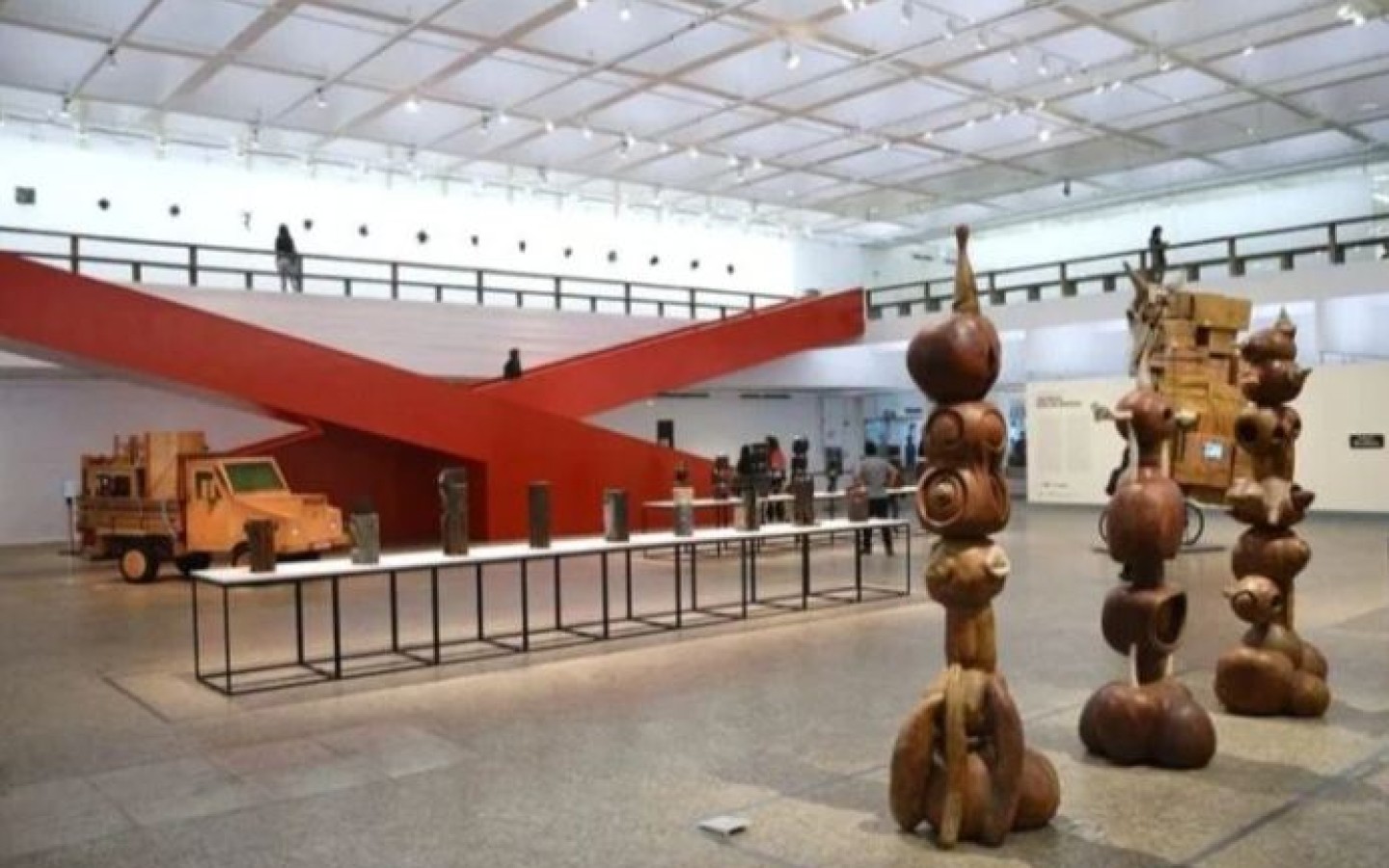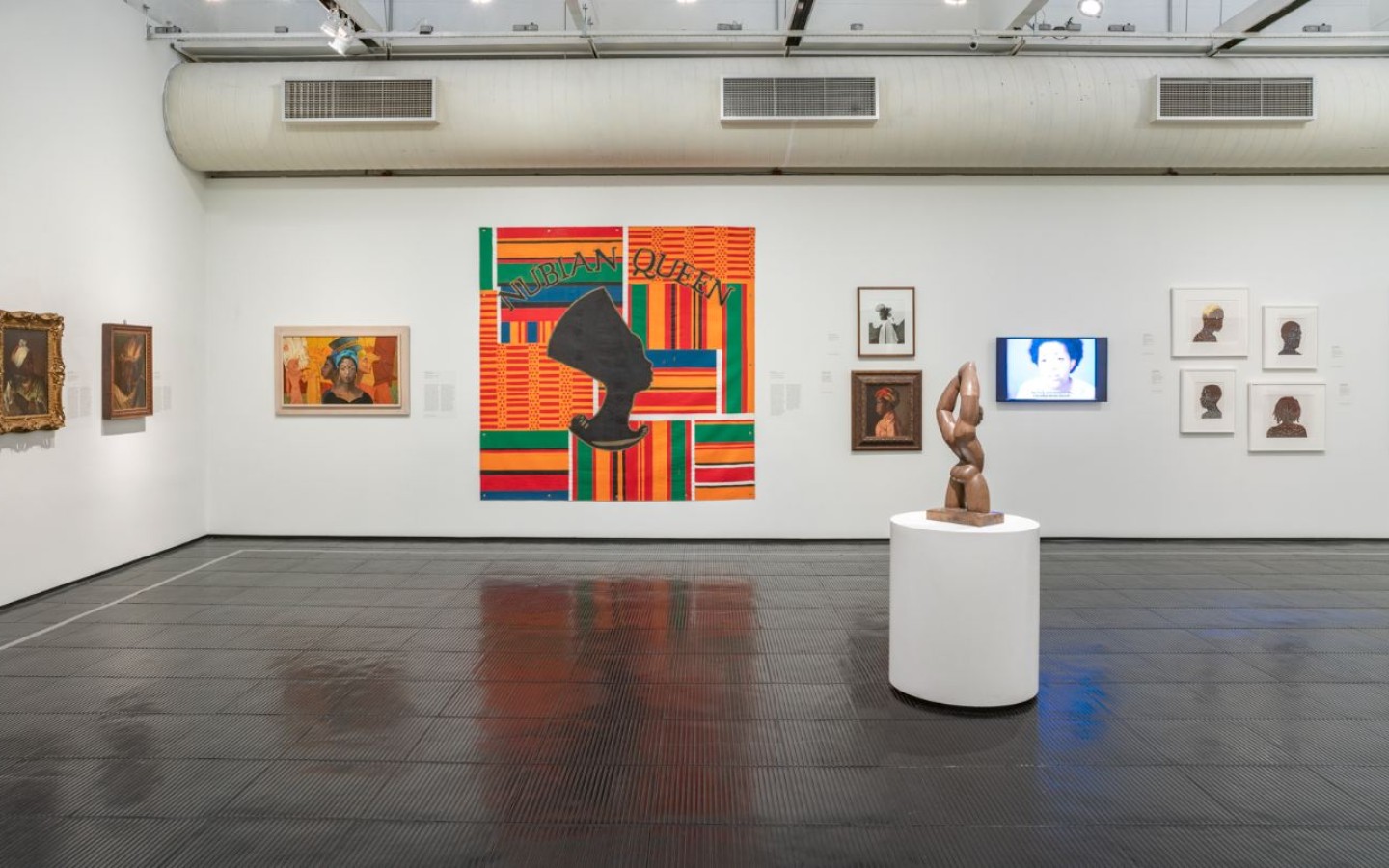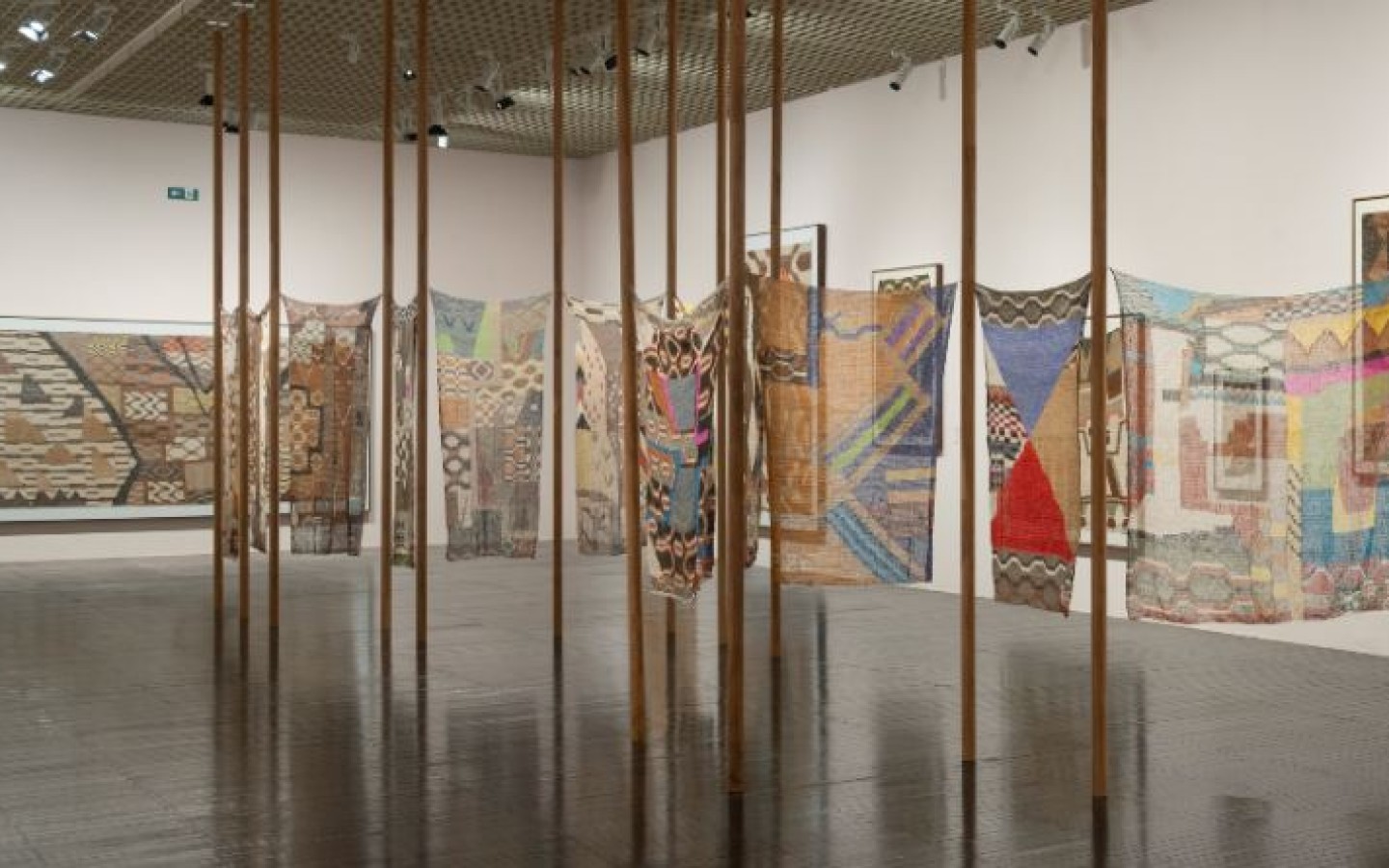


Histórias Latino-Americanas is not designed to answer the question «What is Latin American art?»

Instead, it questions whether such a vast and unstable region can ever be reduced to a single artistic identity.

Occupying five exhibition floors of MASP’s Pietro Maria Bardi building, the exhibition brings together 187 works by 148 artists from 20 countries. Pre-colonial objects, religious imagery, maps, photographs, paintings, conceptual works and contemporary videos appear side by side rather than being separated into a simple chronological history.

Open until January 31, 2027, the exhibition is one of MASP’s most ambitious attempts to examine Latin America through competing histories rather than a unified narrative.

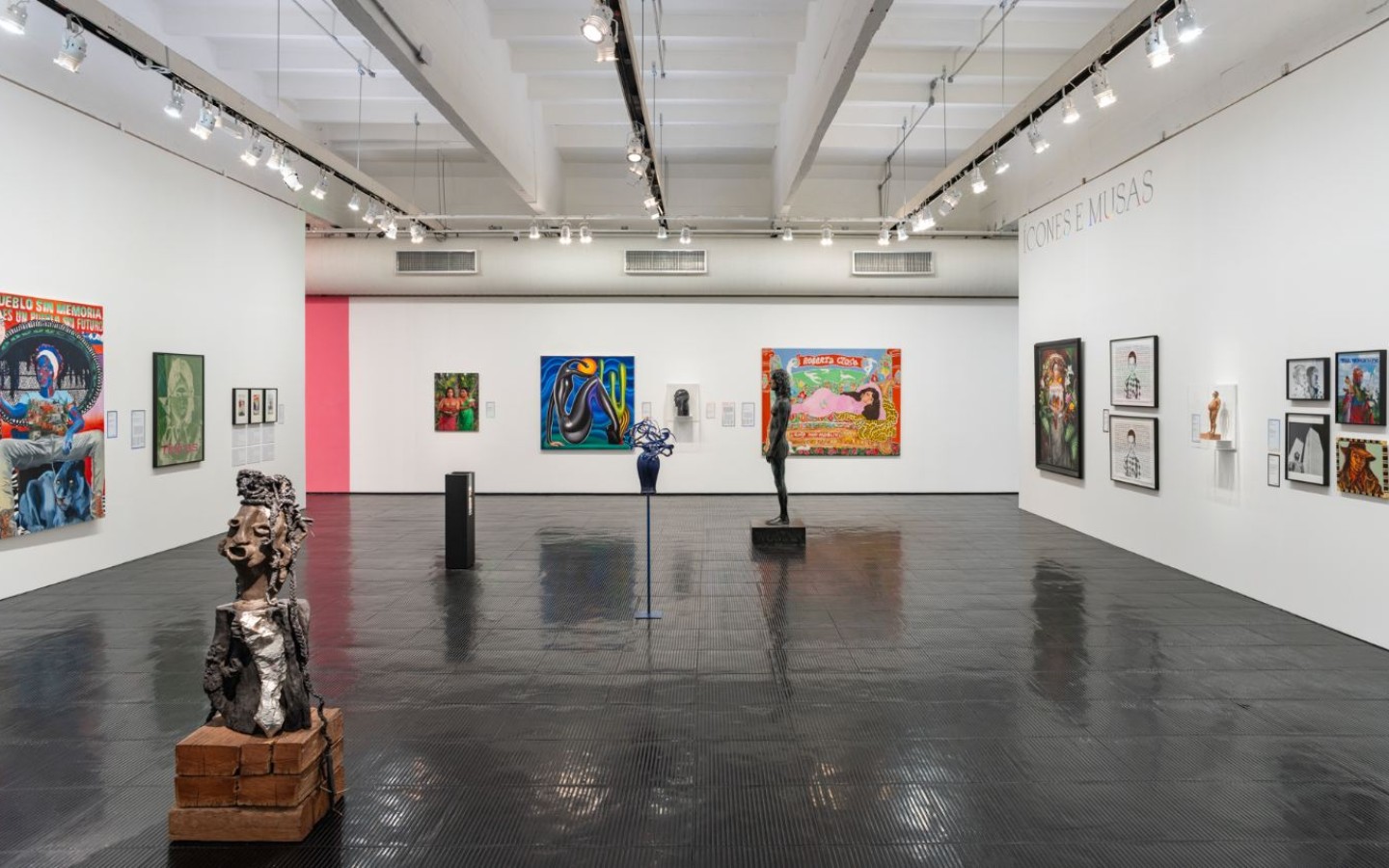
Histórias Latino-Americanas is organized into five thematic sections, each occupying a separate floor.

The World Turned Upside Down examines the European invasion of the Americas and the role images played in describing, classifying, and controlling territories.

Rhetoric of Progress looks at modernization, industrialization, and the promises associated with rational planning, while also addressing the inequality and violence produced by those projects.

American Societies explores collective life, political imagination, education, and different forms of community organization.

Estamos en Salsa follows the movement of sounds, images, people, and goods through migration, cultural exchange, and diaspora.

The Falling Sky draws on contemporary Indigenous thought to examine technology, ecology, dreams, and the crisis of modern ideas of progress.

Together, these sections reject the idea that the region should be presented through isolated national schools or a neat sequence of artistic movements.

Histórias Latino-Americanas 2026/2027 at MASP Event Overview

Histórias Latino-Americanas 2026/2027 at MASP – Complete Visitor Guide

The exhibition contains works from 20 countries and does not limit its perspective only to territories usually labeled Latin American. It also includes diasporas and historical contexts connected to the region, reflecting the idea that cultural history rarely follows political borders. This makes the exhibition’s geography deliberately broader than a conventional map.

Dates:

4 September 2026 - 31 January 2027

Location:

São Paulo, Brazil

Mission:

The exhibition begins with the idea that «Latin America» is itself contested. It can describe geography, language, and political history, but it can also conceal enormous differences between Indigenous nations, colonial histories, diasporas, social structures, and cultural traditions. Histórias Latino-Americanas therefore avoids presenting a definitive portrait of the region. Its mission is instead to show Latin America as something continually constructed, disputed, and reinvented. Colonialism, independence, authoritarian modernization, migration, Indigenous resistance, Black histories, feminism, and ecology all become part of this wider conversation.

Organizer:

Histórias Latino-Americanas is organized by MASP — Museu de Arte de São Paulo Assis Chateaubriand. The exhibition is curated by Amanda Carneiro and Julieta González, with curatorial assistance from Teo Teotônio. It forms the central group exhibition in MASP’s annual program dedicated to Latin American histories.

Why attend to Histórias Latino-Americanas 2026/2027 at MASP?

The scale alone makes the exhibition significant.

With almost 200 works distributed across five floors, visitors encounter an unusually broad range of artists, periods, and media.

But the main reason to visit is the curatorial structure.

Rather than asking visitors to memorize names and dates, the exhibition encourages comparison. A work from one century can change how another work from a completely different period is understood.

The result is particularly valuable for international visitors who may know individual Latin American artists but have rarely encountered the region’s artistic history through such a broad political and cultural framework.

The exhibition also creates an opportunity to discover lesser-known artists alongside major names.

Ticket Information

General admission costs

MASP operates paid museum admission with reduced and free-entry categories.

The museum also offers designated periods of free admission during the week.

Because Histórias Latino-Americanas occupies several floors and is one of the major exhibitions of the season, advance planning is recommended for weekends and free-entry periods.

Getting There:

MASP is located directly on Avenida Paulista, one of São Paulo’s main cultural and commercial avenues.

The nearest metro station is Trianon–MASP, making the museum extremely easy to reach by public transport.

Its central location also allows visitors to combine the exhibition with galleries, cultural centers, cafés and other attractions along Avenida Paulista.

Accommodation

Avenida Paulista, Jardins and Bela Vista are among the most convenient areas for visitors planning a museum-focused trip to São Paulo.

Staying nearby allows you to reach MASP on foot or by a short metro ride and provides easy connections to other districts.

Pinheiros and Vila Madalena are good alternatives for travellers who prefer a stronger restaurant, nightlife and gallery scene while remaining connected by public transport.

Don't Miss an Exhibition

Follow us on X to get the latest art events from around the world first

Follow

Gallery: Histórias Latino-Americanas 2026/2027 at MASP

Secure Your Spot at Histórias Latino-Americanas 2026/2027 at MASP — Before It's Too Late

Tickets are limited and sell out fast.
Get instant access to the Histórias Latino-Americanas 2026/2027 at MASP registration page and be the first to know about exclusive events, VIP passes, and travel perks.

Early access. Limited availability. Global art at your fingertips.

History & Context of a Histórias Latino-Americanas 2026/2027 at MASP

The concept of Latin America became consolidated during the nineteenth century, but the territories grouped under that name have histories stretching far beyond European colonization.

MASP’s exhibition responds to that complexity by creating encounters between different historical moments.

Pre-colonial material can appear alongside contemporary art. Religious objects can be part of a broader discussion alongside conceptual practices. Maps and documentary material can interact with painting and video.

This curatorial structure is important because it prevents history from appearing as a smooth progression from past to present.

Instead, ideas return, conflicts remain unresolved, and older systems of power continue to influence contemporary life.

The exhibition also forms part of MASP’s long-running ‘Histories’ program, through which the museum has previously explored subjects including childhood, sexuality, Afro-Atlantic histories, women and feminism, Indigenous histories, LGBTQIA+ histories, and ecology.

Tips for Visitors of Histórias Latino-Americanas 2026/2027 at MASP

Do not try to rush through all five floors.

Allow at least two hours, and closer to three if you enjoy reading contextual material and spending time with video works.

One useful approach is to choose one or two themes that interest you most, then return to the remaining floors after a break.

Because the exhibition intentionally creates connections across time, pay attention to works placed near each other rather than viewing every object independently.

Visitors who tire easily in large museum exhibitions may benefit from starting on the upper floor and moving downward through the building.

Tips from the ArtExpoWorld

The biggest mistake would be treating this exhibition as a checklist of 187 works.

Its real strength lies in the relationships between them.

Choose a floor, understand the central idea and then look for contradictions. Where does the promise of progress become violence? Where does a colonial image reappear in a contemporary work? Where do migration or Indigenous knowledge challenge conventional national histories?

Approached this way, the exhibition becomes much more manageable — and far more interesting.

Be the First to Access Official "Histórias Latino-Americanas 2026/2027 at MASP" Tickets

Don’t miss your chance to attend one of the world’s leading art fairs. Get direct access to the official ticketing page, exclusive updates, and important visitor information.

Early access. Limited availability. Global art at your fingertips.

Editor’s Note

Histórias Latino-Americanas is one of those museum exhibitions whose importance comes not only from individual masterpieces, but from the argument created by bringing them together.

MASP rejects the easy option of defining Latin American art through a handful of famous movements or national traditions. Instead, the museum presents a region built from overlapping histories, conflicting identities, and unfinished political struggles.

For ArtExpoWorld, that makes the exhibition especially relevant for international audiences.

Visitors leave with fewer simple definitions of Latin America — but a much richer understanding of why simple definitions were inadequate in the first place.

For anyone in São Paulo before January 31, 2027, Histórias Latino-Americanas is one of the essential museum exhibitions to see.

Current and Upcoming Art Expos