









Canaletto, born Giovanni Antonio Canal in Venice in 1697, was one of the greatest cityscape painters of the eighteenth century. His precise yet atmospheric views of Venice transformed canals, public squares, churches, palaces, and civic celebrations into images that defined how generations of European travelers imagined the city. Combining architectural observation with subtle adjustments of perspective, scale, and light, he elevated the urban view into an independent and internationally admired genre.
Canaletto grew up in an artistic environment. His father, Bernardo Canal, worked as a theatrical scene painter, and the young artist initially assisted him with stage scenery. This background helped shape his understanding of architecture, dramatic space, and controlled perspective. Theatre also taught him that a convincing scene did not always require absolute topographical accuracy. Space could be altered to achieve greater clarity, balance, and visual impact.
A journey to Rome during his early career introduced Canaletto to painters who specialized in architectural views and imagined ruins. After returning to Venice, he began concentrating on the genre known as veduta, or view painting. These works appealed especially to wealthy foreign travelers visiting Italy on the Grand Tour, many of whom wanted detailed visual records of the cities and monuments they had encountered.
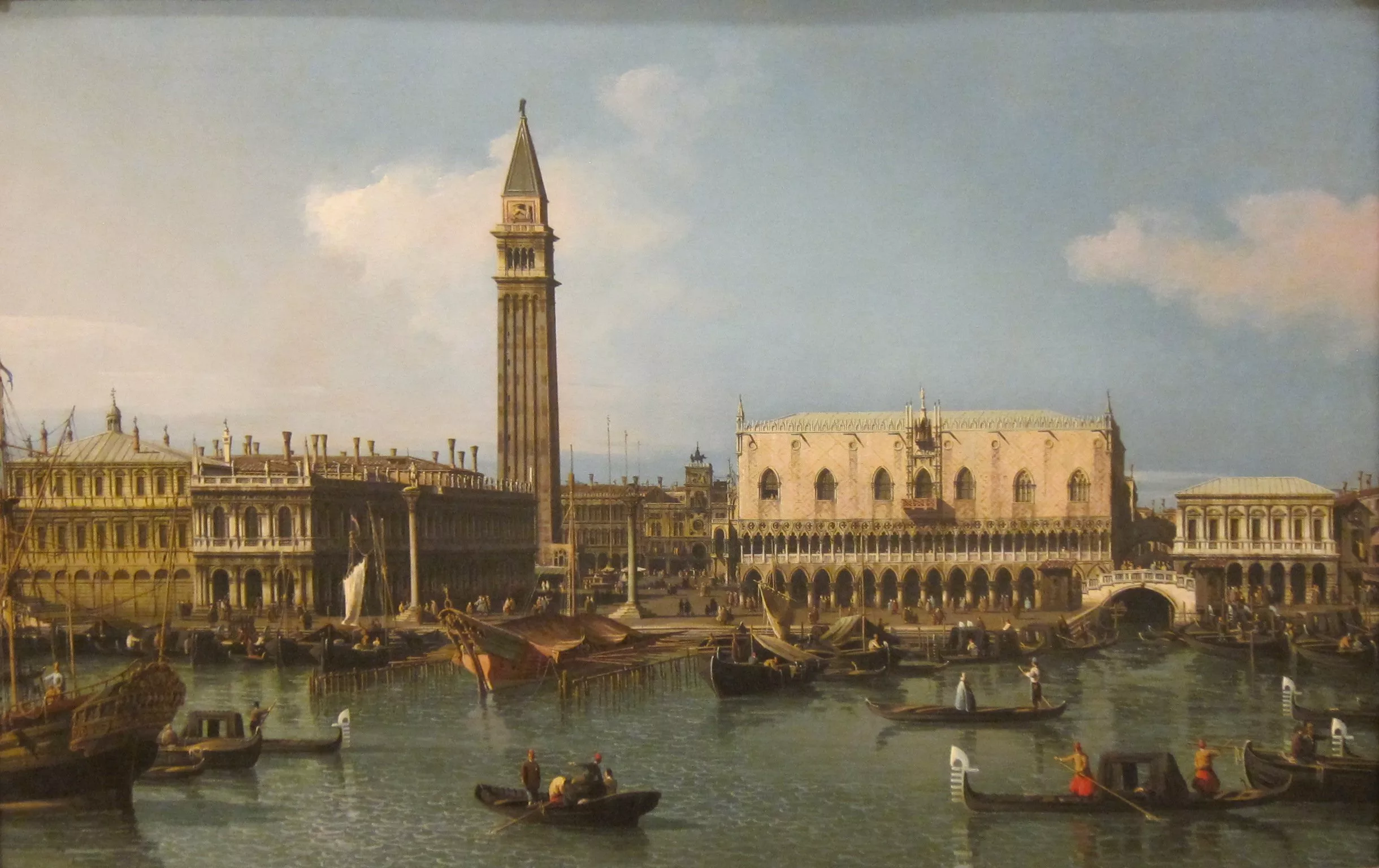
Venice provided Canaletto with an ideal subject. Its waterways, marble façades, bridges, domes, crowded quays, and constantly changing reflections offered endless possibilities. He painted famous locations such as Piazza San Marco, the Grand Canal, the Doge’s Palace, and the entrance to the Cannaregio, but he also portrayed less ceremonial parts of the city where workshops, boats, ordinary residents, and commercial activity shaped daily life.
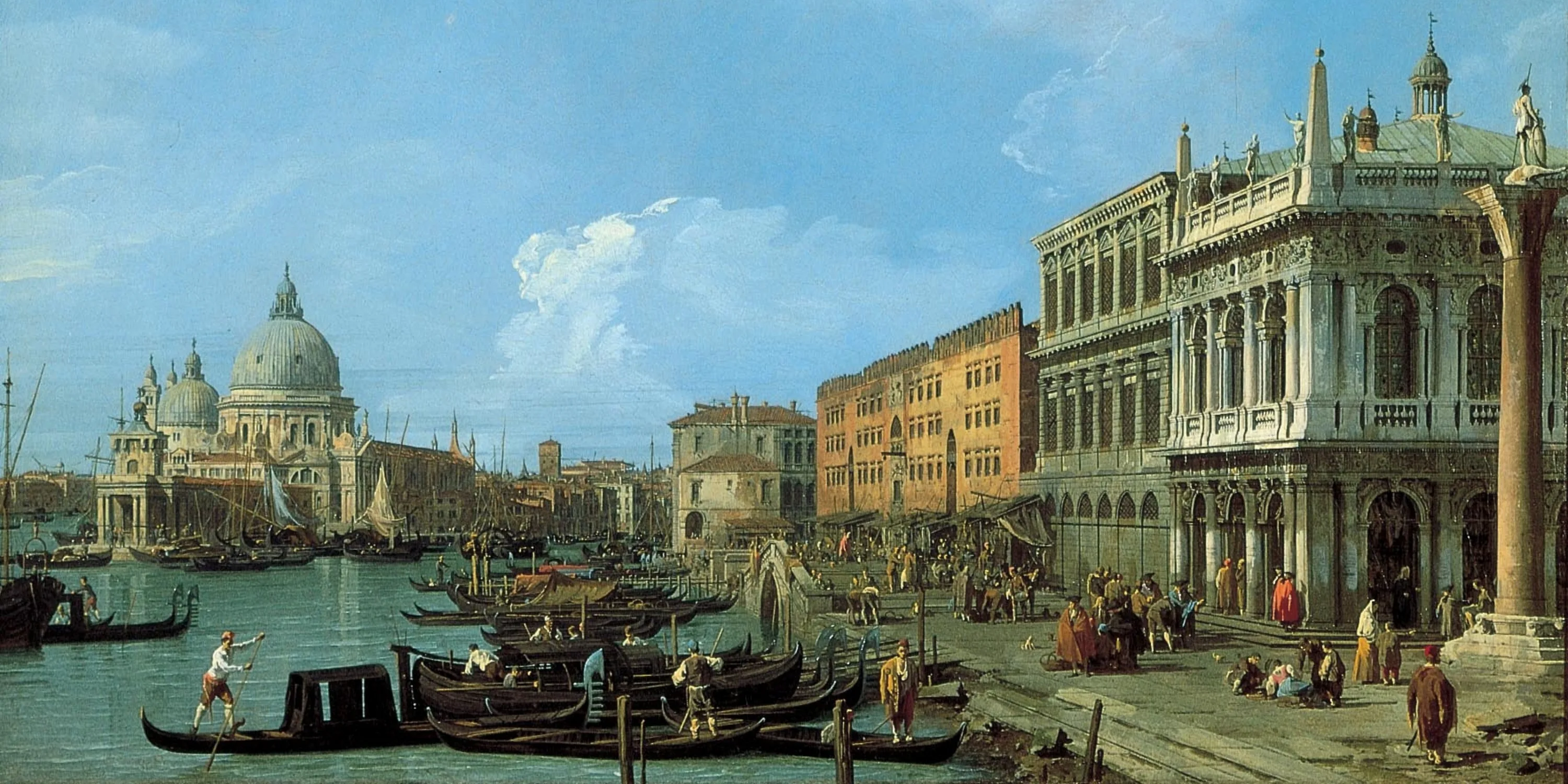
His paintings are celebrated for their remarkable detail, yet they should not be understood as mechanical records. Canaletto frequently adjusted architecture, widened spaces, shifted viewpoints, or altered the relative size of buildings to strengthen a composition. In Venice: Entrance to the Cannaregio, for example, architectural elements were modified to create a more dramatic and visually coherent scene. His art therefore combines observation with carefully controlled invention.
Light is fundamental to Canaletto’s visual language. Venetian buildings are described through sharp sunlight, transparent shadow, and delicate atmospheric changes. White stone, pale walls, blue-green water, and expansive skies create a sense of openness that distinguishes his paintings from darker Baroque city views. The clarity of the light allows architectural detail to remain visible without making the scene feel static.
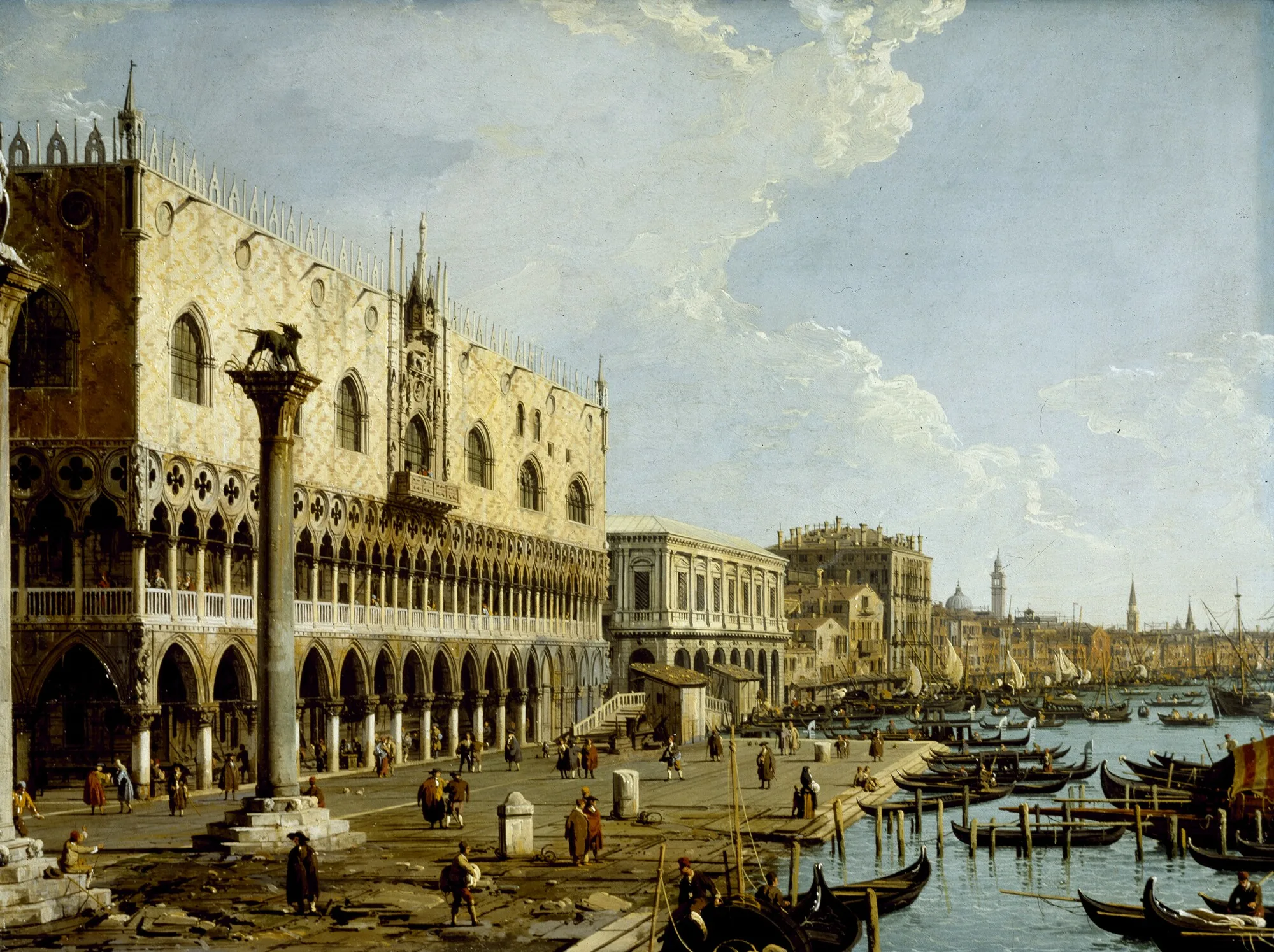
Water serves as both subject and compositional structure. Reflections break the rigidity of architecture, while gondolas, ceremonial boats, and working vessels create movement across the lower part of the canvas. The contrast between permanent buildings and unstable water gives his cityscapes their distinctive rhythm.
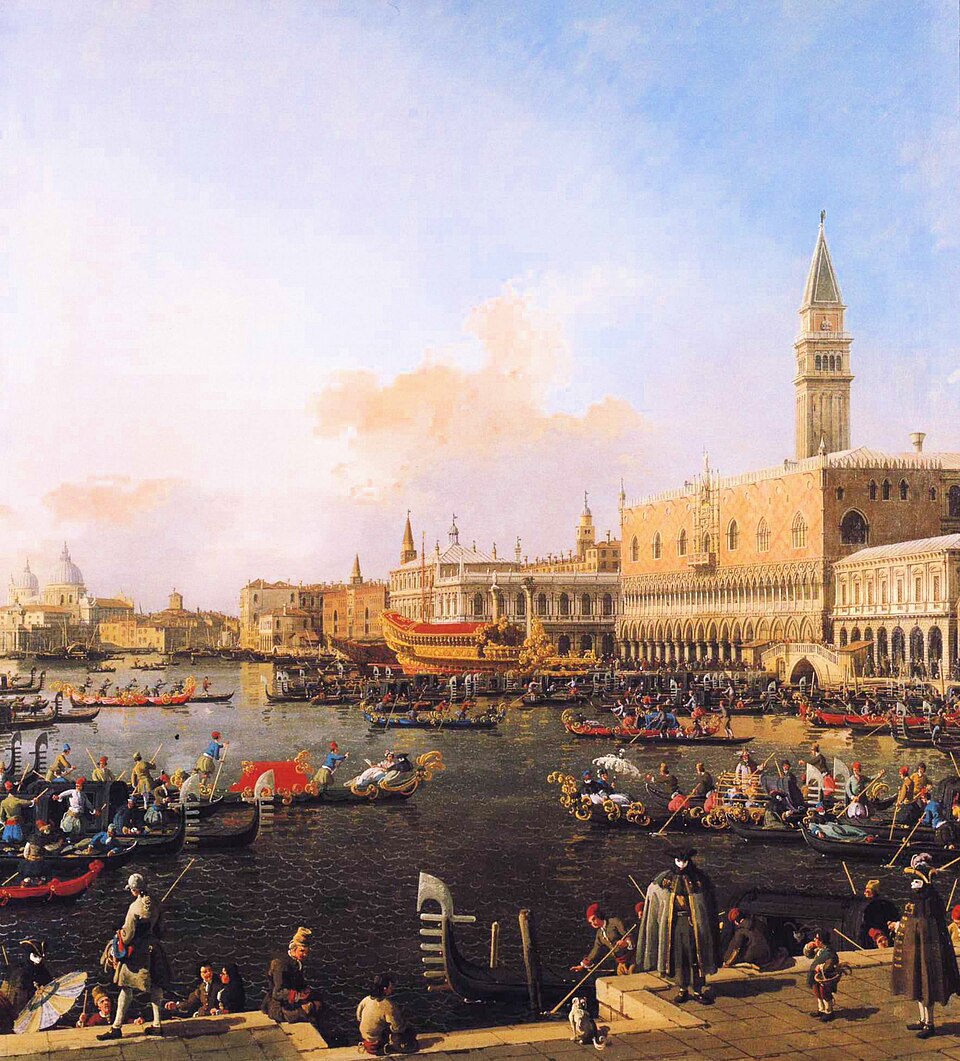
Canaletto was also an exceptional observer of public life. His paintings frequently include merchants, boatmen, aristocrats, masked carnival visitors, foreign travelers, street performers, and workers. These small figures establish scale while transforming architecture into a lived environment. In A Regatta on the Grand Canal, the city becomes a stage for public celebration, with decorated boats, spectators, and carnival clothing creating a vivid record of Venetian social culture.
The artist’s international reputation was supported by Joseph Smith, the British consul in Venice and one of his most important patrons. Smith helped connect Canaletto with British collectors and encouraged the production of prints that circulated his imagery throughout Europe. These prints expanded his fame beyond the travelers who could purchase original paintings.
Political instability and a decline in tourism during the War of the Austrian Succession affected the Venetian art market. In 1746, Canaletto travelled to England, where he remained for much of the following decade. He painted London, the Thames, Westminster, country houses, and aristocratic estates, applying his distinctive understanding of architecture and atmosphere to a very different environment.
His English works reveal his adaptability. The cooler climate and softer light produced a more restrained palette, while the architecture required different compositional solutions. Yet his fundamental interests remained unchanged: the organization of space, the relationship between buildings and human activity, and the ability of light to transform a familiar location.
Canaletto returned permanently to Venice in the mid-1750s. His later paintings sometimes adopt a more reflective atmosphere, with quieter spaces and increasingly expressive skies. He continued working until his death in 1768, leaving behind an enormous visual archive of Venice and an influential model for European cityscape painting.
His legacy extends beyond historical documentation. Canaletto demonstrated that architectural precision and artistic imagination could strengthen one another. The city in his paintings is recognizable, but it has also been reorganized into an ideal visual experience. This combination explains why his work remains valuable to historians while continuing to captivate viewers aesthetically.
At ArtExpoWorld, we consider Canaletto a defining master of urban painting. His work records architecture, ceremony, commerce, movement, and sunlight while transforming Venice into a theatrical yet believable world.
Canaletto’s paintings continue to influence how cities are represented in art, photography, cinema, and travel imagery. He did not merely paint Venice as it appeared. He created one of the most enduring visual identities ever associated with a city.