








Amedeo Modigliani was an Italian painter and sculptor whose elongated faces, simplified bodies, almond-shaped eyes, and elegant lines created one of the most immediately recognizable styles in twentieth-century art. Born in Livorno, Italy, in 1884, Modigliani spent most of his mature career in Paris, where he developed an intensely personal form of figurative modernism.
Although his life was short and his career lasted little more than a decade, Modigliani created an artistic language that remains unmistakable. His portraits and nudes appear both ancient and modern, intimate and distant, realistic and deliberately distorted.
Unlike many artists around him, Modigliani never abandoned the human figure.
While Cubism fragmented objects and abstraction increasingly separated art from recognizable reality, Modigliani remained committed to faces and bodies. Yet he transformed them so radically that conventional portraiture became something new.
His figures are recognizable as individuals, but they also unmistakably belong to Modigliani’s visual world.
Modigliani grew up in a Jewish family in Livorno. His childhood and adolescence were repeatedly interrupted by illness, including serious respiratory problems that affected him throughout his life.
He studied art in Florence and Venice before moving to Paris in 1906.
Paris at the beginning of the twentieth century was undergoing an artistic revolution.
Pablo Picasso, Henri Matisse, Constantin Brâncuși, Juan Gris, Chaim Soutine, Diego Rivera, and numerous other artists were developing radically different approaches to painting and sculpture.
Modigliani entered this environment as an outsider and gradually became associated with the international community of artists living in Montparnasse.
He absorbed influences from many sources without joining any single movement.
Italian Renaissance painting remained important to him, particularly its interest in elegant human proportions and portraiture.
At the same time, he encountered African sculpture, ancient Egyptian art, Cycladic figures, Khmer sculpture, and European modernism.
These influences became especially visible when Modigliani temporarily concentrated on sculpture.
Between approximately 1909 and 1914, sculpture became a central part of his artistic ambition.
He carved a series of stone heads characterized by long noses, extended necks, simplified features, and calm, mask-like expressions.
Rather than modeling soft surfaces, Modigliani emphasized strong contours and architectural form.
His sculptural heads appear simultaneously archaic and modern.
The influence of sculpture remained visible after he returned primarily to painting.
Faces in his portraits often look carved rather than modeled.
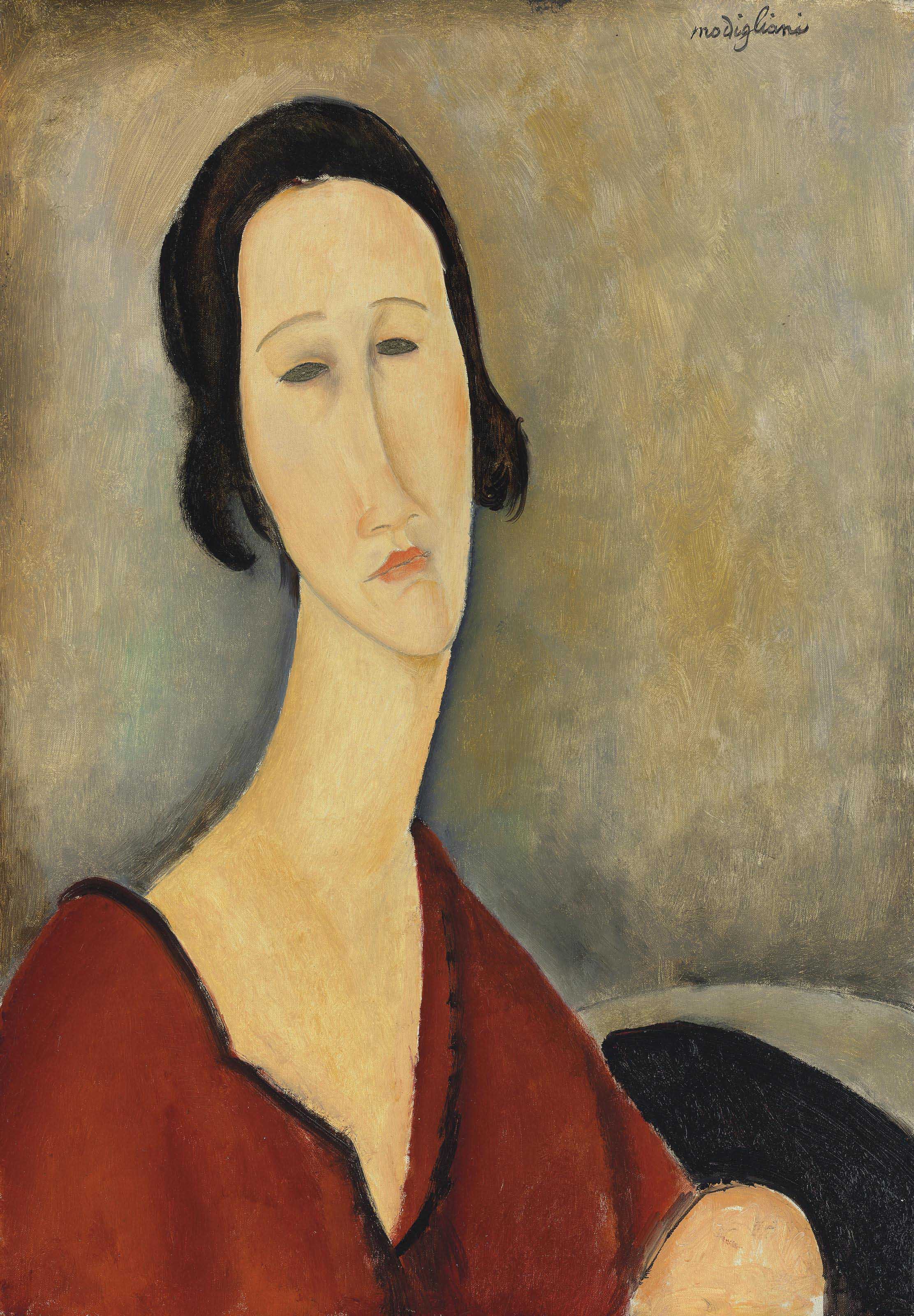
Noses form strong vertical lines. Necks become elongated columns. Shoulders curve into simplified geometric structures.
The human body is transformed through rhythm.
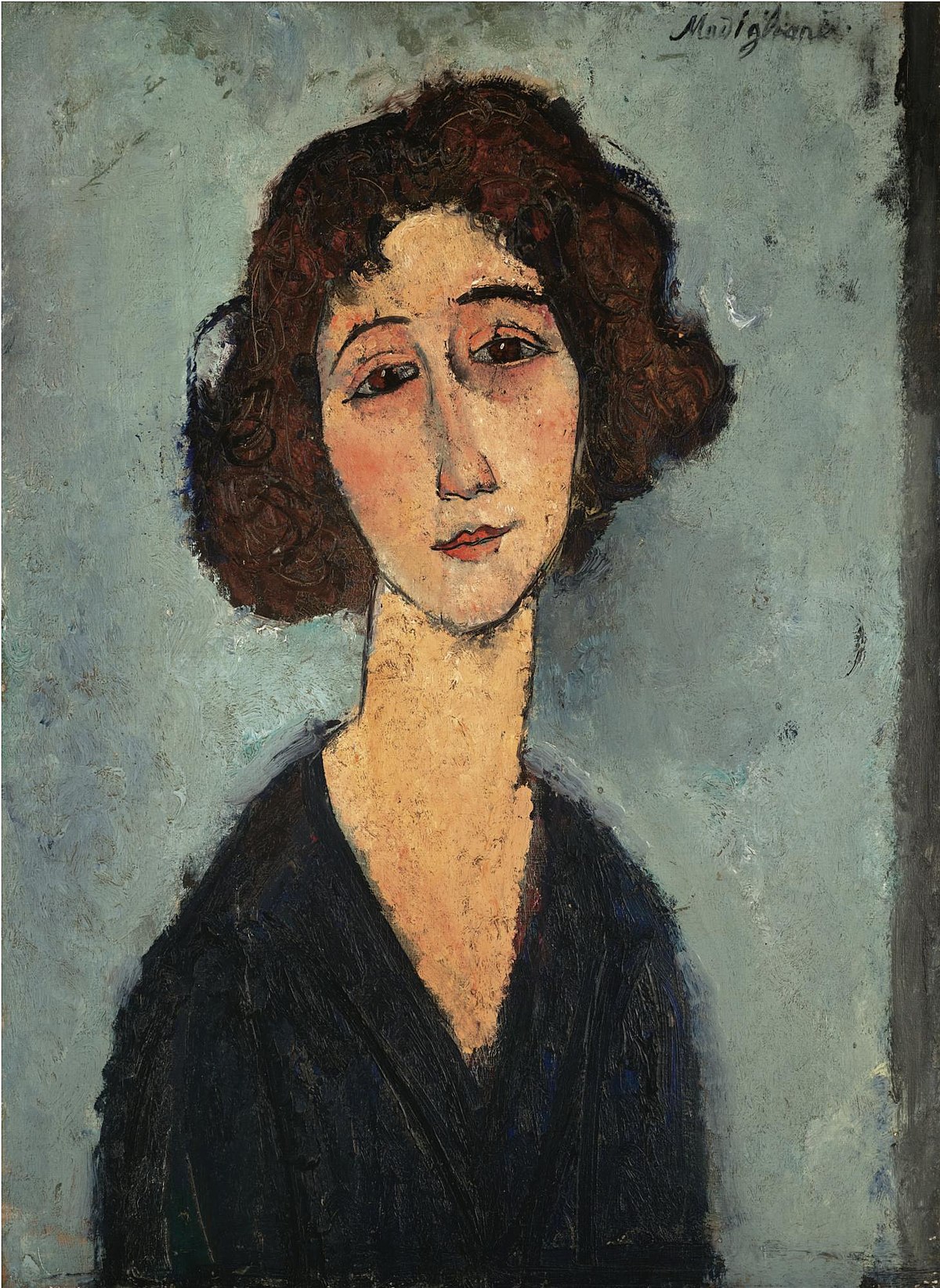
Modigliani’s portraits became the core of his mature work.
He painted artists, writers, dealers, friends, lovers, children, workers, and members of the Parisian avant-garde.
Among his subjects were figures from the cultural world surrounding him, including artists and intellectuals who were themselves shaping modernism.
Yet Modigliani rarely used elaborate backgrounds or objects to describe a sitter’s profession or social position.
Instead, he concentrated attention on posture, face, hands, and silhouette.
The background may consist only of a wall, doorway, chair, or simplified interior.
This reduction makes the figure psychologically dominant.
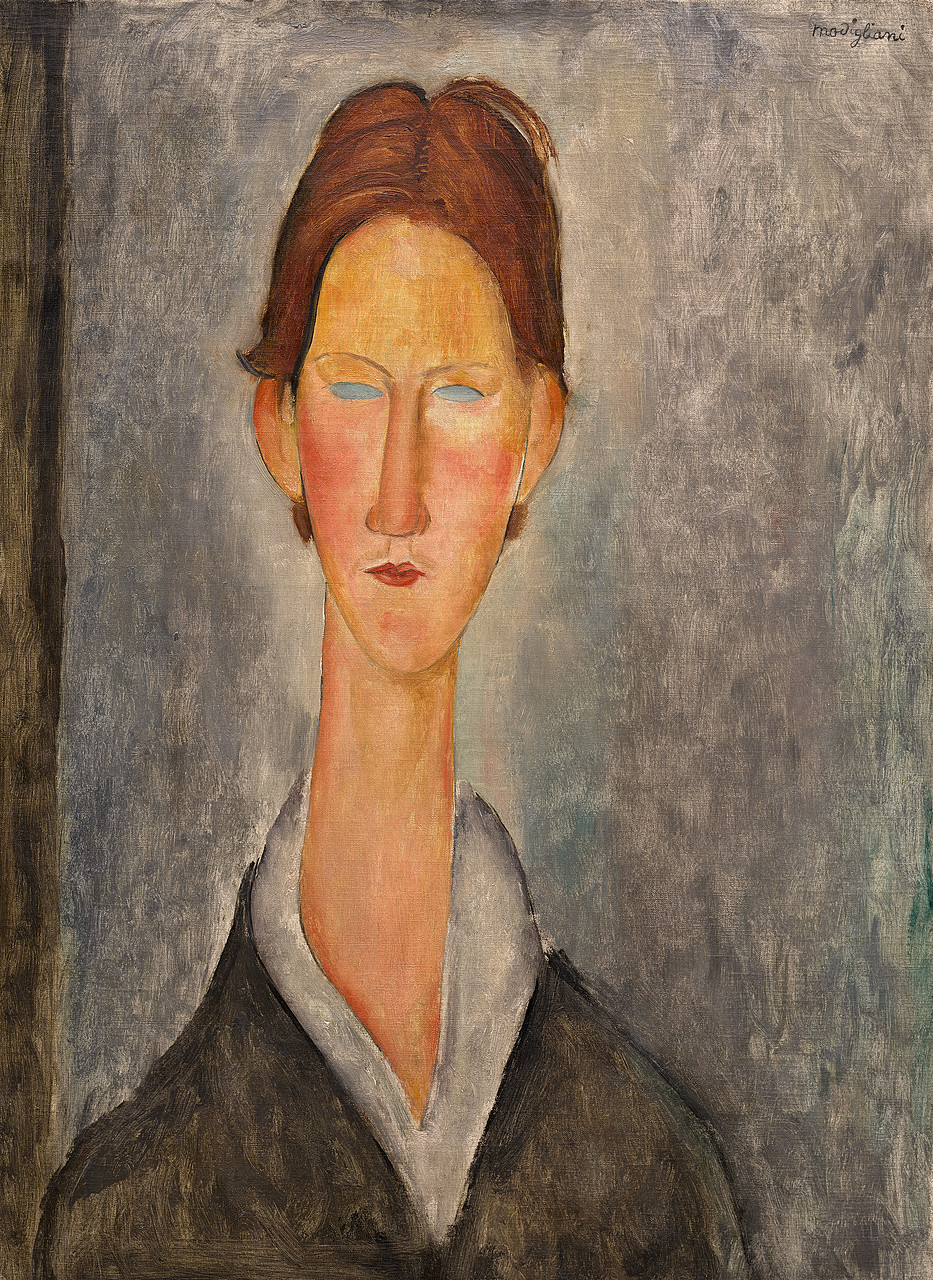
One of the most distinctive features of Modigliani’s portraits is the treatment of the eyes.
Some sitters have clearly defined pupils. Others have completely blank blue, gray, or dark eyes.
These empty eyes have generated countless interpretations.
They can make a sitter appear introspective, distant, spiritual, melancholy, or psychologically inaccessible.
According to a famous story associated with Modigliani, when asked why he sometimes left eyes unfinished, he suggested that he would paint them when he truly knew the person.
Whether or not the anecdote should be taken literally, it captures something fundamental about his portraiture.
Modigliani does not pretend that physical likeness provides complete psychological knowledge.
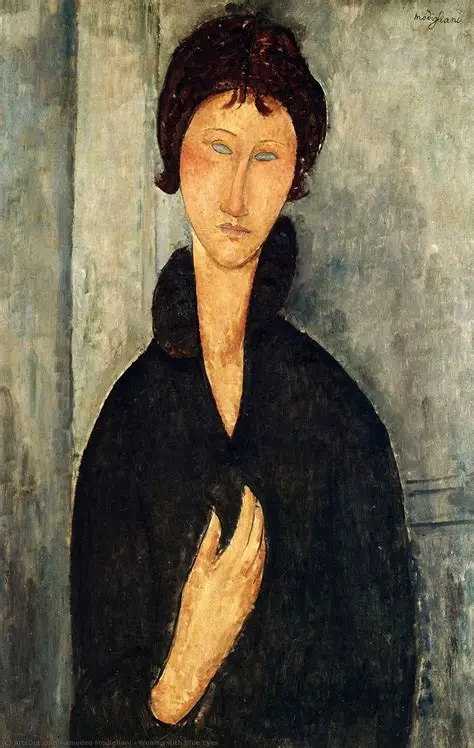
A face can be visible while the person remains mysterious.
This tension gives his portraits extraordinary emotional power.
The distortion of anatomy follows a similar principle.
Heads may be disproportionately long.
Necks stretch beyond natural proportions.
Shoulders slope dramatically.
Hands become narrow and simplified.
Yet the figures rarely feel grotesque.
Instead, distortion produces elegance.
Modigliani understood that anatomical accuracy and visual truth were not necessarily the same thing.
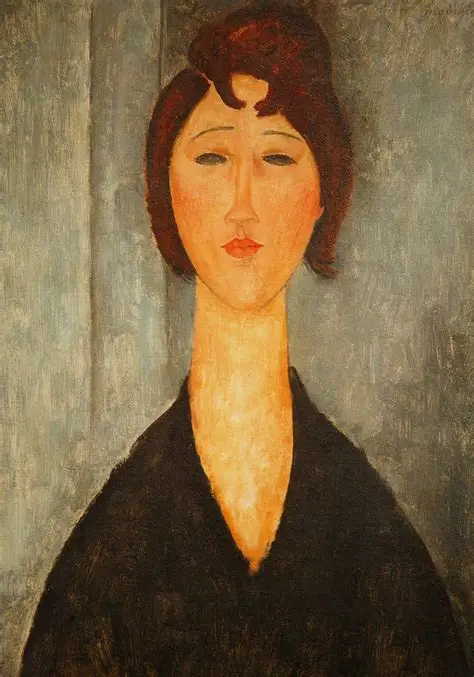
He could lengthen a neck because the resulting curve strengthened the entire composition.
This approach connects him with artists such as Ingres, whose elongated bodies similarly sacrificed anatomical correctness for pictorial rhythm.
Modigliani’s female nudes became among his most controversial and celebrated works.
In 1917, his dealer Léopold Zborowski organized what became the only solo exhibition of Modigliani’s work during the artist’s lifetime.
Several nude paintings displayed in the gallery attracted police attention, and works visible from the street were reportedly ordered removed.
The scandal was not simply caused by nudity.
European art museums were already filled with nude bodies.
What made Modigliani’s paintings provocative was their directness.
These women were not disguised as mythological goddesses or distant historical figures.
They appeared contemporary, physically present, and openly sensual.
Their bodies fill the canvas.
They frequently look directly toward the viewer.
Modigliani removed many of the cultural excuses traditionally used to make the nude respectable.
His treatment of flesh is warm and substantial.
Reds, ochres, browns, creams, and pinks create bodies that contrast with darker backgrounds.
The contour remains essential, giving each body a continuous sculptural rhythm.
Yet these paintings are not simply erotic images.
They demonstrate Modigliani’s continuing investigation of how the human figure can be simplified without losing presence.
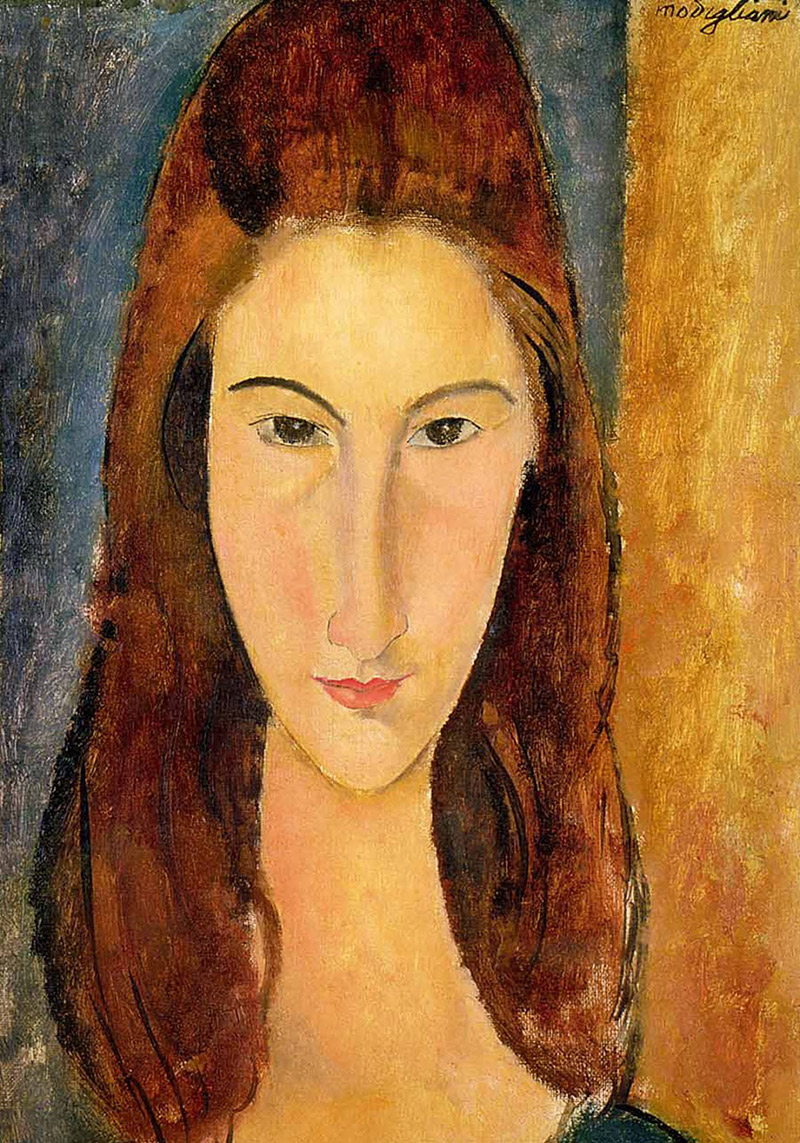
Another defining relationship in his life was with Jeanne Hébuterne.
Hébuterne was a young artist who became Modigliani’s partner and one of his most important models.
He painted her repeatedly.
Her long face, almond eyes, narrow neck, and quiet posture fit naturally within the visual language he had developed, yet the paintings possess distinctive emotional intimacy.
The couple had a daughter, also named Jeanne.
Their relationship unfolded during a period when Modigliani’s health was deteriorating.
Tuberculosis, poverty, alcohol, and an unstable lifestyle contributed to his physical decline.
The romantic mythology surrounding Modigliani has often focused heavily on drinking, drugs, poverty, and bohemian Paris.
That mythology can obscure the seriousness of his artistic practice.
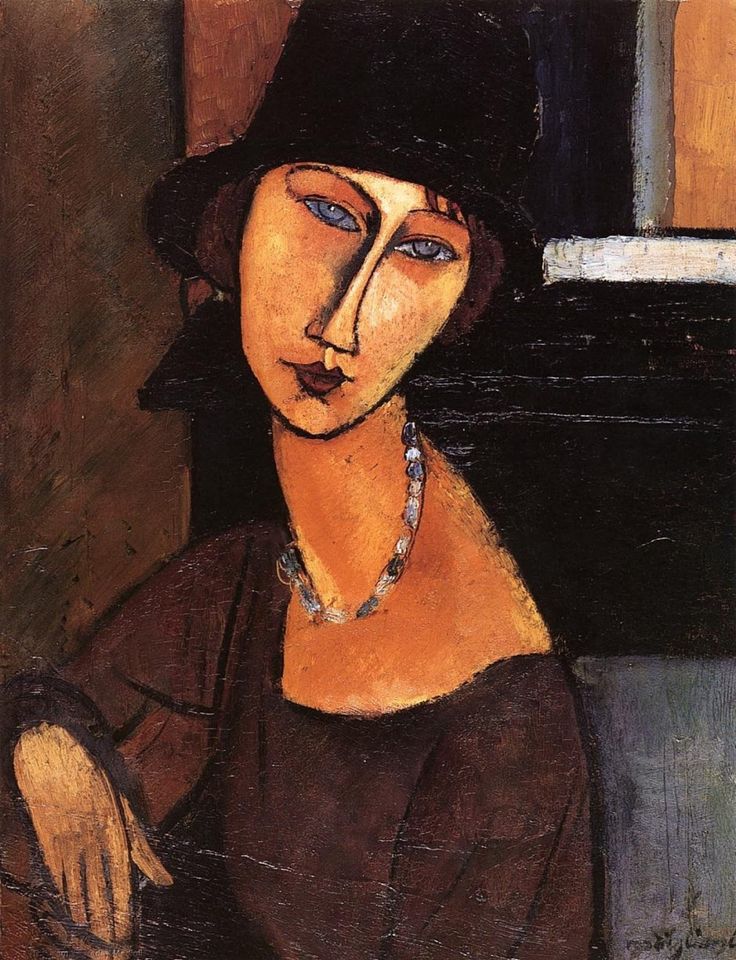
His style was not the accidental product of an uncontrolled life.
The consistency of his compositions demonstrates deliberate formal decisions.
He repeatedly refined relationships between line, color, body, and space.
His portraits may look effortless, but their simplicity is highly controlled.
Removing detail requires knowing which details matter.
Modigliani became particularly skilled at creating identity through very limited means.
A slightly tilted head can suggest vulnerability.
A raised shoulder can imply tension.
A long neck can produce dignity.
A pair of empty eyes can create distance.
His palette is generally restrained compared with the explosive color of Fauvism.
Earth tones, muted reds, blues, greens, creams, and dark outlines dominate many works.
Color supports the figure rather than overwhelming it.
This restraint contributes to the timeless atmosphere of his portraits.
They do not feel completely tied to Paris in the 1910s.
Ancient sculpture, Renaissance portraiture, African art, and modern painting seem to coexist within the same faces.
Modigliani died in Paris in January 1920 at the age of thirty-five from tubercular meningitis.
Jeanne Hébuterne, pregnant with their second child, died by suicide the following day.
The tragedy became inseparable from the mythology surrounding the artist.
Yet Modigliani’s posthumous reputation developed primarily because the paintings themselves proved impossible to ignore.
Within a relatively short period after his death, his work became increasingly sought after by collectors and museums.
Today, Modigliani is among the most internationally recognizable modern artists.
His paintings have also become major objects within the global art market.
But financial value explains only part of his continuing appeal.
The deeper reason lies in the strange balance his portraits maintain between familiarity and mystery.
We recognize a human being immediately.
Yet something remains inaccessible.
The body is present, but the person seems partly elsewhere.
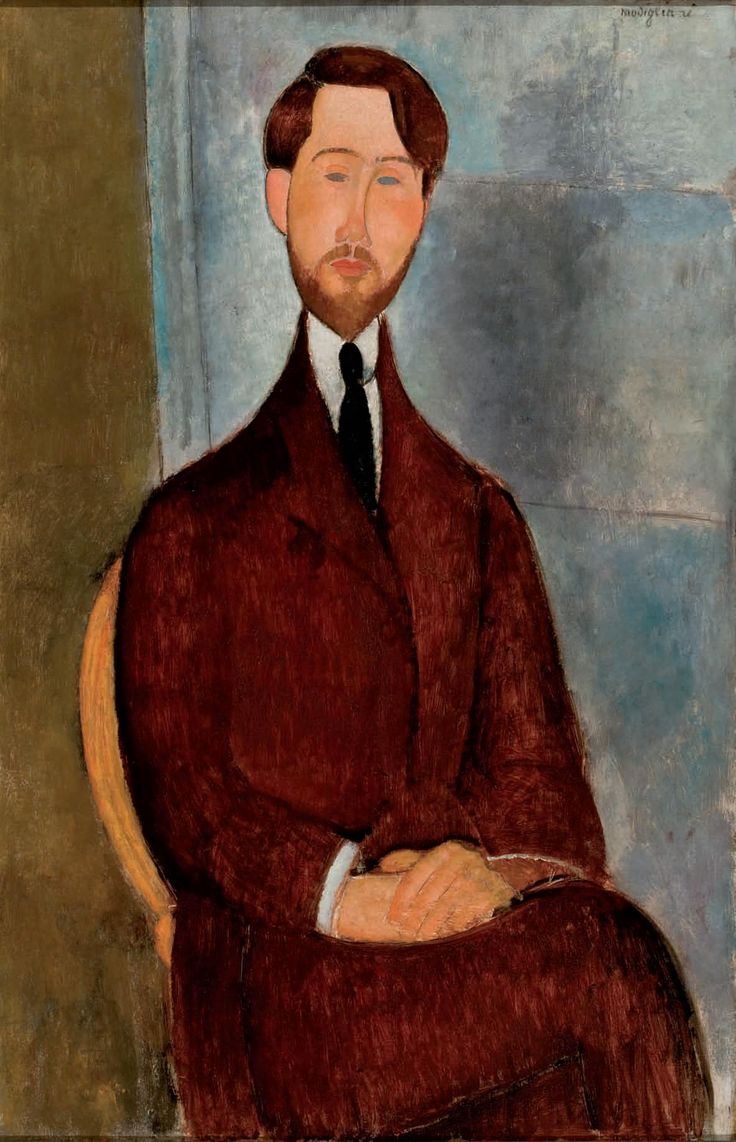
At ArtExpoWorld, we consider Amedeo Modigliani one of the artists who demonstrated how radically the human figure could be transformed without being abandoned.
He did not need to fragment the face into Cubist planes or remove recognizable reality completely.
Instead, he changed proportion.
A neck became longer.
A face became narrower.
Eyes became empty.
A body became a sequence of curves.
Through these apparently simple decisions, Modigliani created a visual language that belongs to no other artist.
More than a century after his death, a Modigliani portrait can often be recognized from across a room.
That immediate recognition is evidence of something extremely rare in art: an artist who discovered a form so personal that eventually his own name became the best description of the style.