







Survey of Global Collecting 2024: What Today’s Collectors Really Want
The global art market is often discussed through auction records, dealer sales, and the prices of famous artworks.
These numbers reveal only part of the picture.
To understand where the market may be headed, it is also necessary to examine the collectors themselves.
Who is buying?
How old are they?

Where do they live?
How much wealth do they control?
Do they prefer art fairs, galleries, auctions, or online platforms?
The Art Basel and UBS Survey of Global Collecting 2024 was created to explore these questions.
Authored by Dr. Clare McAndrew, founder of Arts Economics, the report studied the behavior of high-net-worth collectors across 14 major markets.
Its findings revealed a collector base that was younger, more international, and increasingly comfortable with lower-value transactions and digital access.
The Survey Focused on High-Net-Worth Collectors
The survey examined individuals whose net worth exceeded USD 1 million.
Real estate and private business assets were excluded from the calculation.
A total of 3,663 respondents participated.
They were contacted between July and August 2024.
The survey covered 14 markets, making it the widest geographic sample in the series at that time.

Approximately 55% of respondents held wealth between USD 1 million and USD 10 million.
Another 39% reported wealth between USD 10 million and USD 50 million.
The remaining 6% qualified as ultra-high-net-worth individuals, with assets above USD 50 million.
These participants represent a financially powerful segment of the art market.
They do not represent every collector.
Many people build meaningful collections at much lower price levels.
Why the Collector Survey Is Different From the Art Market Report
The Art Basel and UBS Global Art Market Report examines the wider trade.
It includes data from auction houses, galleries, art fairs, and approximately 45 million transactions.
The Survey of Global Collecting is more focused.
It studies motivations, demographics, and behavior among wealthy buyers.

Dr. Clare McAndrew has emphasized that the art market is not a single unified system.
It consists of many submarkets.
The behavior of a buyer collecting emerging African photography may differ completely from that of a collector acquiring Old Masters or digital art.
A survey cannot perfectly describe every segment.
It can reveal patterns among an influential group.
The Average Collector Was 45 Years Old
The average age of respondents was 45.
Regional differences were significant.
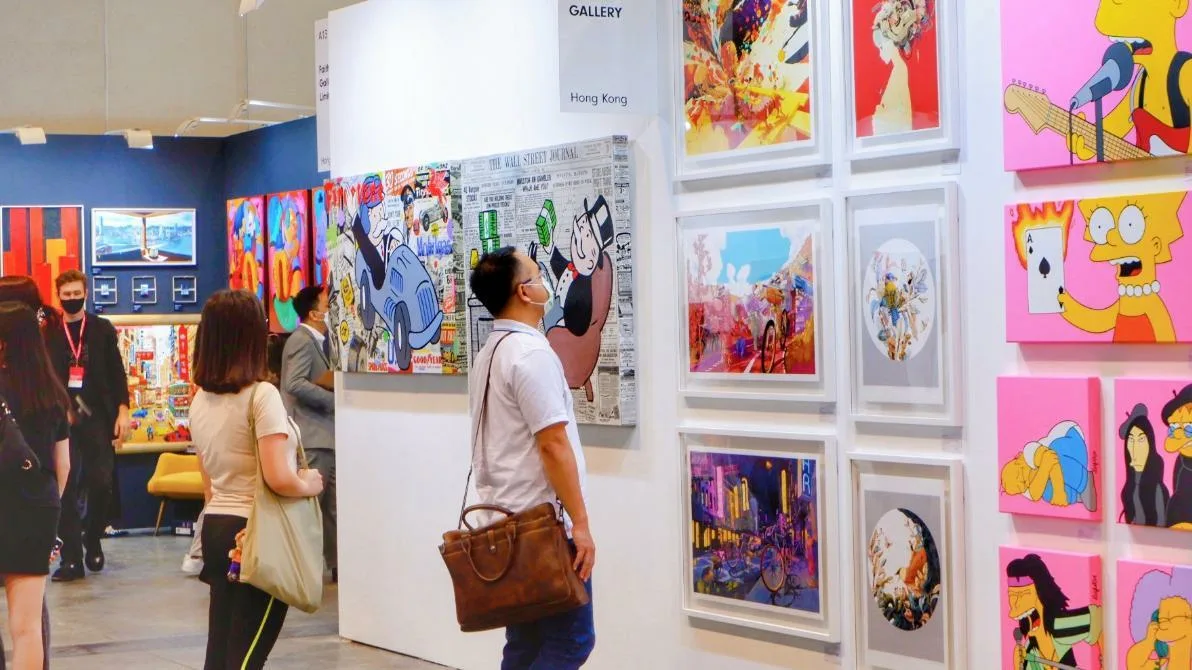
Collectors in Hong Kong had an average age of approximately 38.
In the United States, the average was closer to 50.
This difference reflects broader economic and cultural conditions.
Rapid wealth creation in parts of Asia has produced a younger collector base.
Older markets may contain more established multigenerational collections and collectors who began buying decades earlier.
Age influences buying habits, preferred mediums, and attitudes toward online transactions.
Younger collectors are generally more comfortable discovering art through screens and social platforms.
Men Still Dominated the Sample
Approximately 63% of respondents were men.
The gender balance varied by country.
Women represented only around 29% of respondents in Brazil.
In France, Mainland China, Hong Kong, and Mexico, the female share exceeded 40%.

These differences show that gender participation in collecting cannot be understood globally through a single number.
Wealth distribution, inheritance patterns, business ownership, and cultural expectations all influence who is recognized as the collector.
In some families, women may make important decisions without being publicly identified as the primary buyer.
Future surveys with more balanced samples would later show the growing financial influence of women collectors.
Millennials Became the Largest Generational Group
Millennials represented approximately 40% of participants.
Generation X accounted for around 23%.
This confirms that younger wealthy buyers are no longer a minor future audience.
They already play a major role in the market.
Millennial collectors often combine traditional and new categories.
A collection may include painting, design, photography, jewelry, and digital work.
Younger buyers are also more likely to move between galleries, artist studios, online platforms, and social media.
They may not follow the conventional path through one local dealer.
This flexibility creates opportunity for artists and galleries but makes loyalty harder to maintain.
Wealth Growth in India
India emerged as an important force.
High-net-worth individuals in the country experienced approximately 41% growth in wealth during the relevant period.
Growing wealth can increase demand for both local and international art.

Indian collectors may support Modern masters, contemporary artists, design, photography, and diaspora practices.
However, wealth growth does not automatically produce a mature ecosystem.
Museums, galleries, archives, logistics, tax rules, and art education also influence market development.
A strong collector base can encourage these structures to expand.
The United States and Asia Had Strong Influence
The survey showed a clear weighting toward the United States and Asian markets.
This reflects the concentration of global wealth.
European and Latin American participants formed a smaller part of the study and tended to be slightly older.
Regional differences matter because collectors do not behave identically.
Taxation, import rules, museum culture, domestic artists, and access to fairs all influence buying.
A collector in Hong Kong may move easily between Mainland China, Southeast Asia, Japan, and international fairs.
A collector in Brazil may face different currency, shipping, and tax conditions.
Global art-market analysis needs to account for these local realities.
More Transactions, But at Lower Values
One of the most important findings concerned the relationship between volume and value.
Across the wider art market, transaction numbers were increasing even while sales values at the top declined.
The collector survey showed a similar pattern among high-net-worth individuals.
Collectors remained active.

However, many were buying at more modest price levels.
This may reflect caution during economic uncertainty.
It may also indicate broader interest in emerging artists, editions, design, and smaller works.
The market does not need record-breaking auctions to remain active.
A large number of lower-value sales can support galleries and artists even during a slowdown at the top.
Smaller Purchases Can Reveal Changing Taste
A shift toward more modest acquisitions is not necessarily negative.
Collectors may be reducing risk while continuing to engage.
They may also be moving away from trophy purchases toward more experimental categories.
Works on paper, photography, ceramics, digital art, and emerging artists often cost less than major paintings.
This allows collectors to buy more broadly.
The danger is that lower prices can encourage accumulation without discipline.
A collection still needs focus.
Buying twenty inexpensive works does not automatically create more cultural value than buying one strong piece.
Art Basel VIP Collectors Behaved Differently
For the first time, a parallel survey examined approximately 1,400 Art Basel VIP collectors.
This highly engaged group showed some differences from the broader sample.
The wider group attended more events and expressed greater comfort with online transactions.
The VIP collectors attended fewer events in 2024.
They showed a stronger preference for private, one-to-one buying environments.
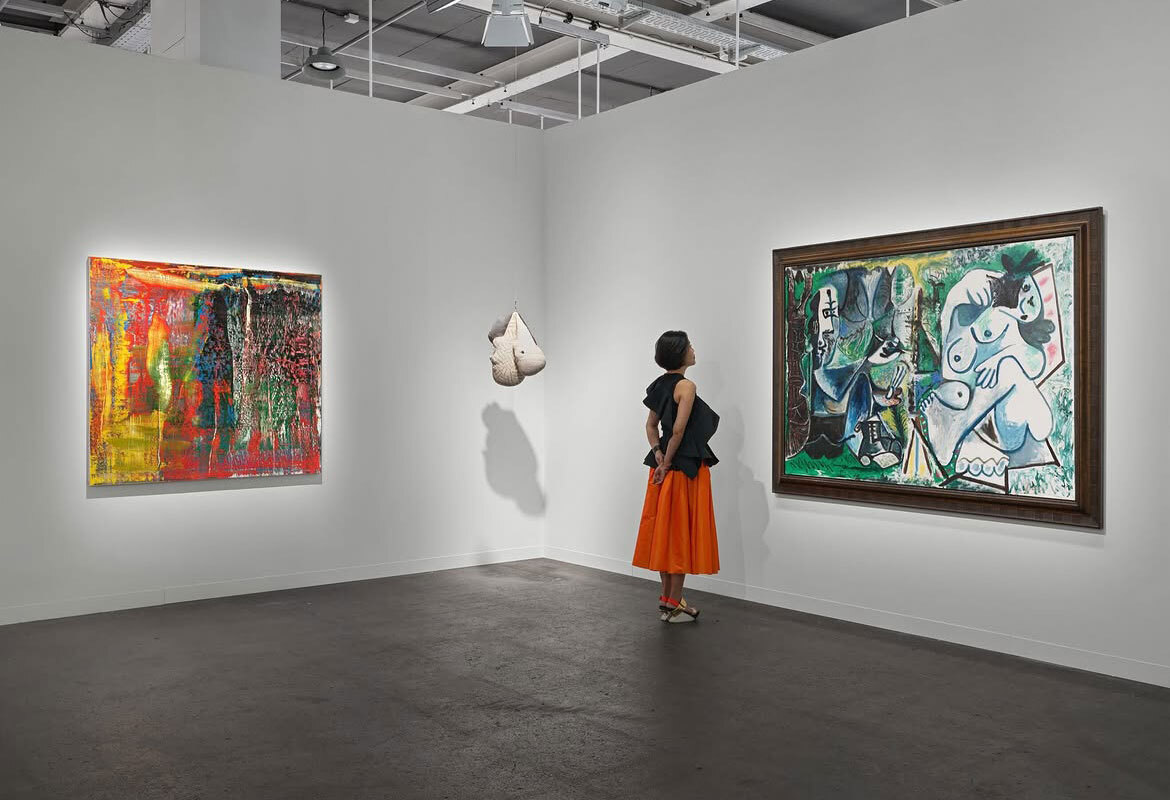
This suggests that the most experienced collectors may become more selective.
They do not necessarily need to attend every fair and opening.
They may rely on established gallery relationships, advisors, and private presentations.
Access changes behavior.
A collector with long-standing relationships can view important work before it reaches a public booth or website.
Online Buying Continued to Grow
The survey showed greater preference for online transactions among many respondents.
Digital access allows collectors to buy internationally without constant travel.
Gallery websites, online viewing rooms, auctions, and social media all contribute.
Online buying is particularly useful for standardized categories such as editions, photography, and works with clear documentation.

It can also support transactions for major pieces when trust already exists.
However, online access does not remove the need to evaluate condition, scale, and physical presence.
Collectors should request videos, installation images, and detailed reports.
The screen is a discovery tool, not a substitute for every form of due diligence.
Event Attendance Is Not the Same as Engagement
A collector may attend many fairs, exhibitions, and social events without developing deep knowledge.
Another may attend fewer events but spend more time with artists, curators, and galleries.
The survey’s comparison between the wider sample and Art Basel VIPs illustrates this difference.

Quantity of attendance does not measure the quality of engagement.
Collectors should choose events according to their goals.
A first-time buyer may benefit from visiting many exhibitions.
An experienced collector may prefer targeted studio visits and private conversations.
The Survey Has Important Limitations
No survey captures the full art market.
Younger people are generally more willing to complete online questionnaires.
This can increase their representation.
Participants also had to have purchased art between 2022 and mid-2024.
Older collectors who buy only occasionally may therefore have been excluded.
Annual changes in methodology make direct comparisons imperfect.
The survey also concentrates on wealthy individuals.
It does not represent the many collectors buying prints, local artists, and lower-cost work outside international networks.
These limitations do not make the research useless.
They define what the data can and cannot tell us.
Dealers Use Collector Data Strategically
Galleries and dealers study surveys to understand how buyers are changing.
The findings may influence:
online investment;
fair participation;
regional expansion;
price strategies;
collector events;
communication;
artist selection;
succession services.
A gallery seeing growth among younger Asian collectors may increase digital content or participate in regional fairs.
A dealer observing preference for private buying may organize more individual presentations.
Data cannot replace relationships.
It can help businesses understand where those relationships may develop.
The Great Wealth Transfer Will Change Collecting
Large amounts of wealth are expected to move between generations.
Art will form part of that transfer.
Younger heirs may keep inherited works, sell them, or integrate them into different collections.
They may also place greater importance on social purpose, diversity, digital culture, and public access.
The collector survey is therefore not merely a description of current behavior.
It offers clues about the future structure of patronage.
Galleries, museums, and advisors that fail to involve younger generations may lose both clients and collections.
What Galleries Should Learn
The survey suggests several practical lessons.
Collectors remain active even when the top of the market slows.
Lower and middle price levels matter.
Younger buyers expect digital access but still value trust.
Regional differences require local knowledge.
Highly engaged collectors may prefer selective private experiences over constant event attendance.
Galleries should not assume every wealthy buyer behaves the same way.
The strongest strategy combines data with personal understanding.
What Collectors Should Learn
Collectors can use the survey to understand their own position.
Being part of a trend does not make a purchase right or wrong.
A millennial collector does not need to buy digital art.
A wealthy collector does not need to pursue record-breaking works.
Data shows what groups are doing.
It should not dictate personal taste.
The purpose of collecting remains individual.
The best collections are built through sustained attention rather than demographic expectations.
Editorial Note
ArtExpoWorld believes the most useful finding of the Survey of Global Collecting 2024 is that activity cannot be measured only through record prices.
The market can remain culturally alive while the most expensive segment slows.
Collectors buying emerging artists, editions, and modestly priced works may have a greater long-term effect on artistic careers than a small number of trophy transactions.
At the same time, surveys must be read carefully.
High-net-worth individuals represent a powerful group, but they are not the entire art world.
Museums, artists, small galleries, and collectors with limited budgets also shape culture.
Data should help the market understand behavior, not reduce collecting to statistics.