








Jean-Auguste-Dominique Ingres was one of the most celebrated painters and draftsmen of nineteenth-century France. Born in Montauban in 1780, he built his reputation through portraits, historical subjects, religious paintings, mythological scenes, and idealized images of the human body. Although he considered himself a defender of the classical tradition, his unusual proportions, smooth surfaces, psychological precision, and highly personal distortions made his work far more modern than his own artistic ideology might suggest. The Metropolitan Museum of Art has described him as the greatest portrait painter of the nineteenth century and one of the most brilliant draftsmen in art history.
Ingres received his earliest artistic education from his father before studying in Toulouse and later moving to Paris. There he entered the studio of Jacques-Louis David, the dominant figure of French Neoclassicism.
David emphasized drawing, clarity, classical composition, and moral seriousness. Ingres absorbed these principles but gradually developed a very different visual personality.
For Ingres, line became the foundation of artistic beauty. Contours flow continuously around bodies, clothing, furniture, and faces.
He often reduced visible brushwork so dramatically that surfaces appear almost polished. Paint is used to make the image look complete, controlled, and independent from the physical act of painting.
This emphasis on line placed him in a famous theoretical opposition with Eugène Delacroix, whose art represented expressive color, movement, and Romantic intensity.
The contrast between Ingres and Delacroix later became one of the central debates in nineteenth-century French art: line versus color, classical order versus Romantic emotion.
In practice, the division is less simple. Ingres’s paintings may be controlled, but they can also be highly sensual, psychologically intense, and visually strange.
He won the prestigious Prix de Rome and spent many years in Italy. Rome became fundamental to his development.
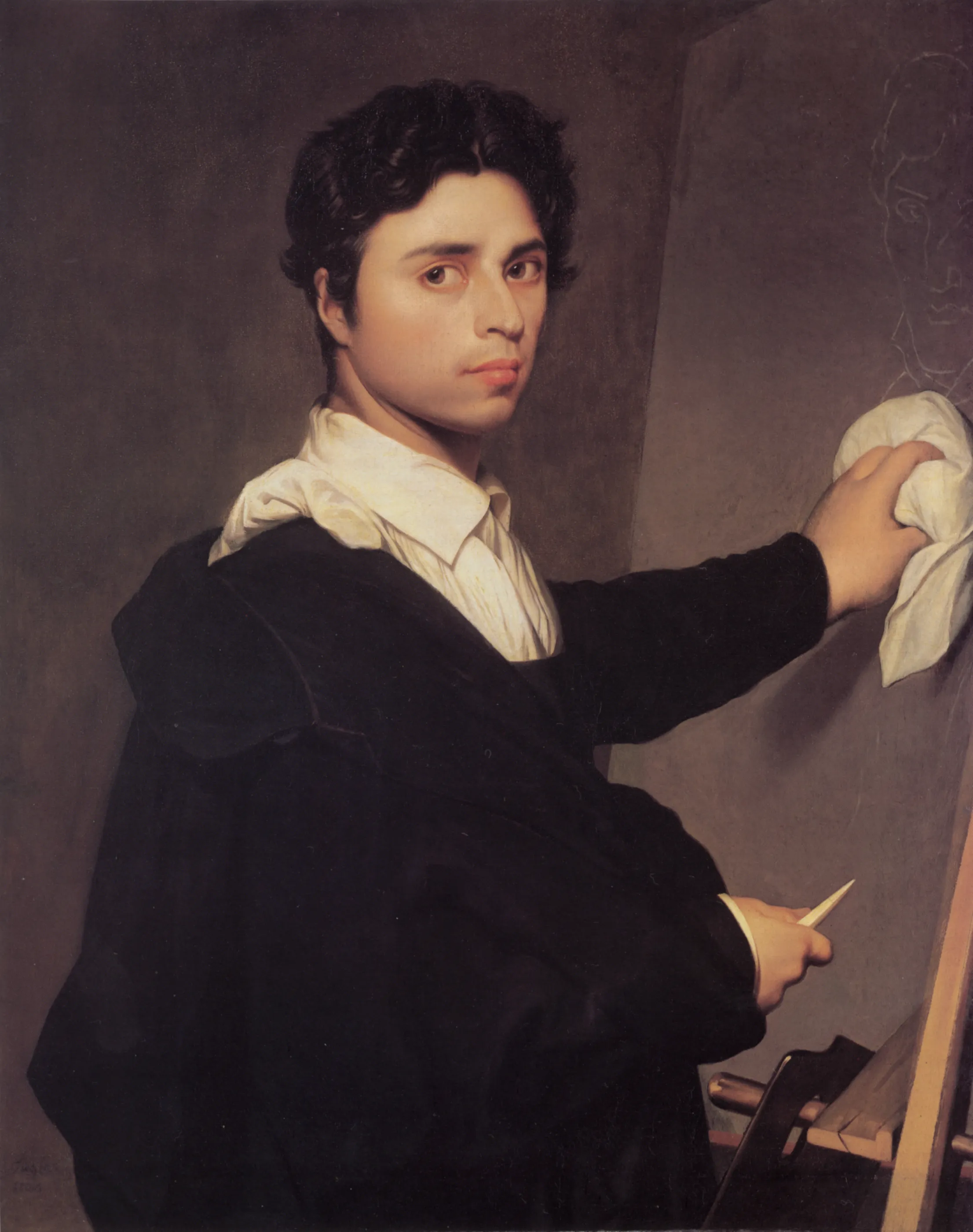
Ingres studied Raphael, Renaissance painting, classical sculpture, architecture, and the traditions of Italian art with enormous seriousness.
He considered Raphael one of the greatest artistic models in history. Yet his own figures often move far beyond Renaissance naturalism.
Anatomy is frequently altered for compositional or expressive reasons. Backs become longer, arms more flexible, necks unusually smooth, and bodies arranged according to rhythm rather than strict biological accuracy.
This is especially visible in his odalisques.
La Grande Odalisque presents a reclining woman whose elongated spine became famous because of its anatomical impossibility.
Her body appears to contain additional vertebrae, while the relationship between hips, back, shoulders, and limbs has been deliberately stretched.
The distortion is not simply a mistake. It creates an elegant continuous curve that organizes the entire composition.
Ingres preferred pictorial beauty to anatomical correctness when the two came into conflict.
This decision fascinated later modern artists, who recognized that distortion could strengthen rather than weaken an image.
The odalisque also reflects nineteenth-century European fascination with imagined versions of the Islamic world.
Textiles, jewelry, fans, turbans, and luxurious interiors create an exoticized fantasy produced largely for European viewers.
These works are now studied not only for their formal sophistication but also for the colonial assumptions and power structures surrounding Orientalist imagery.
Ingres’s portraiture offers a very different kind of complexity.
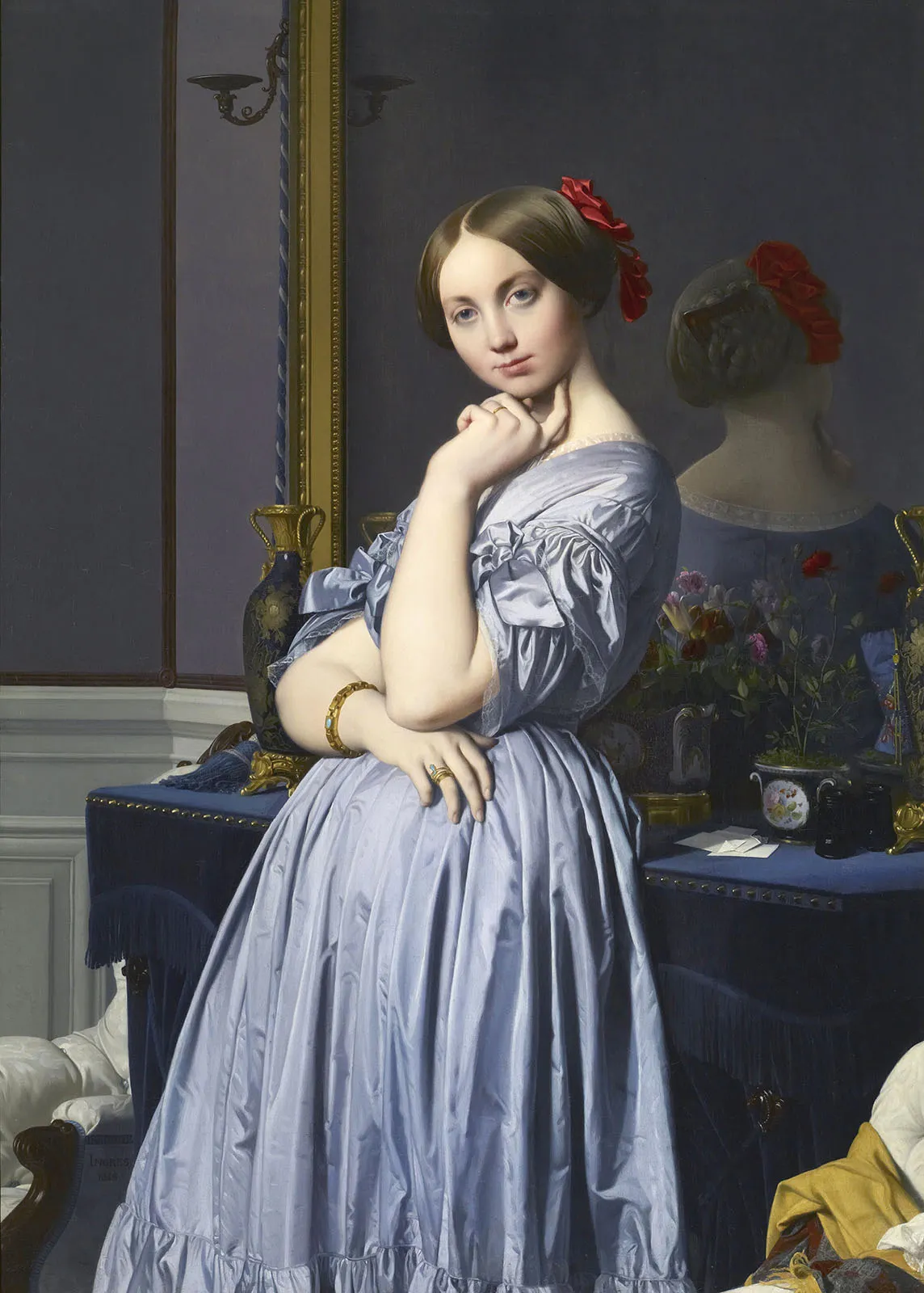
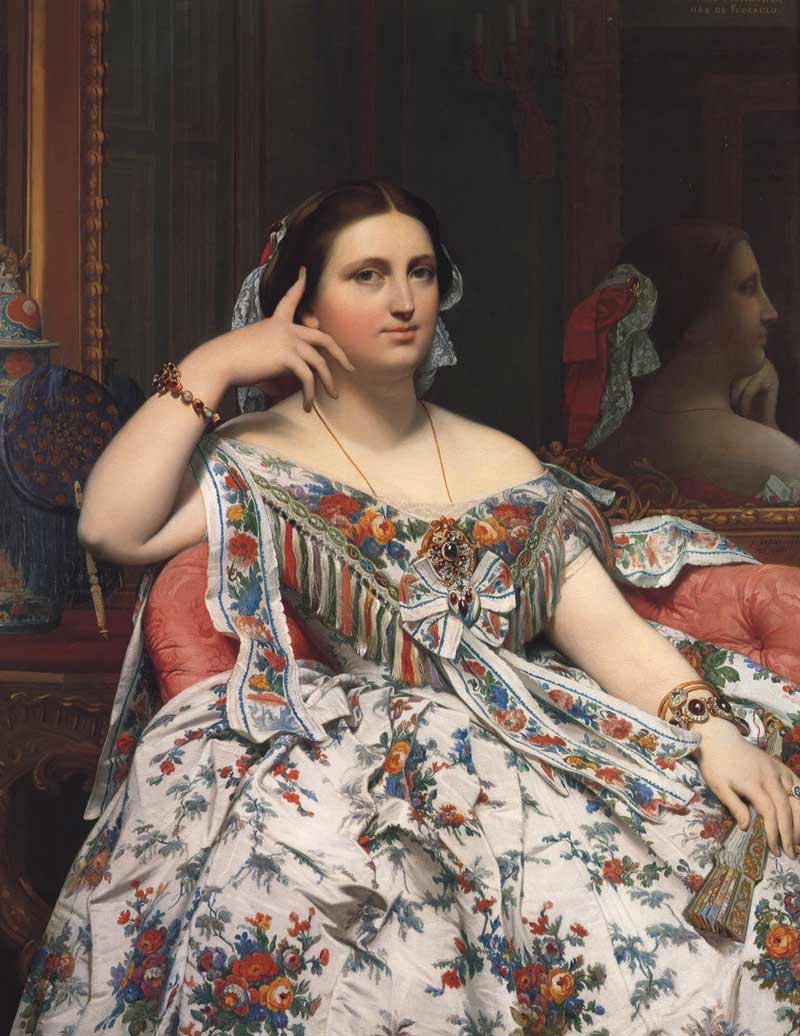
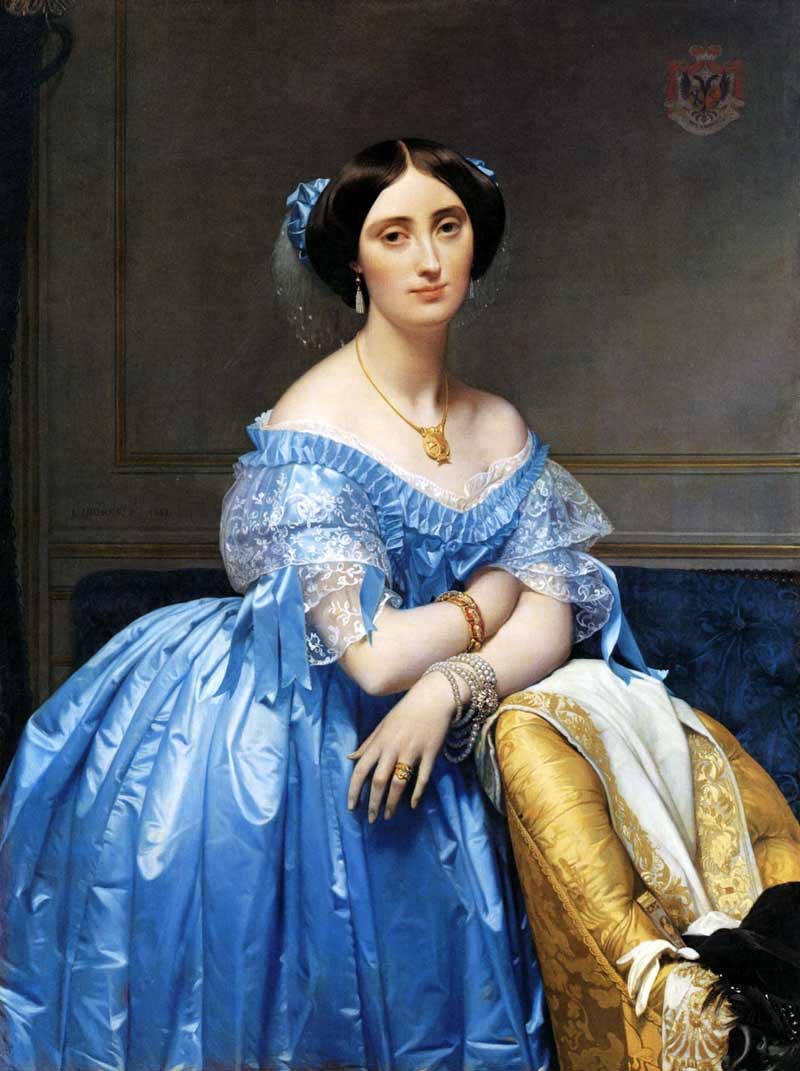
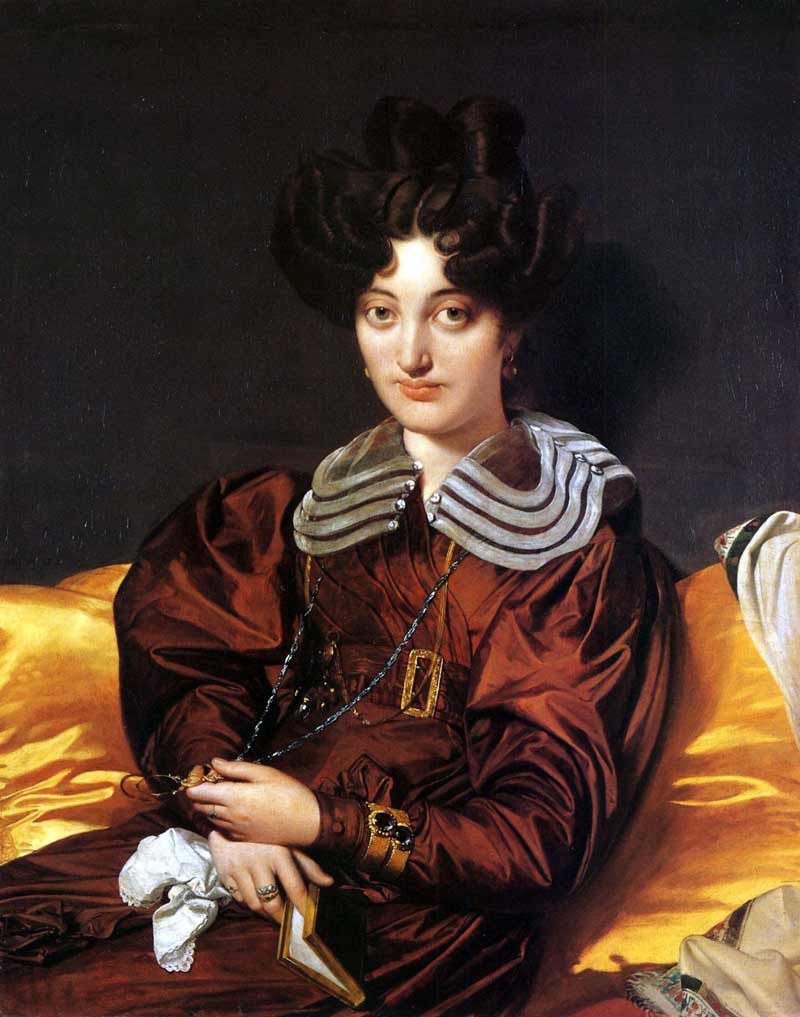
His painted portraits represent aristocrats, officials, wealthy families, cultural figures, and members of European society with extraordinary precision.
Clothing, jewelry, fabrics, furniture, skin, hair, and objects are rendered with almost obsessive attention.
Yet the portraits never become simple inventories of wealth.
Ingres could reveal personality through posture, hands, facial tension, and subtle spatial relationships.
The sitter may appear elegant while also guarded, ambitious, nervous, intelligent, distant, or self-conscious.
His portrait of Edmond Cavé, for example, was carefully constructed from a preparatory drawing transferred onto canvas, demonstrating how seriously Ingres controlled likeness and composition. (The Metropolitan Museum of Art)
Drawing was central to this process.
Ingres produced numerous graphite portraits that are among the most refined drawings of the nineteenth century.
These works frequently describe a face with careful precision while reducing clothing and background to lighter, more economical lines.
The contrast focuses attention on identity.
His portrait drawing of Niccolò Paganini demonstrates the precision of this method. The Met’s research shows how Ingres reused and transferred drawings, revealing a disciplined workshop process rather than purely spontaneous observation.
Many of these drawings were created during his years in Rome, when portrait commissions provided important income.
Ingres sometimes regarded portraiture as less prestigious than history painting, yet portraits eventually became one of the strongest foundations of his reputation.
This tension is important. The work he valued most highly according to academic hierarchy was not necessarily the work later audiences admired most.
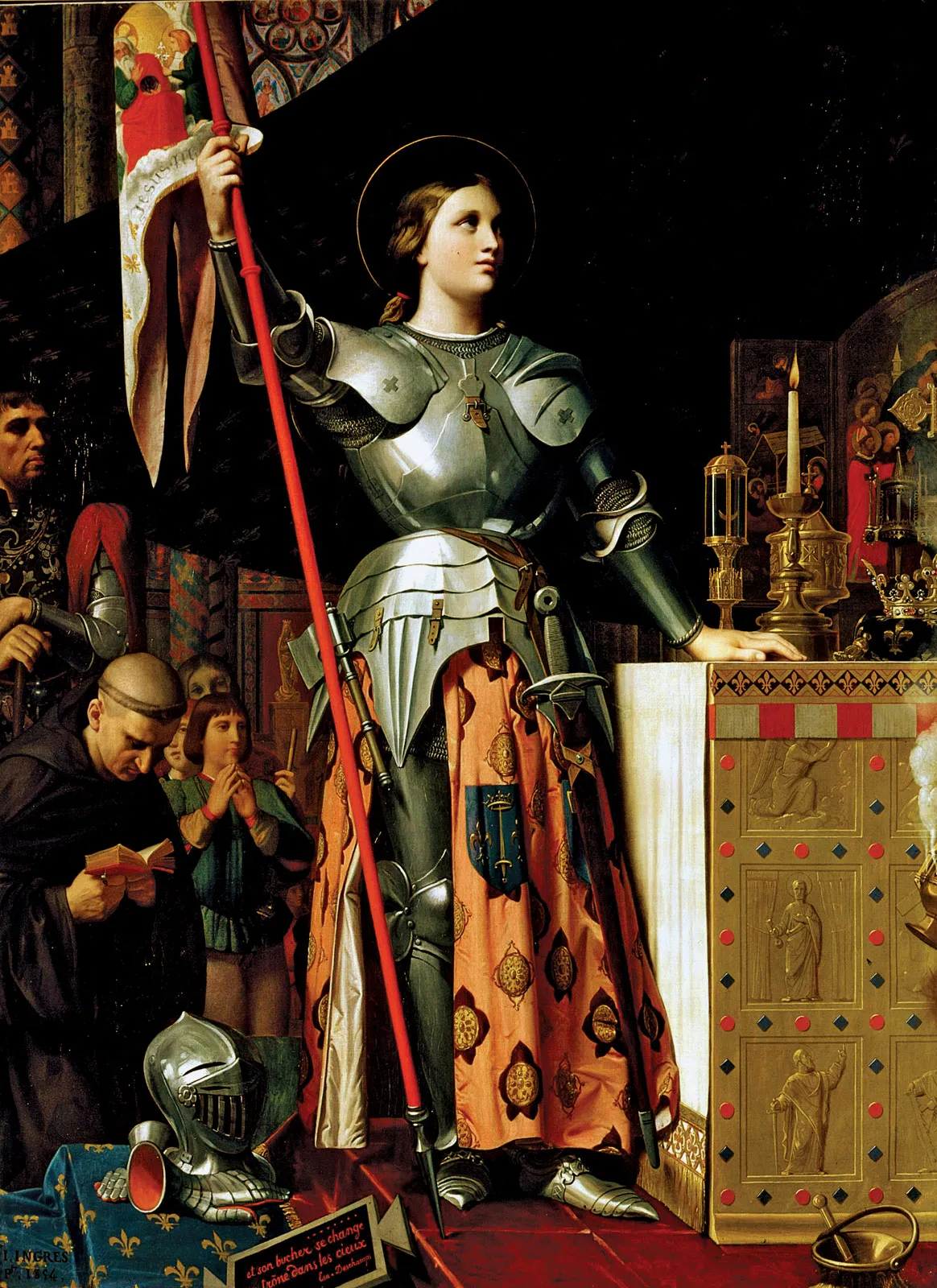
Ingres wanted recognition as a major history painter.
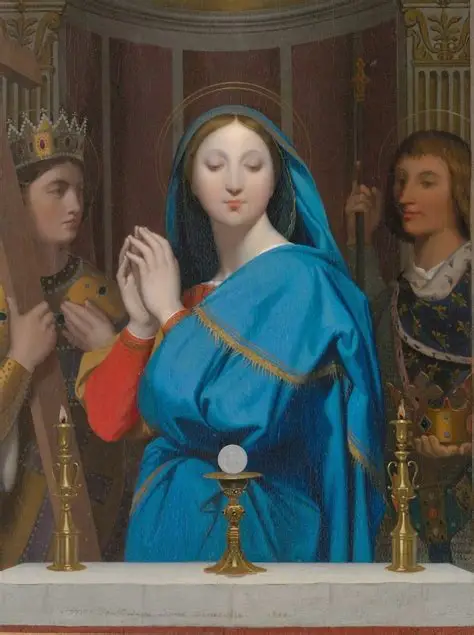
Religious and mythological subjects offered him the opportunity to position himself within the tradition of Raphael and classical art.
Works such as The Apotheosis of Homer present history as a highly ordered hierarchy of cultural achievement.
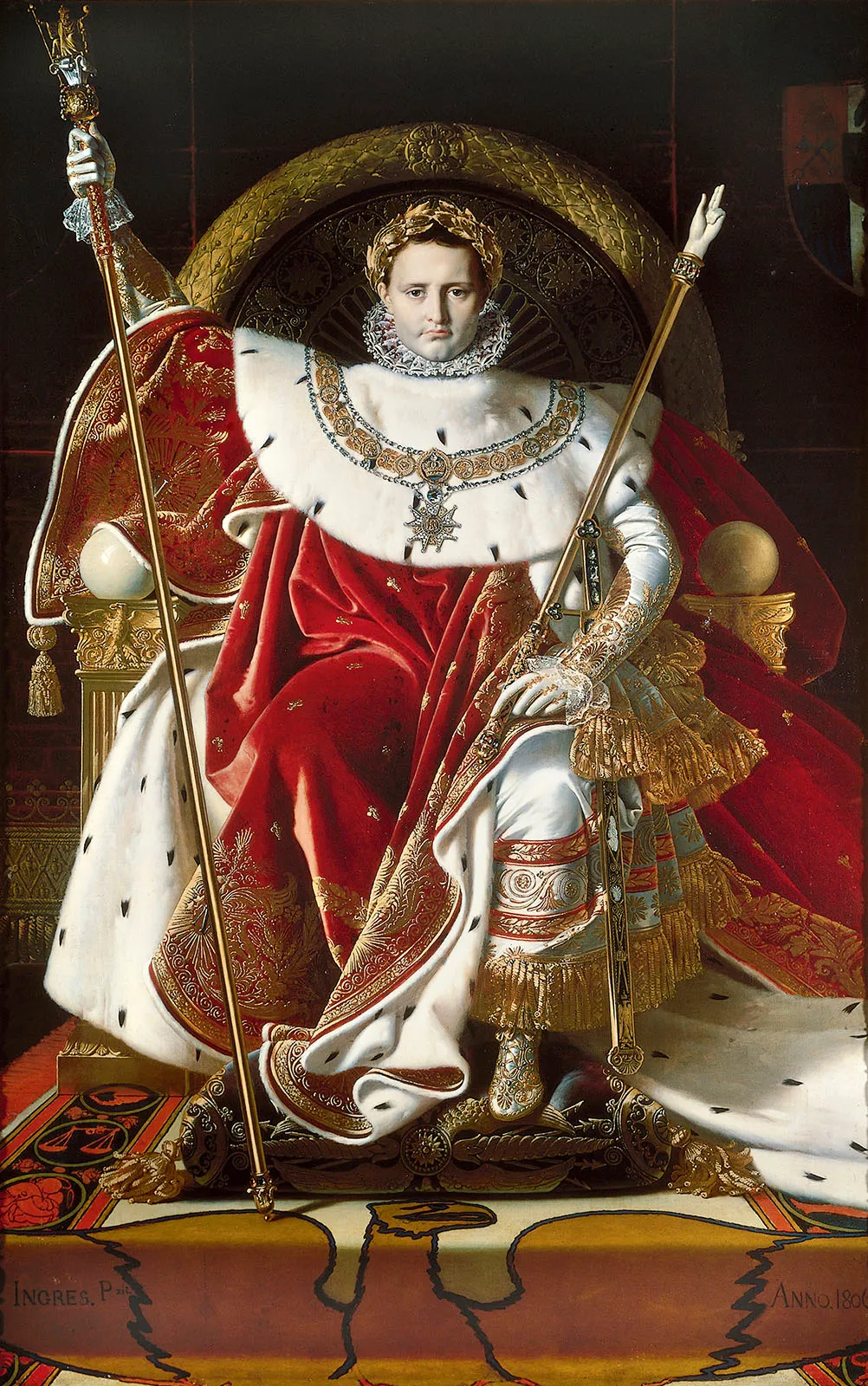
Homer occupies the center surrounded by figures representing literature, art, philosophy, and intellectual civilization.
The painting expresses Ingres’s belief that great culture develops through continuity with the past.
Yet some of his most memorable historical compositions are powerful precisely because they depart from conventional naturalism.
Bodies bend into improbable shapes. Space becomes shallow. Figures can appear frozen like sculpture while simultaneously radiating sensuality.
Ingres’s fascination with the female nude continued across his entire career.
The Turkish Bath, completed late in his life, gathers numerous female figures within a circular composition.
The bodies twist, recline, embrace, play music, and interact through repeated curves.
Rather than constructing realistic depth, Ingres compresses the figures into an ornamental field.
The work combines decades of anatomical study with deliberate distortion.
A shoulder, arm, back, or leg may be extended because its line contributes to the rhythm of the composition.
This ability to transform anatomy into design became extraordinarily influential.
Artists as different as Edgar Degas, Pablo Picasso, Henri Matisse, and later modernists recognized qualities in Ingres that exceeded traditional academic conservatism. The Met specifically identifies Cézanne, Degas, Matisse, and Picasso among the artists influenced by his legacy.
Ingres’s relationship with music provides another important dimension of his personality.
He was an accomplished amateur violinist. The French phrase violon d’Ingres eventually came to mean a serious secondary passion or hobby.
Music and drawing shared qualities that mattered deeply to him: discipline, rhythm, precision, balance, and controlled variation.
His portraits often include cultural references through musical instruments, books, textiles, and interiors.
These objects help define social identity while contributing to the geometry of the image.
Ingres eventually became one of the most powerful figures within the French academic establishment.
He served as director of the French Academy in Rome and received major honors during his lifetime.
For younger artists, this made him both an admired master and a symbol of institutional authority.
Yet the history of modern art complicated that reputation.
The very qualities once criticized as unnatural became increasingly important to later generations.
His unnaturally long bodies anticipated modern distortion. His smooth surfaces influenced photography and fashion imagery. His compressed interiors and radical curves became useful to painters who had little interest in academic ideology.
Ingres died in Paris in 1867 after a career extending across more than six decades.
The art world he left behind was already changing rapidly. Realism, photography, and new approaches to contemporary life challenged the hierarchies he had defended.
Yet Ingres did not disappear with the academic system.
His drawings continued to influence artists because of their clarity and economy.
His portraits remained psychologically compelling.
His nudes became increasingly relevant to modern discussions of distortion, gaze, idealization, and the constructed body.
At ArtExpoWorld, we consider Jean-Auguste-Dominique Ingres one of the most fascinating contradictions in nineteenth-century art.
He defended tradition while producing images that later modernists found surprisingly radical.
He pursued anatomical perfection while deliberately altering anatomy.
He valued history painting but achieved some of his greatest successes through portraits.
Ingres demonstrates that innovation does not always appear in the form of rebellion. Sometimes it enters through the smallest deviations inside an apparently traditional system.
A spine becomes too long. A shoulder moves slightly out of place. A line continues farther than nature would allow.
Through these controlled departures, Jean-Auguste-Dominique Ingres transformed classical elegance into something personal, strange, and enduringly modern.