








Caravaggio was one of the most revolutionary painters in European art history. Born Michelangelo Merisi in Milan in 1571, he transformed religious and mythological painting through radical realism, dramatic lighting, psychologically immediate figures, and an uncompromising interest in the physical world. His influence spread rapidly across Europe and helped shape the development of Baroque painting.
The name Caravaggio comes from the Lombard town associated with his family. He trained in Milan before moving to Rome in the early 1590s, entering a competitive artistic environment filled with churches, wealthy collectors, cardinals, aristocrats, workshops, and ambitious painters seeking patronage.
His early years in Rome were difficult. Caravaggio produced relatively small paintings of musicians, card players, fortune tellers, fruit, and young men while gradually attracting important collectors.
Even these early works reveal characteristics that would define his career. He preferred ordinary models rather than idealized bodies and paid extraordinary attention to physical detail. Dirty fingernails, bruised fruit, wrinkles, worn clothing, and imperfect skin could remain visible.
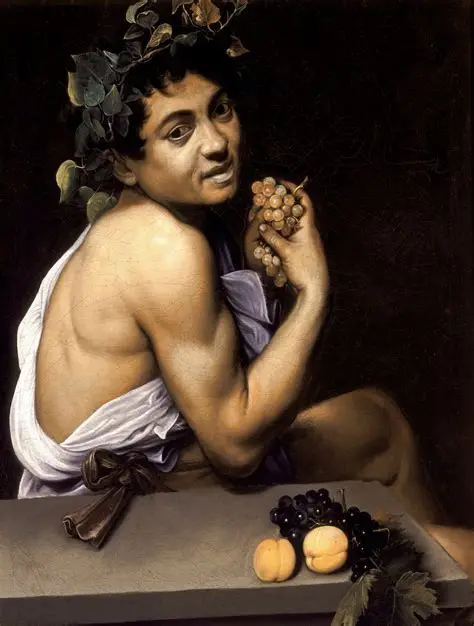
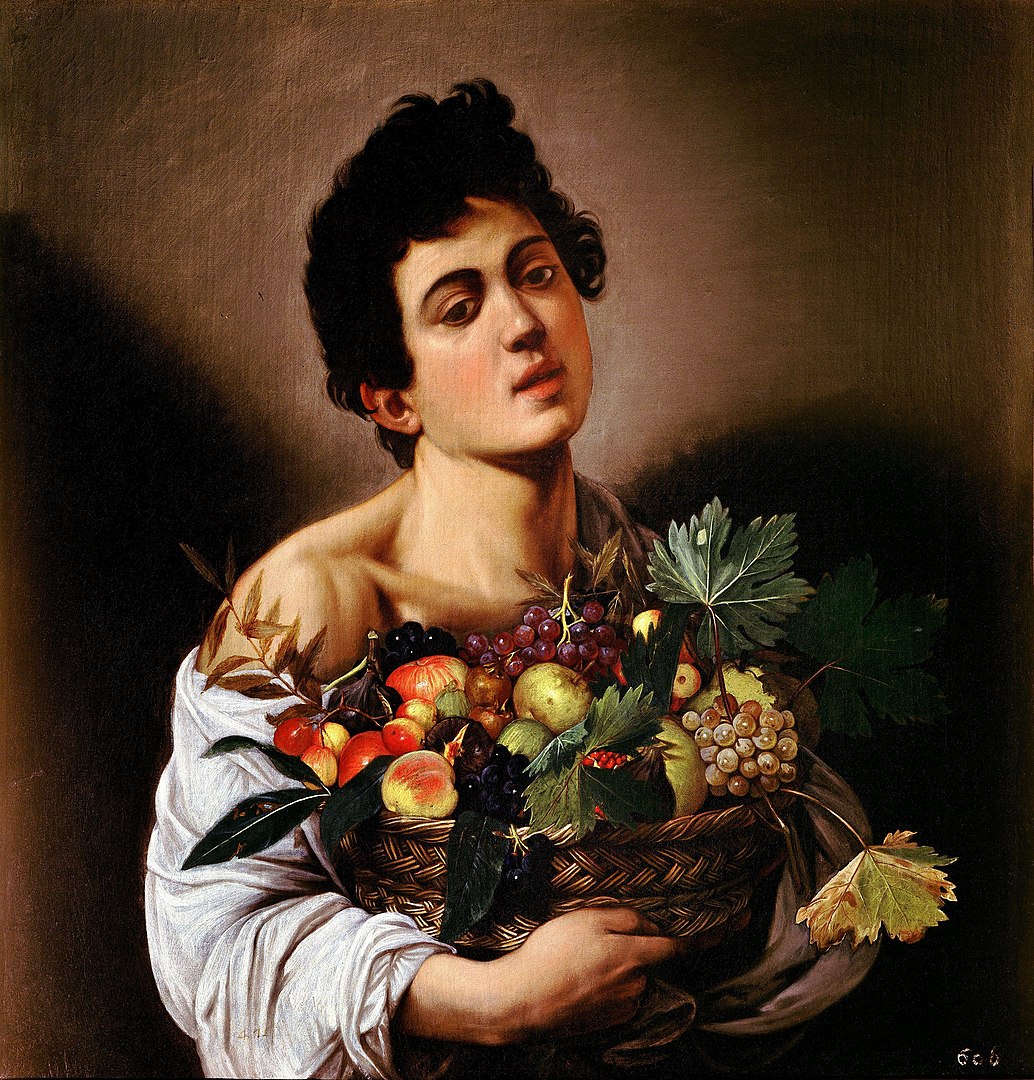
Boy with a Basket of Fruit demonstrates his remarkable ability to combine portrait-like human presence with still-life observation. Grapes, leaves, figs, apples, and other fruits possess the same physical importance as the young figure carrying them.
Caravaggio’s Basket of Fruit became one of the foundational still lifes of European painting. Fruit appears ripe but imperfect. Leaves dry, surfaces become damaged, and decay begins to enter the image.
Beauty and mortality coexist within an apparently simple basket.
This commitment to observable reality became controversial when Caravaggio began receiving major religious commissions.
Church art traditionally represented saints and biblical figures with idealized dignity. Caravaggio instead used models who could resemble people encountered in Roman streets, taverns, markets, and working-class neighborhoods.
Sacred history suddenly appeared physically present.
The Contarelli Chapel commission in San Luigi dei Francesi transformed his career. Paintings devoted to Saint Matthew demonstrated that monumental religious art could combine theatrical drama with startling realism.
The Calling of Saint Matthew became one of his defining masterpieces. Christ enters a dark room where men sit around a table counting money. A beam of light crosses the composition and visually reinforces Christ’s gesture toward Matthew.
The setting resembles Caravaggio’s own contemporary Rome rather than ancient biblical history.
This collapse of historical distance is essential. The religious event does not appear safely contained in the past. It seems capable of happening inside an ordinary room.
Light becomes both physical and symbolic.
Caravaggio’s dramatic use of intense illumination against deep darkness is often associated with tenebrism. Figures emerge from shadow while large areas remain almost completely black.
The technique directs attention with extraordinary precision.
A face, hand, sword, wound, or gesture can suddenly become the emotional center of the entire composition.
Yet darkness does more than create theatrical drama. It removes unnecessary surroundings.
The viewer cannot escape into elaborate architecture or decorative landscape.
Human action becomes unavoidable.
Caravaggio’s religious figures possess physical weight. Feet become dirty. Bodies become heavy. Blood appears real. Grief changes faces. Death produces actual physical consequences.
This realism made some patrons uncomfortable.
Several works were rejected or replaced because commissioners considered them inappropriate for religious settings.
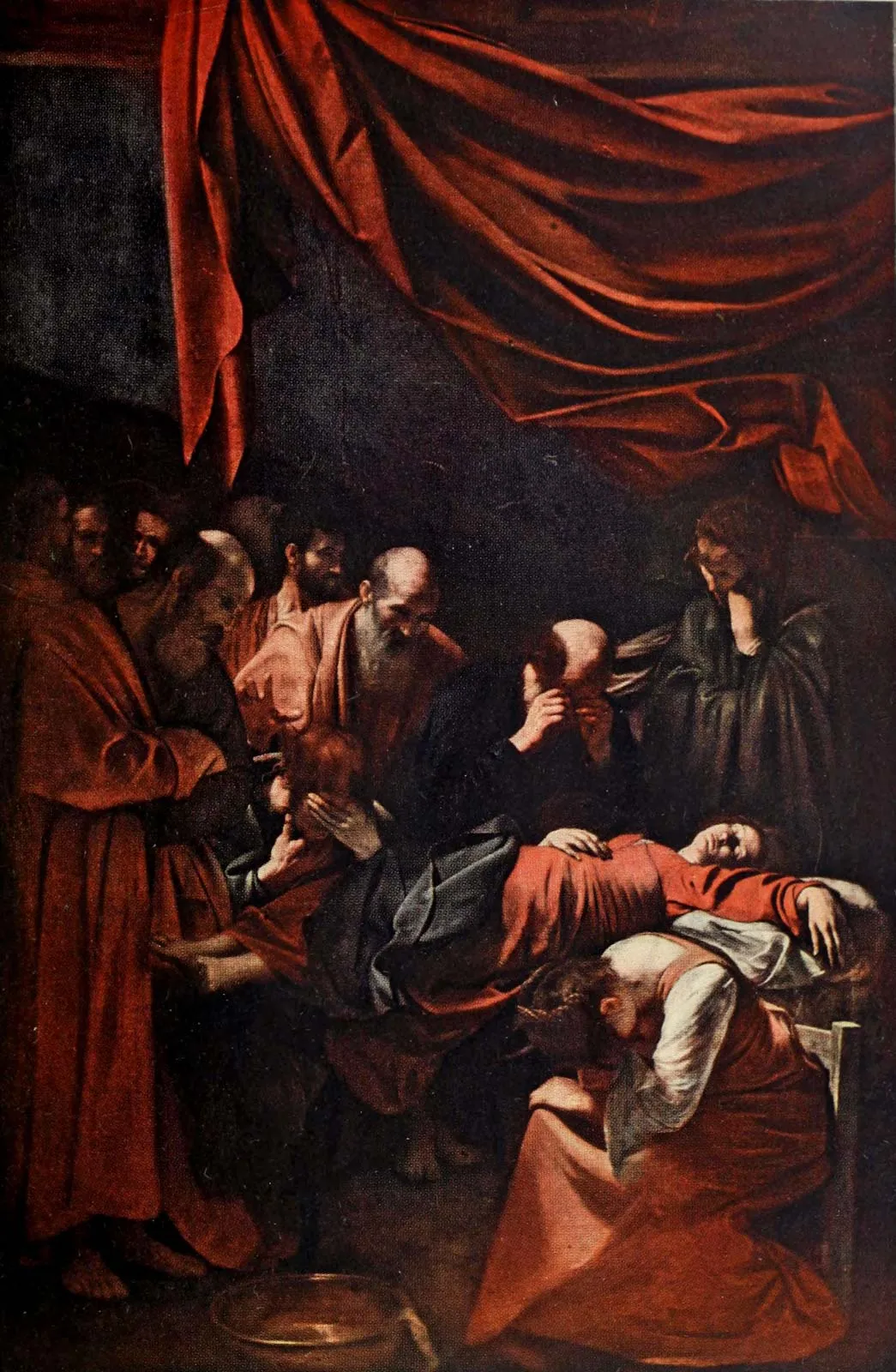
The Death of the Virgin became one of the most famous examples. Mary’s body is presented with disturbing physical reality rather than conventional spiritual idealization. Her swollen body lies heavily within the room while mourners gather around her.
The painting’s emotional force comes from its recognition that grief is physical.
People bend.
They cover their faces.
They sit exhausted.
Caravaggio transforms sacred mourning into recognizable human experience.
Violence became another central subject.
Judith cuts the throat of Holofernes.
David holds the severed head of Goliath.
Saints suffer martyrdom.
People are stabbed, beheaded, crucified, or threatened.
These scenes are not elegant theatrical illustrations. Caravaggio emphasizes the moment when violence becomes physically irreversible.
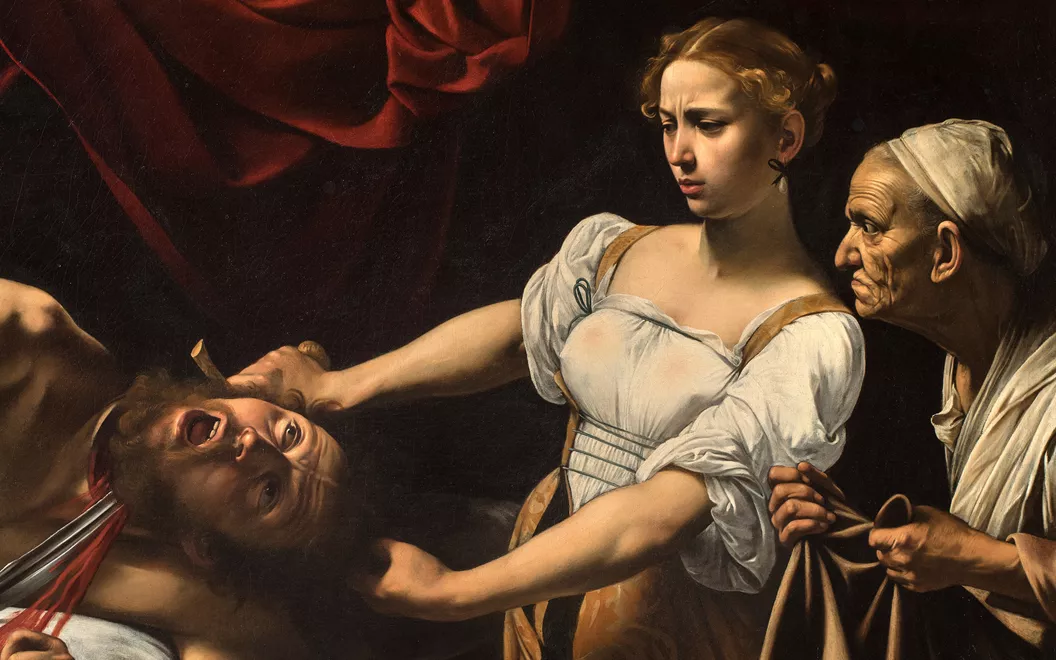
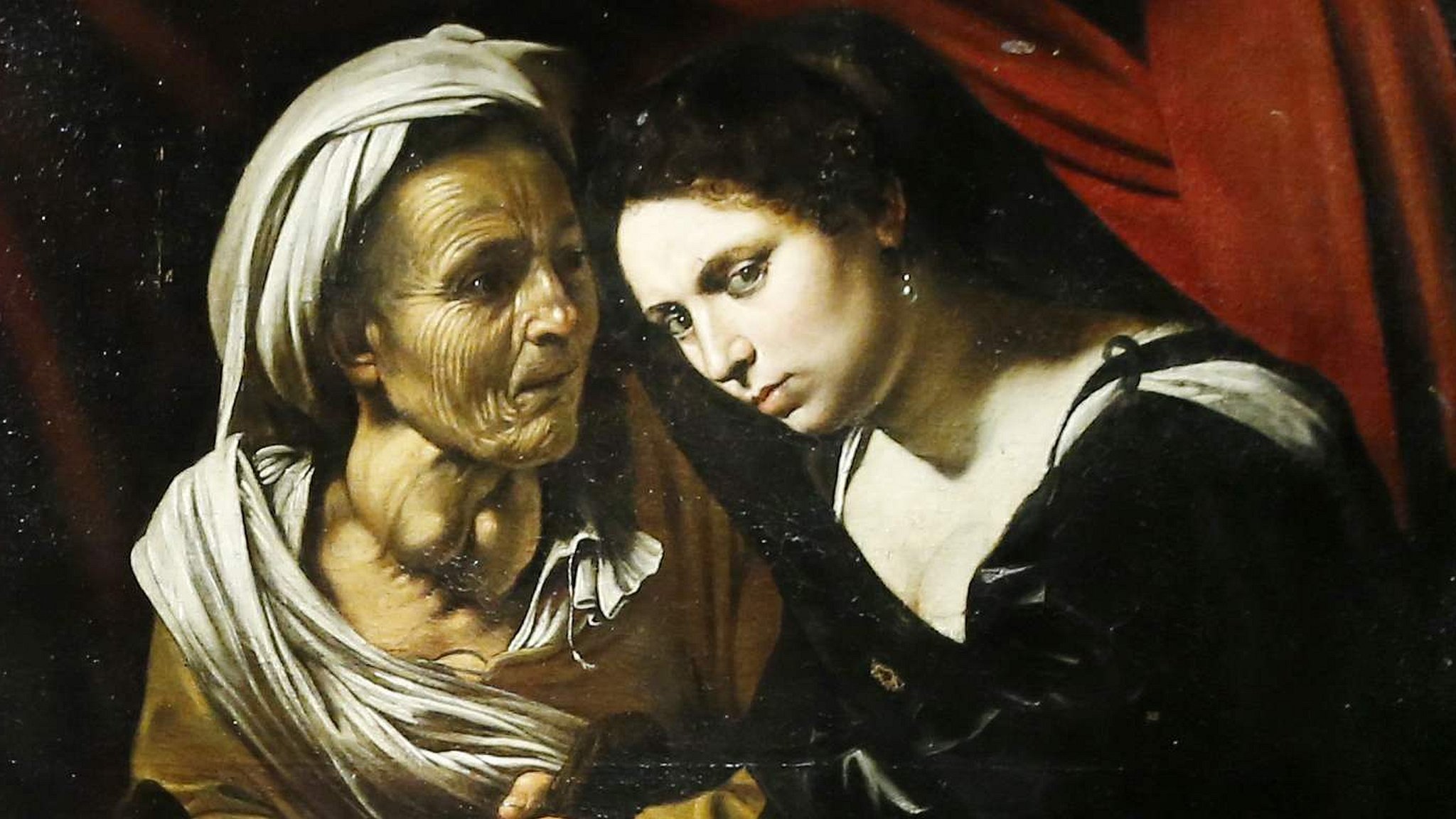
Judith Beheading Holofernes demonstrates this approach perfectly. Judith leans backward slightly while cutting through Holofernes’s neck. Her expression combines determination and revulsion. The maid watches closely, prepared to assist.
Blood moves across the composition while the dark background eliminates distraction.
The scene is horrific but psychologically complex.
Caravaggio does not transform Judith into a simple heroic machine. Her body communicates the difficulty of the act.
His personal life became almost as dramatic as his paintings.
Archival records document numerous disputes, arrests, weapons offenses, insults, and violent confrontations. Caravaggio moved through a social world in which artists, patrons, prostitutes, soldiers, servants, criminals, and aristocrats frequently overlapped.
In 1606, a violent confrontation resulted in the death of Ranuccio Tomassoni. Caravaggio fled Rome under a death sentence.
The remaining years of his life became a continuous movement through Naples, Malta, Sicily, and back toward Naples as he sought powerful patrons and attempted to secure a papal pardon.
Exile changed his paintings.
The compositions often became darker and more psychologically severe. Figures occupy increasingly empty spaces, and the relationship between violence, guilt, mercy, and death becomes more intense.
In Malta, Caravaggio joined the Knights of Malta and produced The Beheading of Saint John the Baptist, his largest surviving painting and the only known work he signed.
The signature appears in the painted blood beneath the saint’s body.
The composition is unusually spacious. Much of the scene consists of architecture and emptiness while the execution occurs low within the image.
The violence feels almost disturbingly quiet.
Caravaggio’s own situation in Malta soon collapsed after another confrontation. He was imprisoned, escaped, and was expelled from the order.
His journey continued through Sicily, where he produced major religious paintings characterized by enormous dark spaces and increasingly vulnerable human figures.
Returning to Naples, he continued working while attempting to negotiate his return to Rome.
In 1610, believing that a pardon might be near, Caravaggio travelled north. The exact sequence of his final journey remains historically complicated, but he died near Porto Ercole at approximately thirty-eight years old.
His career had lasted less than two decades.
Its impact was enormous.
Artists throughout Italy and northern Europe adopted aspects of his realism and dramatic lighting. The international followers influenced by his work became known broadly as Caravaggisti.
Artemisia Gentileschi, Orazio Gentileschi, Jusepe de Ribera, Georges de La Tour, Gerrit van Honthorst, and numerous others developed different possibilities from the territory Caravaggio opened.
His influence also extended indirectly toward Rembrandt, Velázquez, and later traditions of dramatic figurative painting.
Yet Caravaggio’s reputation declined during subsequent centuries. Critics often considered his realism crude compared with more idealized classical traditions.
The twentieth century brought a major reassessment.
Modern audiences recognized that his paintings possessed extraordinary cinematic qualities. Strong directional light, close physical action, dark backgrounds, cropped compositions, and psychologically intense moments resemble techniques later fundamental to photography and film.
Contemporary photographers and filmmakers continue to use «Caravaggesque» lighting as a recognizable visual concept.
His art also remains modern because it eliminates the comfortable distance between sacred subject and ordinary viewer.
Saints have dirty feet.
A biblical execution looks physically possible.
A divine calling enters a room resembling a tavern.
Religion becomes embodied.
At ArtExpoWorld, we consider Caravaggio one of the artists who permanently changed the relationship between art and reality.
He understood that idealization is not the only route toward spiritual intensity. Sometimes imperfection makes an image more powerful.
A saint can look like an ordinary person and become more emotionally convincing because of it.
Darkness can make light meaningful.
Violence can reveal vulnerability.
Physical reality can carry spiritual meaning without being disguised.
Caravaggio’s paintings remain extraordinary because they still feel immediate. More than four centuries separate contemporary viewers from the people he painted, yet his figures do not seem safely historical.
They breathe, bleed, doubt, fear, suffer, and look directly into the same darkness we occupy.
That immediacy is Caravaggio’s revolution.