









Edvard Munch was a Norwegian painter and printmaker whose images of anxiety, desire, loneliness, illness, jealousy, and death helped define the emotional language of modern art. Born in 1863, Munch worked for more than sixty years and became one of the most important figures connecting late nineteenth-century Symbolism with the emergence of Expressionism. His paintings do not simply describe people or places. They transform psychological experience into color, line, rhythm, and atmosphere.
Munch grew up in Kristiania, now Oslo, in a family marked by illness and loss. His mother died from tuberculosis when he was five, and his older sister Sophie later died from the same disease. Munch himself experienced serious illness during childhood and often spent long periods at home, where drawing became increasingly important. At seventeen, he decided to become a painter.
These early experiences did not mechanically determine his later art, but themes of sickness, grief, separation, and fear recur throughout his career. Munch repeatedly returned to memories rather than treating a painting as the record of one isolated moment.
One of his most important early works, The Sick Child, grew from memories of his sister Sophie. The painting shows a pale girl sitting upright in bed while an older woman bends beside her. Munch repeatedly reworked the composition and produced several versions over many years.
The surface is deliberately unstable. Scraped paint, visible strokes, and softened forms prevent the scene from becoming polished academic realism. Instead, the painting communicates memory as something fragmented, painful, and continuously reconstructed.
Munch became increasingly dissatisfied with conventional realism during the 1880s. He wanted art to address inner states rather than simply reproduce visible appearances.
His contact with artistic circles in Kristiania exposed him to writers, critics, and bohemian intellectuals who challenged bourgeois morality. Trips to Paris introduced him to Post-Impressionism, Symbolism, and the work of artists who used color and structure more freely.
By the 1890s, Munch had developed the group of themes that became known as The Frieze of Life. Love, desire, jealousy, anxiety, separation, and death were treated as interconnected stages of human experience.
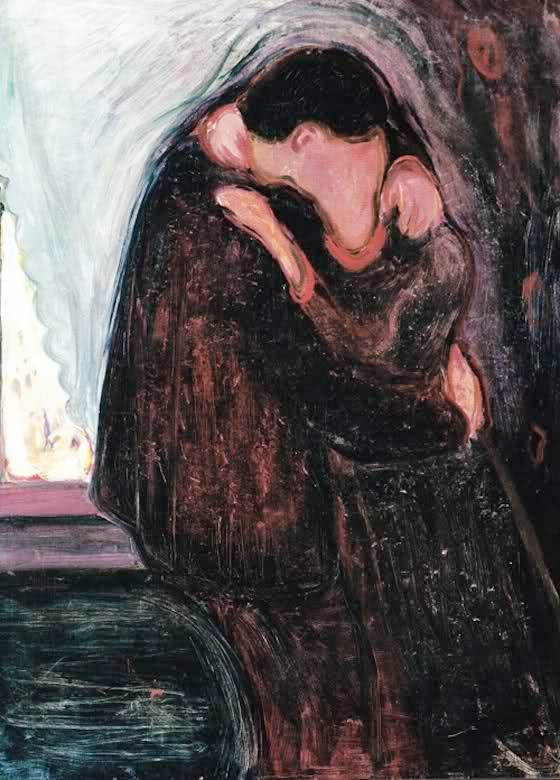
Works such as The Kiss, Madonna, Vampire, Jealousy, Melancholy, and The Dance of Life belong to this larger psychological universe. The same emotional situations return in different versions, techniques, and compositions.
Munch did not consider repetition a sign that an idea had been exhausted. Revisiting an image allowed him to test how its meaning changed through color, scale, material, and memory.
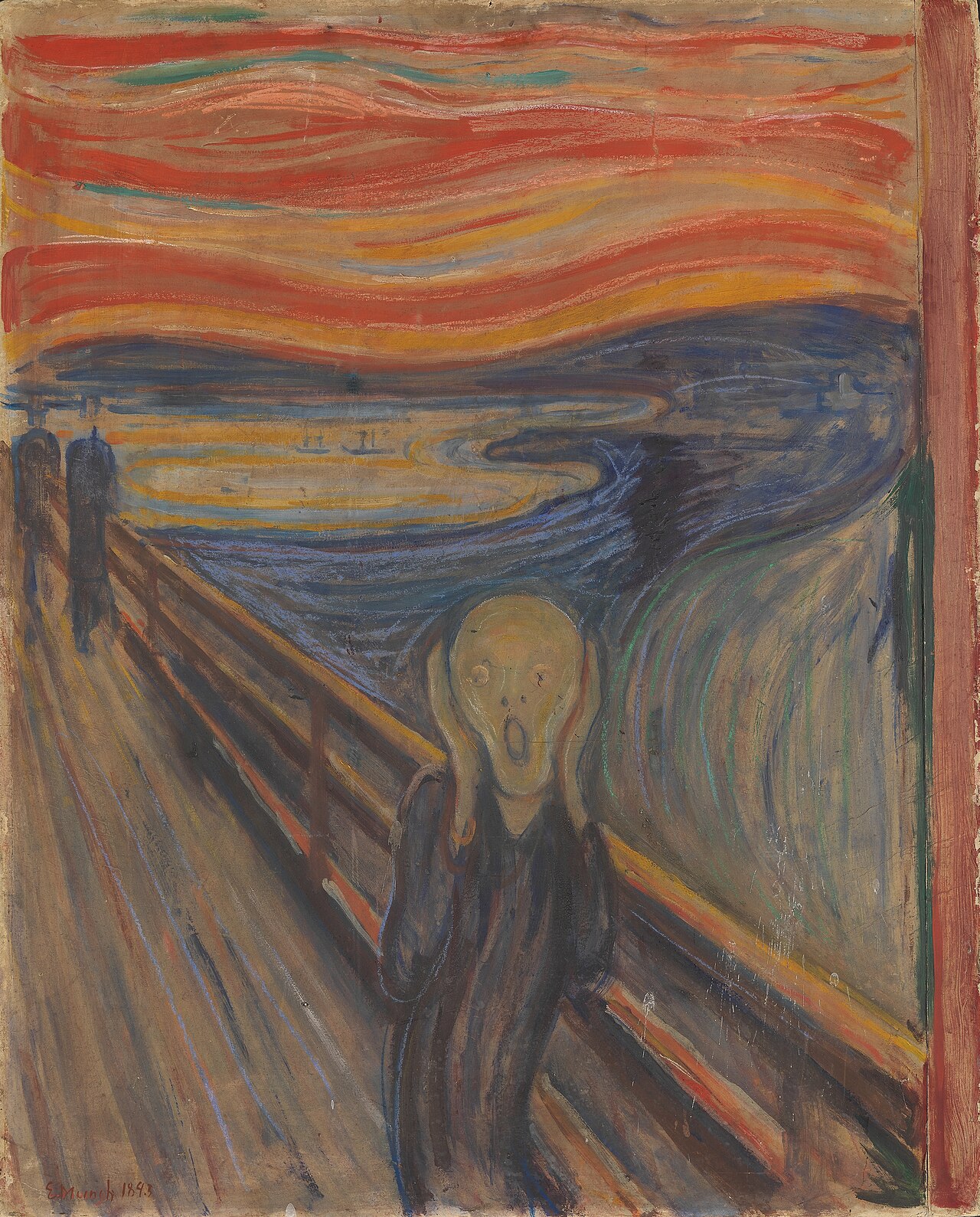
This approach is particularly visible in The Scream, the image that became his most internationally recognized work.
A figure stands on a bridge beneath an intensely curved sky, pressing its hands against the sides of its head. Two distant figures walk away while the landscape appears to vibrate around the central body.
The figure is highly simplified. Its skull-like head, open mouth, and flowing outline make it difficult to identify by age or gender. It becomes less an individual portrait than a visual embodiment of overwhelming anxiety.
The landscape is equally important. Roads, water, sky, and human figure are connected through repeating curves. The entire world appears to participate in the emotional crisis.
Munch created several versions of The Scream using paint, pastel, and printmaking. The existence of multiple versions reinforces his interest in recurring states rather than one definitive original.
Color is central to his emotional language. Red skies, dark coastlines, green faces, blue shadows, and unnatural contrasts are used to intensify mood rather than imitate optical reality.
This deliberate distortion helped establish a path toward Expressionism.
Later artists recognized that a painting did not need to remain visually naturalistic in order to communicate emotional truth.
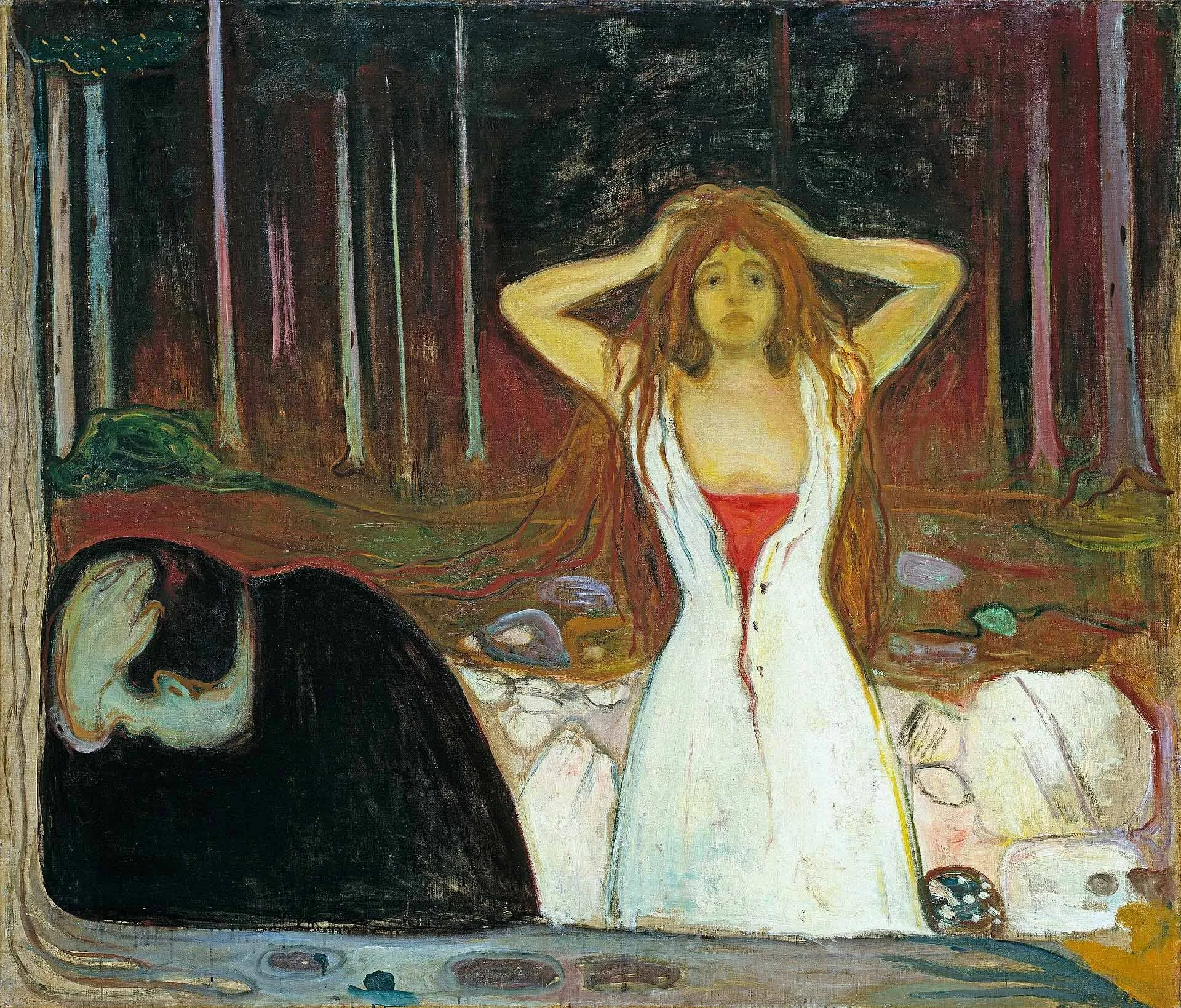
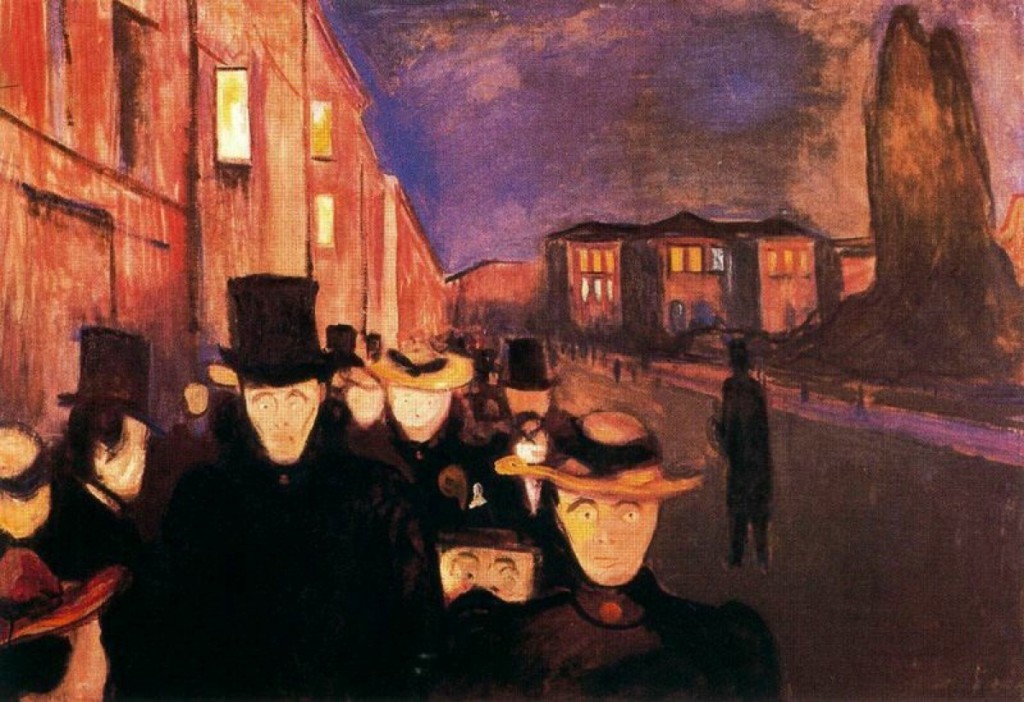
Munch’s figures often appear isolated even when they are together. Couples embrace so closely that individual faces disappear. Groups stand beside one another without genuine connection. A person may occupy a crowded street while feeling completely alone.
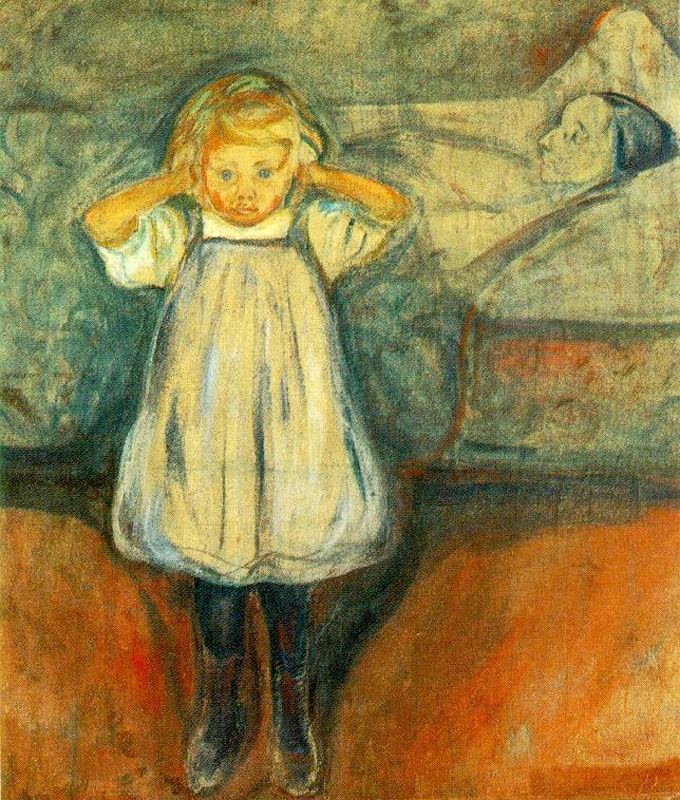
These images helped establish one of the defining subjects of modern art: the psychological isolation of the individual within contemporary society.
Urban life appears frequently in Munch’s work. Streets, cafés, hotel rooms, theatres, railway stations, and public spaces become emotionally charged environments.
In Evening on Karl Johan Street, a crowd advances toward the viewer. The figures are formally dressed, but their pale faces resemble masks. Their social order produces unease rather than security.
Munch also transformed portraiture. Writers, artists, friends, collectors, and members of his own circle are depicted with expressive color and simplified form. He was less interested in flattering likeness than in revealing psychological presence.
Self-portraiture remained important across his entire career. Munch represented himself as young artist, lover, patient, aging man, and isolated observer. These works create a visual record of changing identity rather than one fixed image of the self.
Printmaking allowed him to experiment with repetition and variation in a different medium. He worked with lithography, etching, and woodcut, often translating major painted subjects into graphic form.
His woodcuts are especially distinctive. Munch sometimes used the natural grain of the wood as part of the image, allowing physical material to interact with the composition.
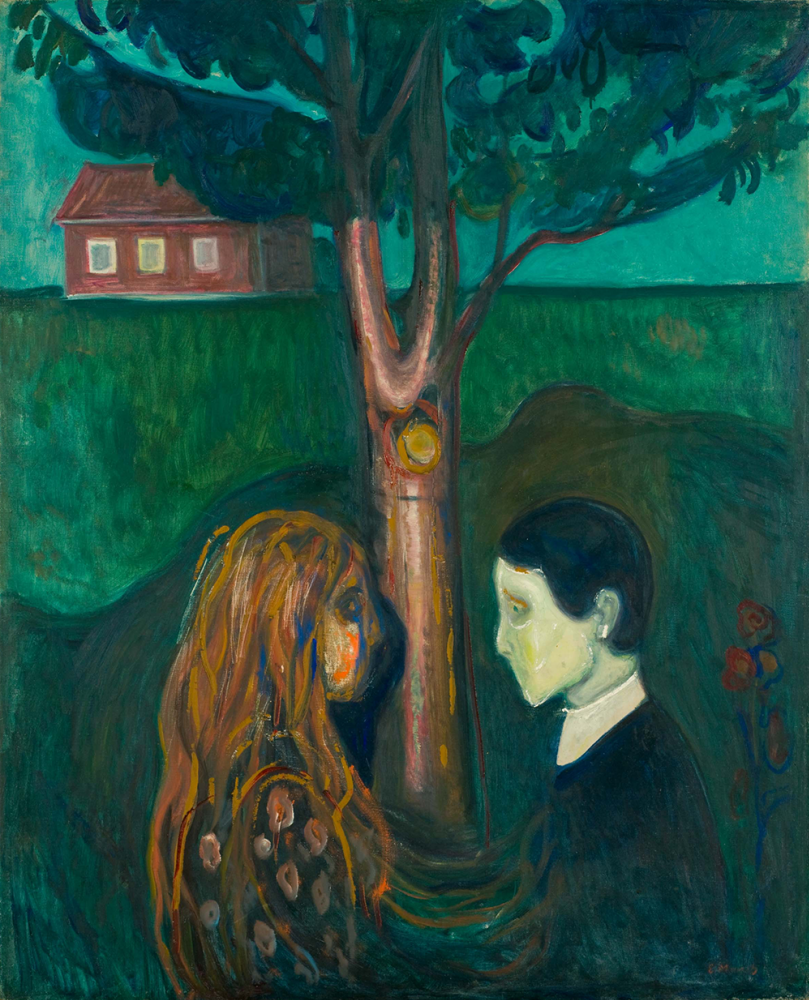
He also cut printing blocks into separate sections so that different parts could be inked with different colors before being reassembled. This method introduced controlled variation into repeated images.
Photography and film interested him as well. MUNCH describes his practice as extending beyond painting and graphic art into sculpture, photography, and film, demonstrating how broadly he experimented with modern image-making.
His relationship with exhibitions was often turbulent. An exhibition in Berlin in 1892 was closed shortly after opening because of controversy surrounding the work. The scandal increased his visibility and connected him with German artists who later helped develop Expressionism.
Munch’s personal life included intense relationships, conflicts, heavy drinking, and periods of psychological instability. In 1908, after a serious crisis, he entered a clinic in Copenhagen.
After treatment, his work changed in important ways. The palette often became brighter, and public commissions, portraits, landscapes, and scenes of physical labor gained greater importance.
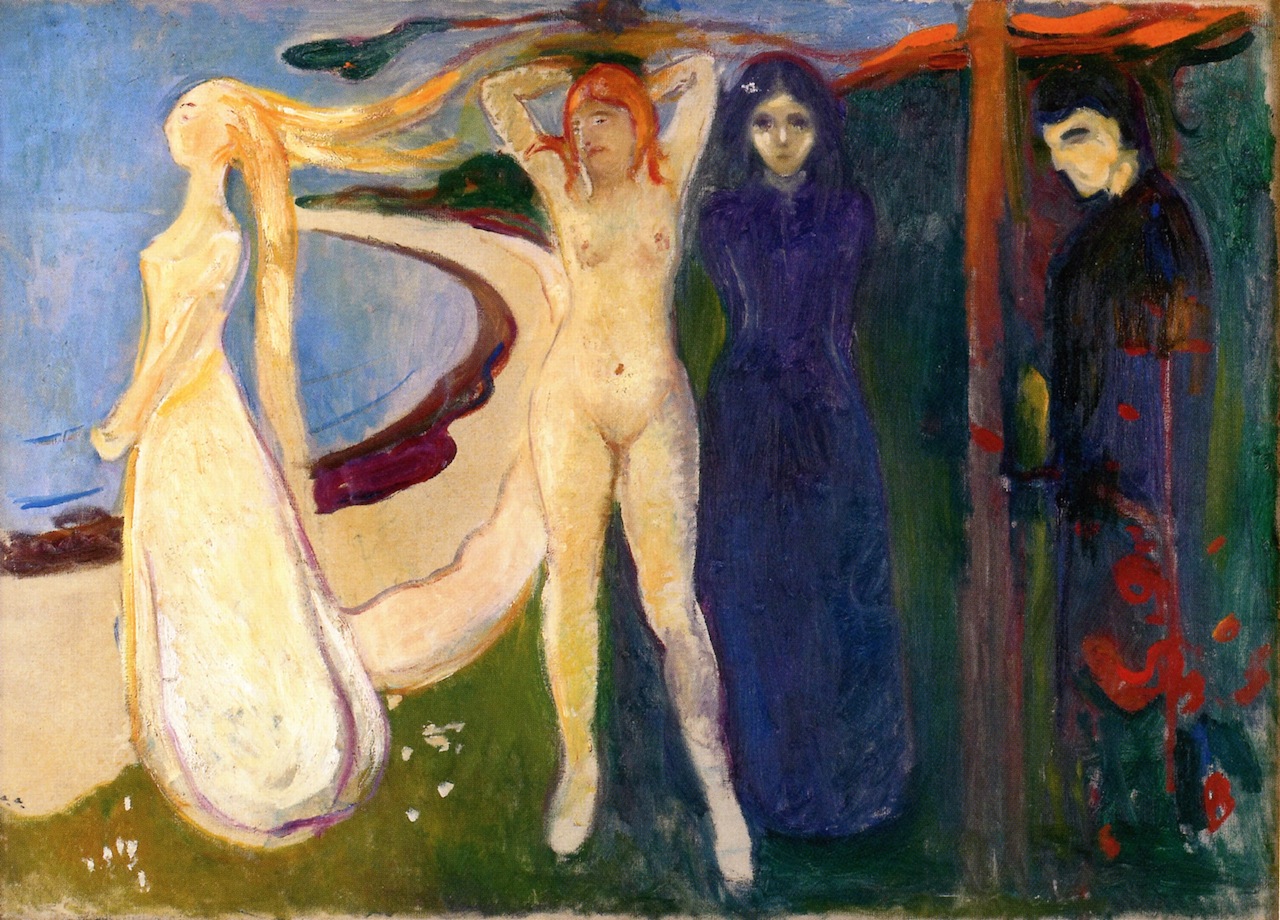
His monumental decorations for the University of Oslo include The Sun, an enormous image in which radiant light expands outward across mountains and sea.
The painting is very different from the claustrophobic atmosphere associated with his earlier work. Yet the same interest in fundamental emotional forces remains.
Nature could represent fear, desire, vitality, isolation, or renewal depending on the context.
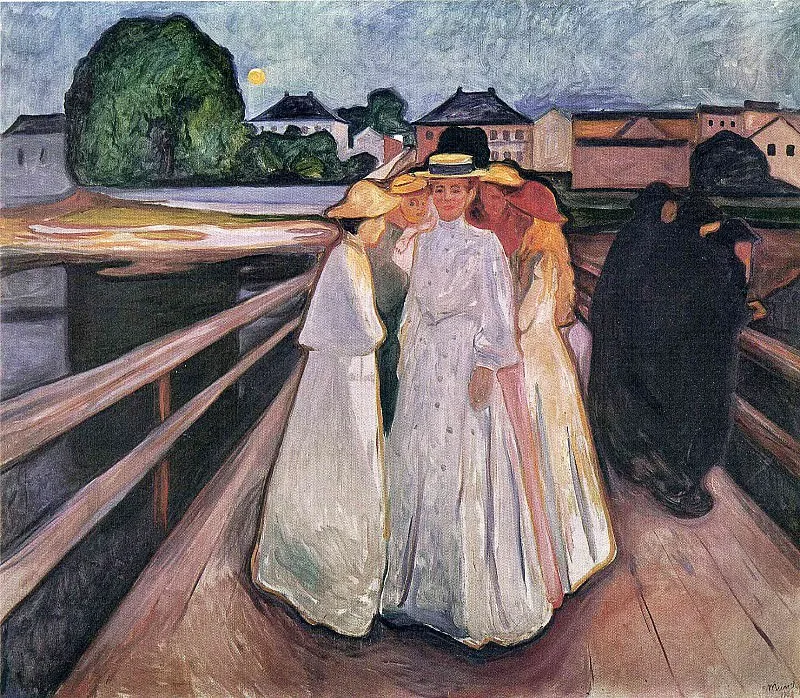
During his later years, Munch lived and worked at Ekely outside Oslo. He continued painting until his death in 1944. By then, his art had already become fundamental to international modernism.
His influence extends through German Expressionism, figurative painting, printmaking, cinema, photography, graphic design, and contemporary psychological art.
The extraordinary familiarity of The Scream can sometimes obscure the scale of his achievement. Munch was not the painter of one famous image. He developed a complete visual system for representing unstable emotional experience.
At ArtExpoWorld, we consider Edvard Munch one of the artists who most decisively moved painting from external observation toward psychological reality.
His figures remain powerful because they do not explain emotion. They embody it.
Love can become physical fusion. Anxiety can distort the landscape. Jealousy can change color. Illness can dissolve the surface of a painting.
Edvard Munch demonstrated that modern art could represent invisible states with the same seriousness earlier painters had given to history, religion, and mythology. His work remains relevant because fear, desire, loneliness, and the need for human connection have not become historical subjects. They remain part of the present.