





Georgia O’Keeffe was one of the defining artists of American modernism. Known for her monumental flowers, desert landscapes, animal bones, city views, and abstract compositions, she developed a visual language based on close observation, simplified form, and an intense sensitivity to color. Her paintings transformed familiar subjects into images that feel both physical and mysterious.
Born in Wisconsin in 1887, O’Keeffe grew up in a farming family and decided at an early age that she wanted to become an artist. She studied at the School of the Art Institute of Chicago and the Art Students League in New York, receiving a traditional education based on drawing, composition, and realistic representation.
Although she demonstrated considerable technical skill, O’Keeffe became dissatisfied with academic methods. She wanted to create work that reflected her own experience rather than imitate established European styles. This search led her toward abstraction and experimental approaches to line, rhythm, and shape.
A major turning point came when O’Keeffe studied the educational ideas of Arthur Wesley Dow. Dow encouraged artists to organize images through relationships between line, color, and tonal balance rather than simply copying nature. His approach helped O’Keeffe understand that a painting could grow from personal sensation and formal structure.
In the mid-1910s, she created a series of abstract charcoal drawings that marked the beginning of her mature artistic identity. Curving lines, spirals, dark openings, and expanding forms suggested growth, energy, landscape, and bodily experience without representing any single object directly.
These drawings reached the photographer and gallery owner Alfred Stieglitz, who recognized their originality and exhibited them in New York. Stieglitz became O’Keeffe’s most important early supporter, later her husband, and a central figure in promoting her career.
O’Keeffe moved to New York and entered a cultural environment shaped by photography, modern architecture, abstraction, and the search for a distinctly American form of modern art. Her work appeared alongside artists connected with Stieglitz’s circle, yet she maintained a strongly independent visual identity.
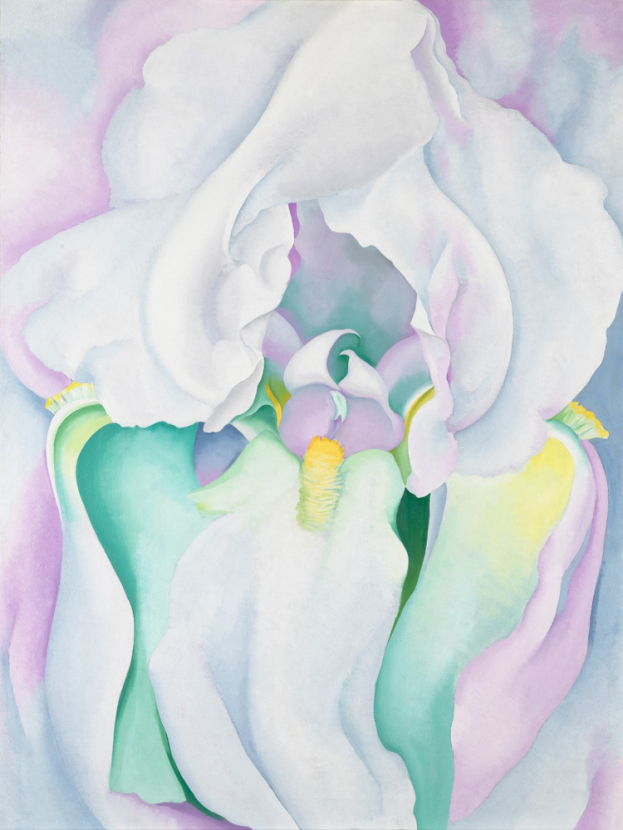
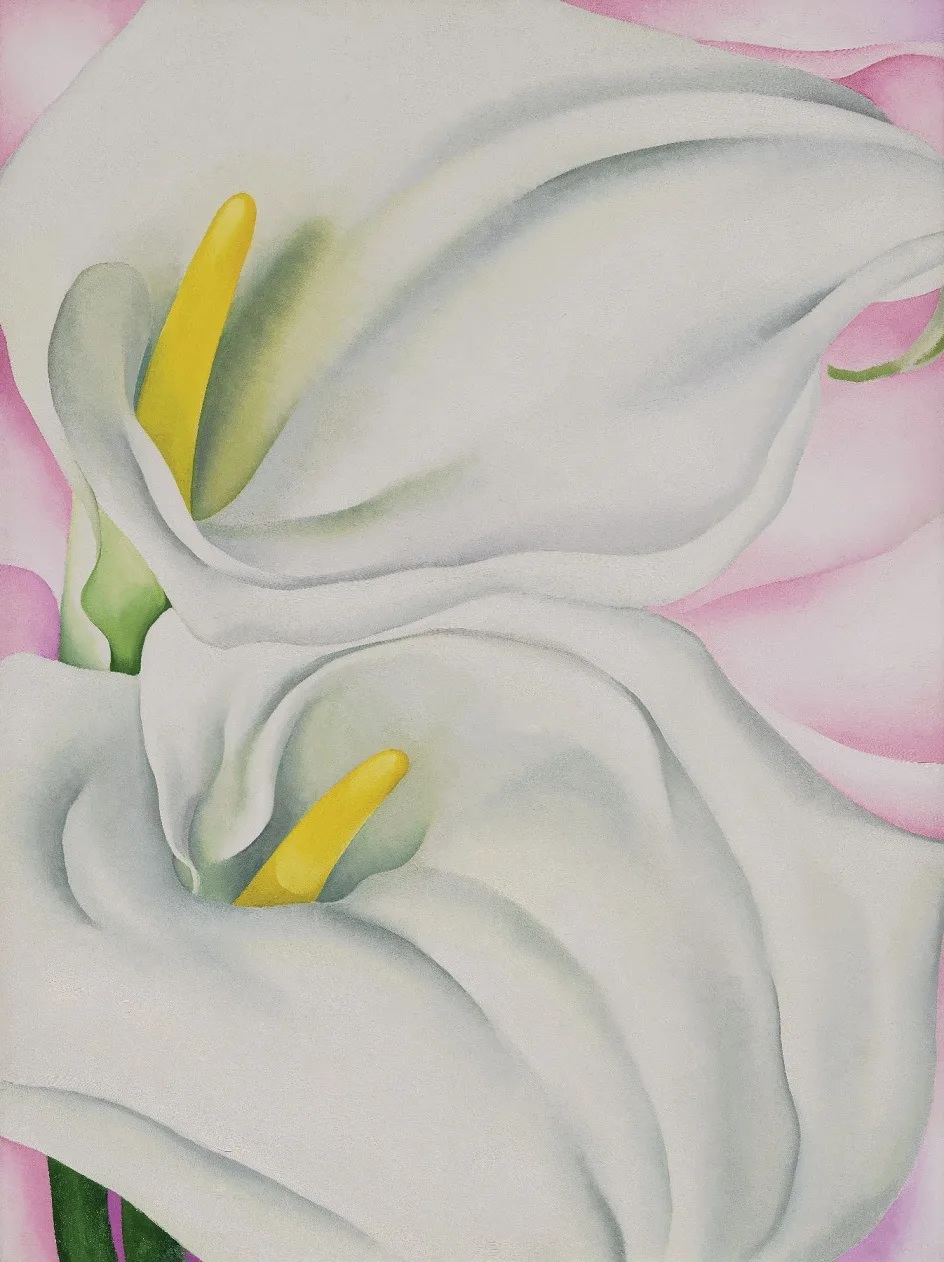
Flowers became her most famous subject during the 1920s. O’Keeffe enlarged petals, centers, stems, and folds until they filled the canvas. The unusual scale forced viewers to look closely at forms that were usually treated as decorative or insignificant.
She explained that people were too busy to truly observe a flower, so she painted it large enough that they would have to notice it. Her images do not function as botanical illustrations. They transform flowers into landscapes of color, movement, and spatial depth.
Smooth transitions and carefully controlled edges allow petals to appear soft and sculptural. Dark centers may open into uncertain spaces, while pale surfaces curve outward with remarkable clarity. The paintings remain recognizable, but their scale pushes them toward abstraction.
Critics often interpreted these works through sexuality and the female body. O’Keeffe repeatedly resisted narrow symbolic readings, arguing that viewers were projecting their own associations onto the paintings. This tension became part of her public reputation and reveals how differently work by women was often interpreted.
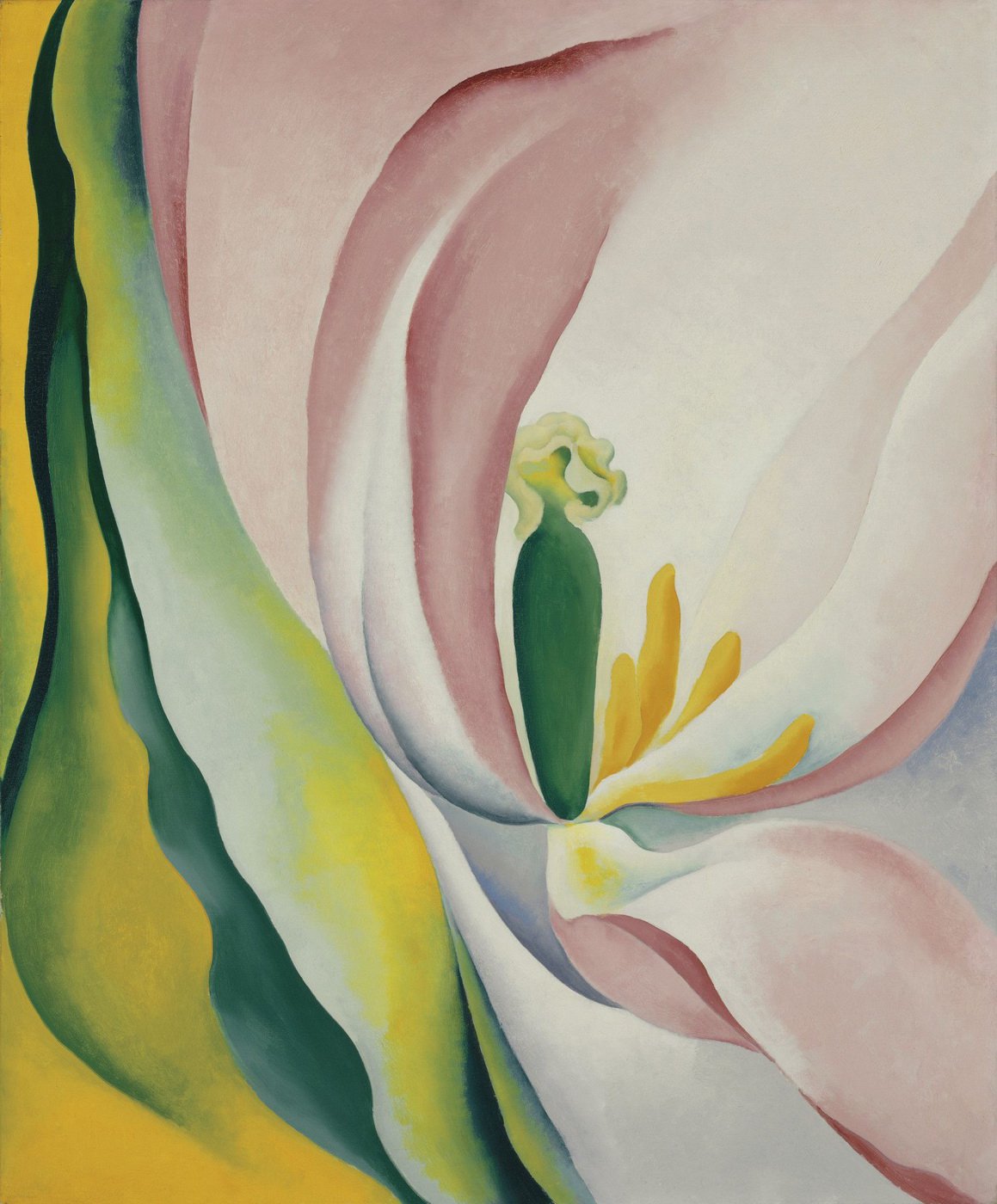
Her achievement lies precisely in the openness of the forms. A flower can remain a flower while also suggesting landscape, anatomy, movement, or pure abstraction. O’Keeffe allows several interpretations to exist without reducing the image to a single message.
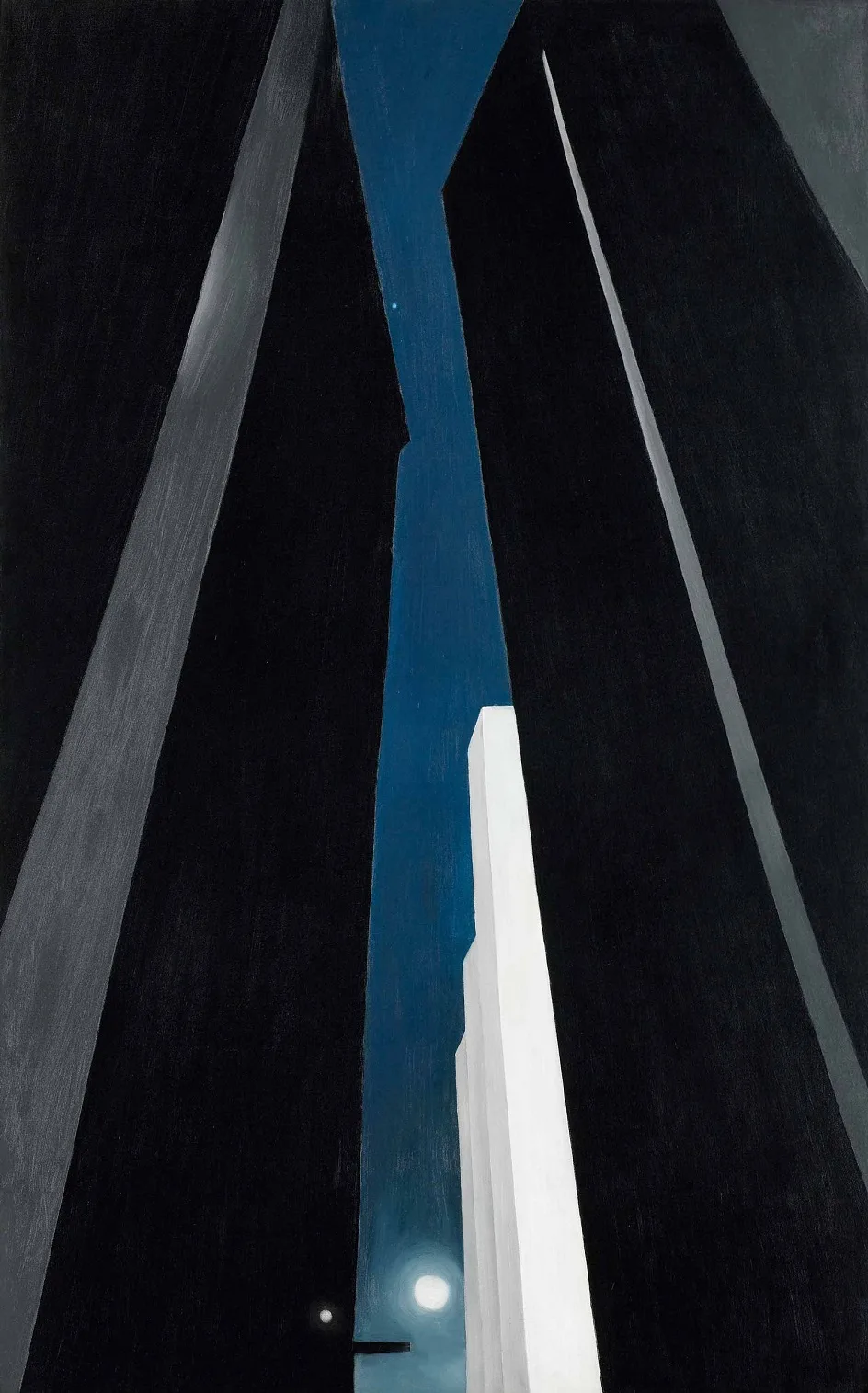
New York provided another important group of subjects. She painted skyscrapers, illuminated windows, rooftops, and views of the city at night. These works present modern architecture through simplified vertical forms and dramatic contrasts between darkness and artificial light.
Unlike the organic curves of her flowers, the city paintings often rely on straight lines, sharp edges, and compressed space. Yet they share the same interest in scale and visual concentration. A skyscraper becomes a single towering form, while windows create repeating patterns of color.
O’Keeffe’s relationship with New Mexico became increasingly important after her first visit in 1929. The desert environment offered open horizons, intense sunlight, dry bones, cliffs, adobe architecture, and unusual geological structures. She returned repeatedly before eventually making the region her permanent home.
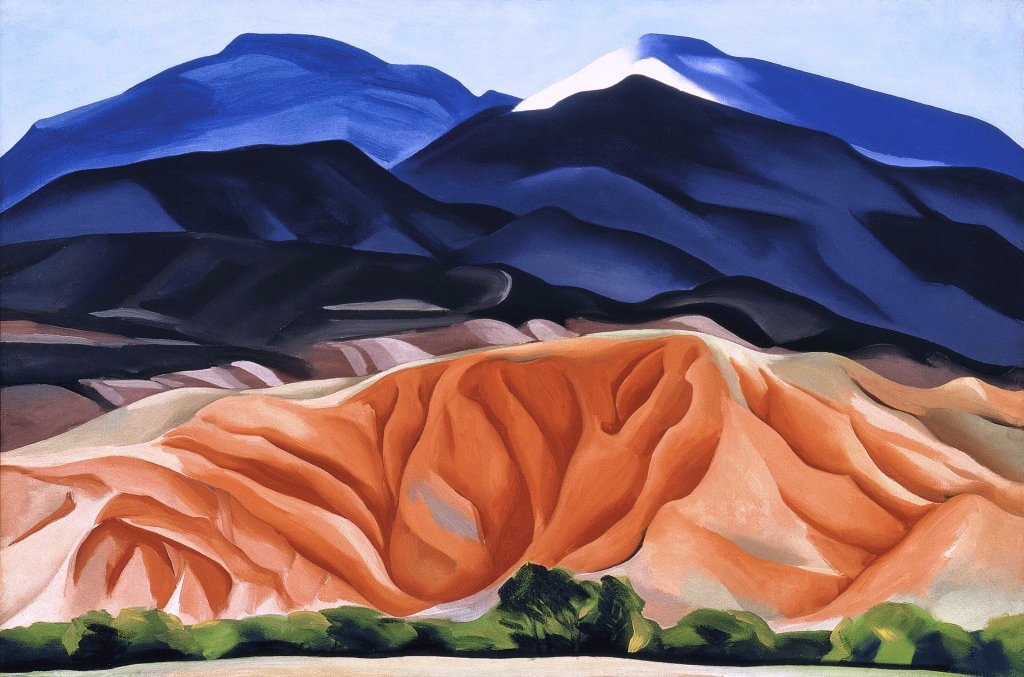
New Mexico transformed her palette and sense of space. Reds, whites, ochres, blues, and pinks became more intense, while forms were simplified against broad areas of sky and land.
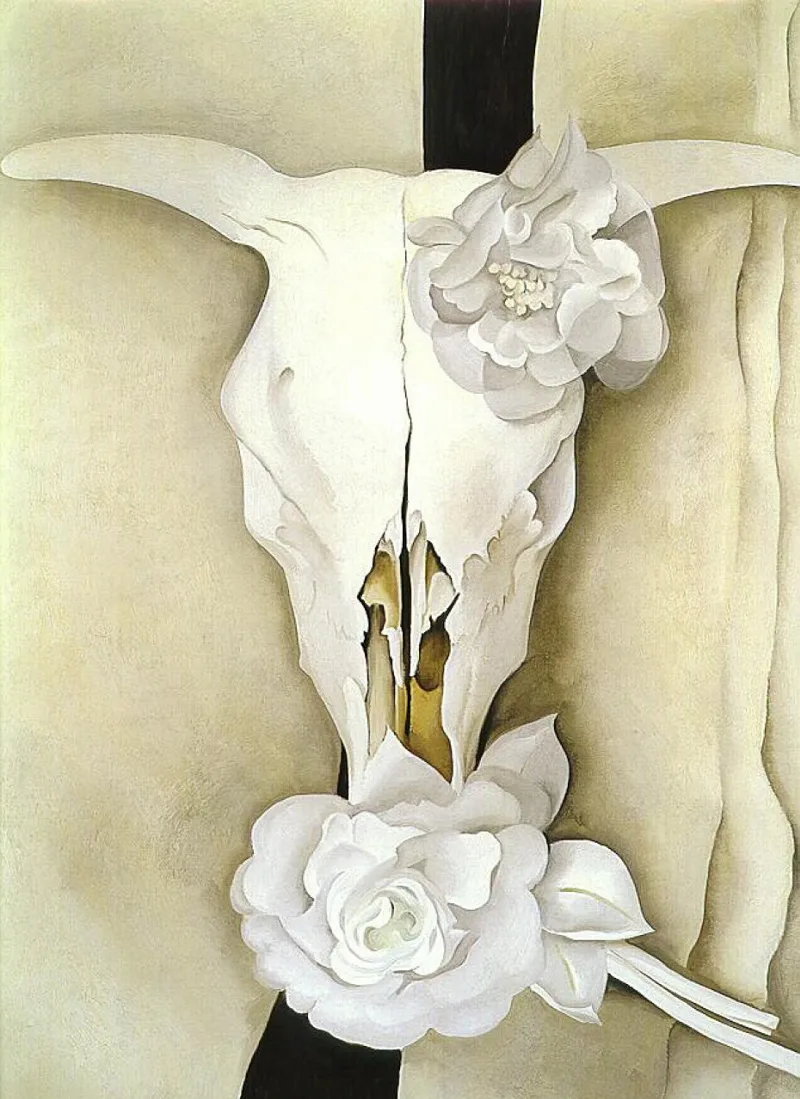
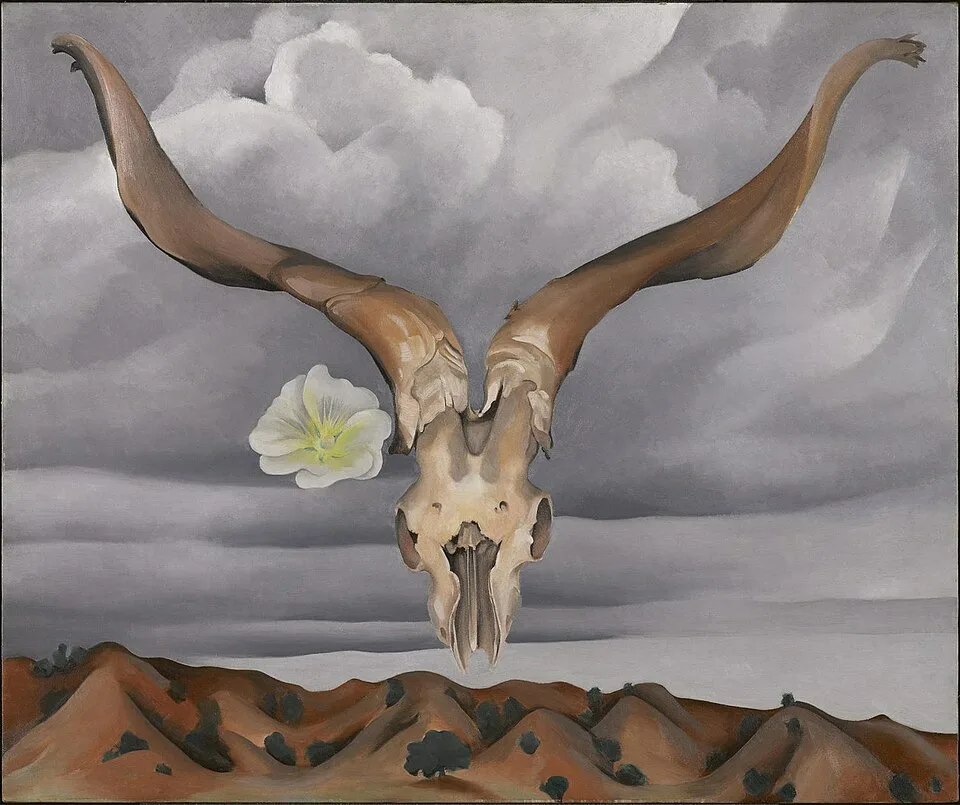
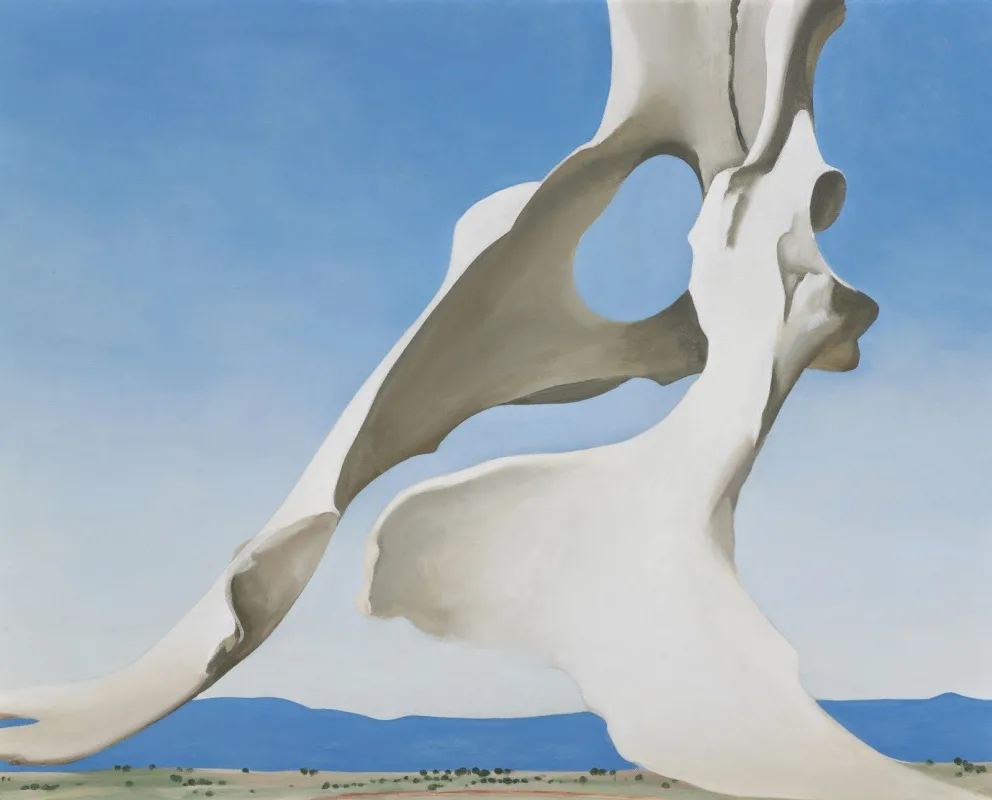
Animal skulls and bones became recurring motifs. O’Keeffe collected them during walks and brought them into her studio. In her paintings, bones are not symbols of decay alone. Their pale surfaces appear clean, durable, and almost architectural.
A skull may float against a blue sky or hang above a distant landscape. The contrast between bone, open space, and saturated color creates a sense of stillness and permanence.
Her desert paintings also include mountains, hills, doors, ladders, trees, and the unusual cliffs near Ghost Ranch. She returned to certain locations repeatedly, studying how their forms changed under different light and weather conditions.
One of her most personal subjects was the flat-topped mountain known as Pedernal. O’Keeffe painted it many times and humorously suggested that if she painted it often enough, it would belong to her. The repeated image became part of her visual identity and connection with place.
Architecture in New Mexico offered another path toward abstraction. Adobe walls, courtyards, windows, and doors were reduced to strong arrangements of light and shadow. A black doorway could become a powerful rectangle surrounded by white wall, suggesting both physical entrance and psychological depth.
O’Keeffe carefully controlled the presentation of her public image. Photographs by Stieglitz and other photographers helped construct her reputation as an independent modern woman closely connected with nature and the American landscape.
Yet she resisted being treated as a symbol rather than a serious painter. Throughout her career, she insisted on artistic discipline, formal intelligence, and the importance of direct experience.
Her later work continued to evolve. Aerial views observed during airplane travel inspired paintings of rivers, clouds, and land seen from above. These images return to abstraction while remaining connected to natural phenomena.
In the series inspired by clouds, repeated white forms spread across blue space like an endless field. The works suggest atmospheric distance, rhythm, and the experience of moving above the earth.
O’Keeffe continued working into old age despite declining eyesight. She adapted her process, relied more heavily on assistants, and explored new materials. Her career extended across most of the twentieth century, giving her an unusual position between early modernism and later contemporary art.
Her influence is visible in abstraction, feminist art, photography, landscape painting, design, and contemporary discussions about scale and perception. She demonstrated that subjects associated with nature or domestic decoration could carry formal and intellectual power.
At ArtExpoWorld, we consider Georgia O’Keeffe one of the artists who most successfully united observation and abstraction. She did not simply enlarge flowers or paint desert scenery. She transformed the act of looking into a disciplined artistic method.
Her paintings ask viewers to slow down, isolate a form, and experience it without distraction. Through flowers, bones, buildings, mountains, and open sky, Georgia O’Keeffe created a visual language of extraordinary clarity, independence, and lasting emotional force.