







Artemisia Gentileschi was one of the most accomplished and original painters of the Italian Baroque. Born in Rome in 1593, she built an international career at a time when women faced severe restrictions in artistic education, professional organizations, patronage, and public life.
Her paintings are known for dramatic lighting, physical intensity, rich color, and psychologically commanding figures. Biblical and historical women appear not as passive decorations but as intelligent, determined participants in moments of danger, resistance, judgment, and transformation.
Artemisia was the daughter of the painter Orazio Gentileschi, an important follower of Caravaggio. After her mother’s death, she grew up in a household dominated by her father and brothers. Orazio recognized her talent and trained her in drawing, pigment preparation, composition, and painting from posed models.
Women were generally excluded from the academies and public workshops where male artists studied anatomy and the nude figure. Artemisia’s education therefore developed largely inside her father’s studio. Despite these limitations, her technical ability emerged remarkably early.
Her earliest signed and dated painting, Susanna and the Elders, was completed in 1610, when she was approximately seventeen. The subject comes from a biblical story in which two older men spy on Susanna while she bathes and threaten her when she refuses them.
Earlier artists often treated the scene as an opportunity to display an idealized female body. Artemisia instead emphasized Susanna’s discomfort. The young woman twists away from the men, raising her arms defensively as their bodies press into the space above her.
The psychological focus distinguishes the painting. Susanna is not presented for the viewer’s pleasure. Her vulnerability, isolation, and rejection of the men’s attention become the central drama.
In 1611, Artemisia was raped by Agostino Tassi, a painter who worked with her father. A lengthy trial followed in 1612. The surviving testimony records both the violence she experienced and the humiliating procedures imposed upon her while she attempted to prove the accusation.
Tassi was convicted, although the sentence was not meaningfully enforced. This event has become one of the most frequently discussed parts of Artemisia’s biography, but it must not be allowed to reduce her entire career to a single trauma.
Her paintings cannot be interpreted as simple autobiographical confessions. They were produced within complex traditions of biblical storytelling, patronage, theatrical gesture, Baroque composition, and professional competition.
At the same time, her experience of gendered violence contributed to the historical conditions in which she worked. The power of her female protagonists remains impossible to separate entirely from her understanding of how women were judged, controlled, threatened, and denied authority.
Soon after the trial, Artemisia married Pierantonio Stiattesi and moved to Florence. The city gave her access to the Medici court, intellectual networks, collectors, musicians, writers, and artists.
In 1616, she became the first woman admitted to Florence’s prestigious Accademia delle Arti del Disegno. Membership strengthened her professional status and allowed her to conduct business with greater independence.
Artemisia developed relationships with influential patrons and cultural figures, including members of the Medici family. Her surviving correspondence demonstrates that she was not merely a talented painter working under male protection. She negotiated prices, defended the value of her work, managed commissions, and deliberately built her reputation.
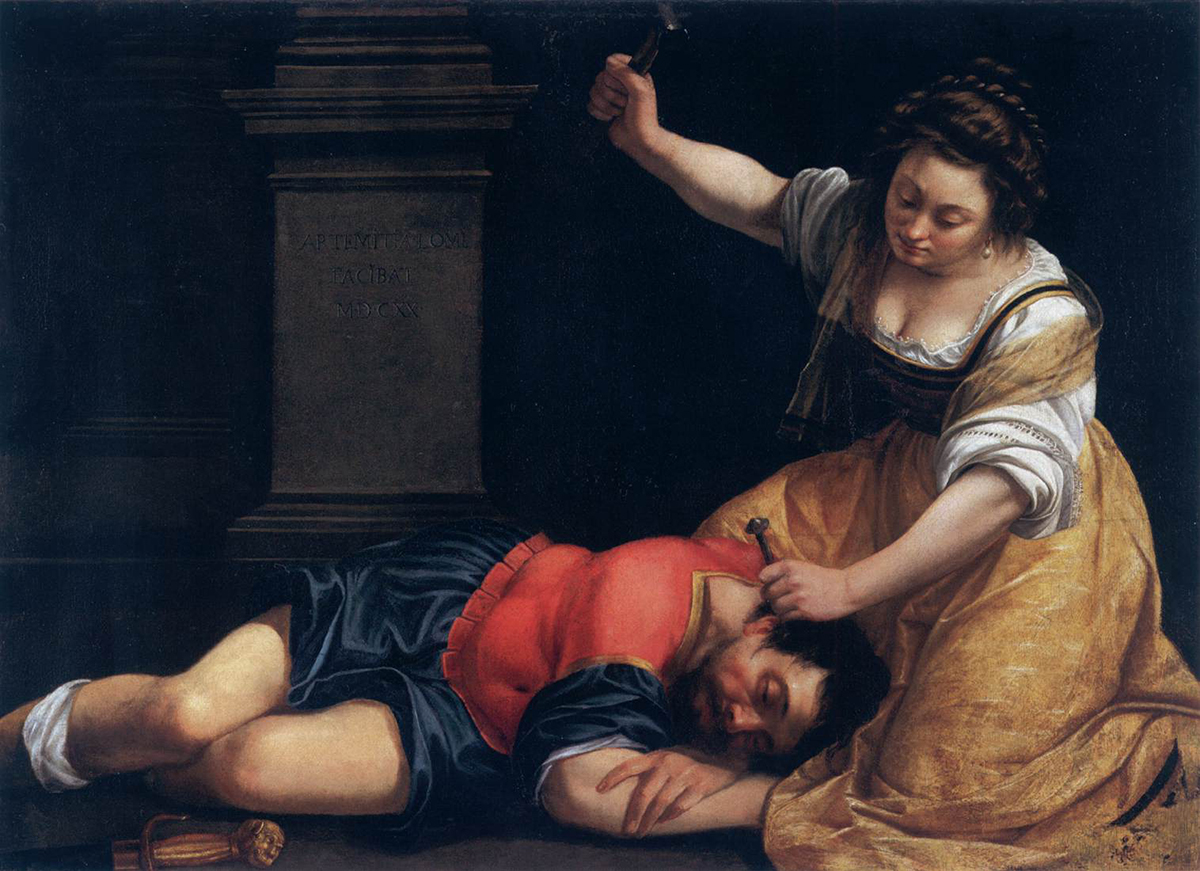
Her version of Judith Slaying Holofernes became one of the defining images of Baroque painting. The biblical heroine Judith and her maidservant overpower the Assyrian general Holofernes, who has threatened their people.
Artemisia presents the action with startling physical realism. Judith does not strike from a safe distance. She leans into the struggle, gripping Holofernes while cutting through his neck. Her maidservant actively restrains his body.
The composition is built from force, resistance, crossing arms, compressed bodies, and sharply directed light. Blood is not symbolic decoration but part of the physical event.
Comparisons with Caravaggio’s treatment of the same subject reveal Artemisia’s originality. In Caravaggio’s version, Judith appears to recoil from the killing. Artemisia’s heroine is more physically engaged and supported by a stronger maidservant.
The painting has often been interpreted through Artemisia’s biography, but its importance also lies in its formal control. The figures create a tightly organized structure, and the distribution of light directs attention through the violent action.
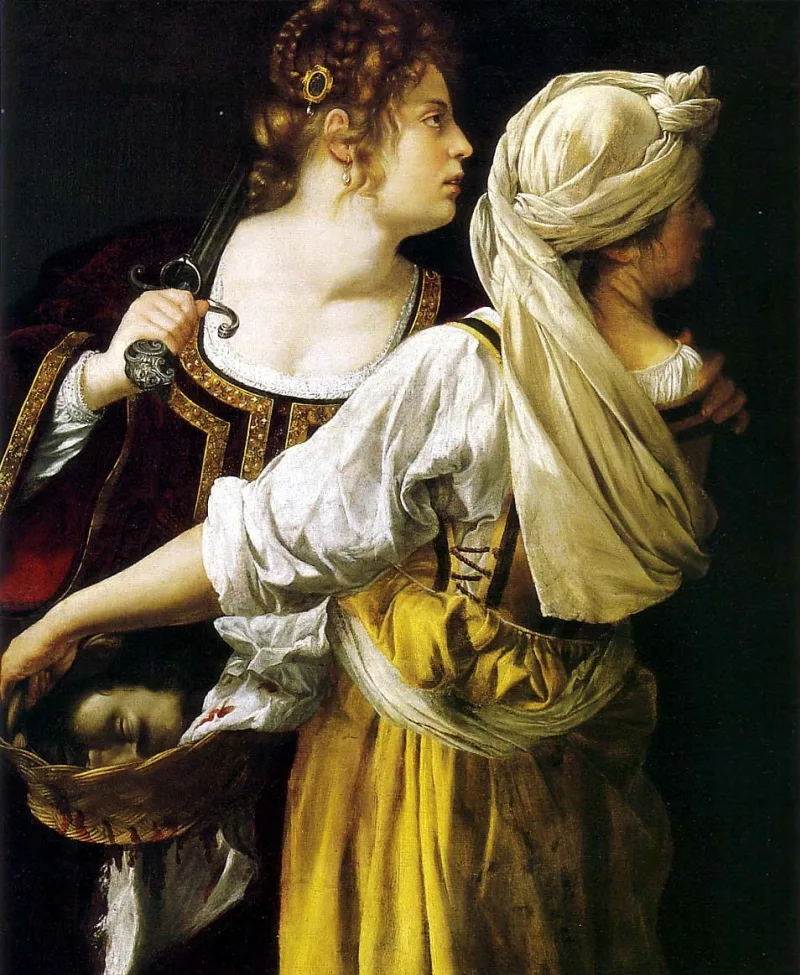
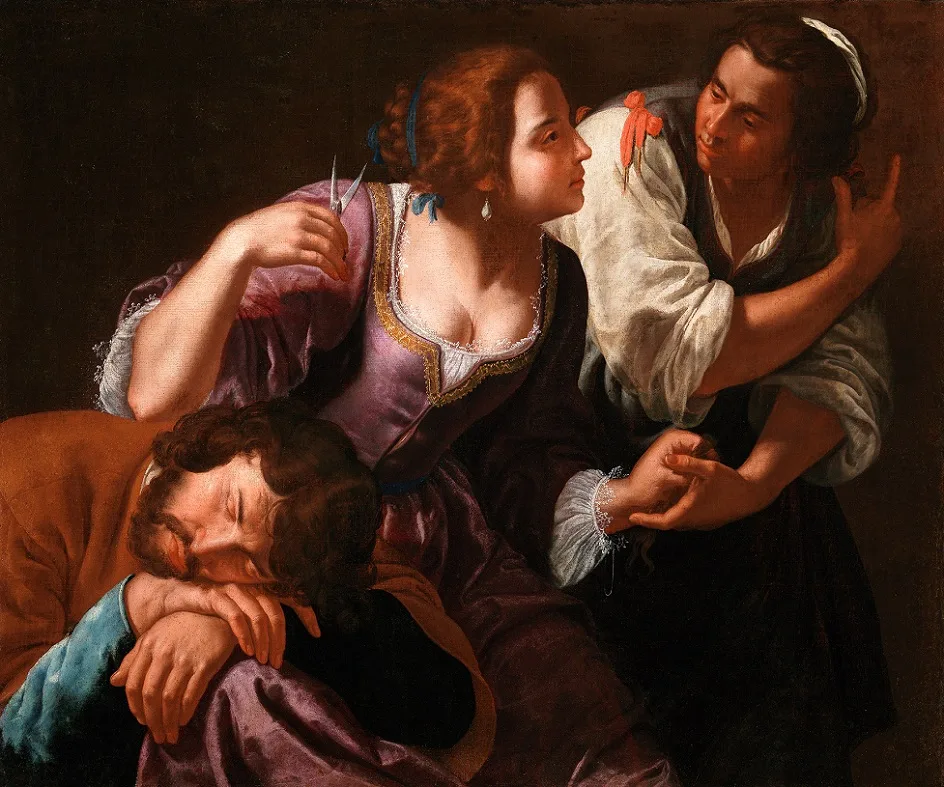
Judith appears repeatedly in Artemisia’s work. In Judith and Her Maidservant, the killing has already occurred. The women pause in darkness, listening for danger while preparing to escape.
The emotional register is completely different. Instead of direct physical conflict, Artemisia creates tension through silence, shadow, alert gestures, and the possibility of discovery.
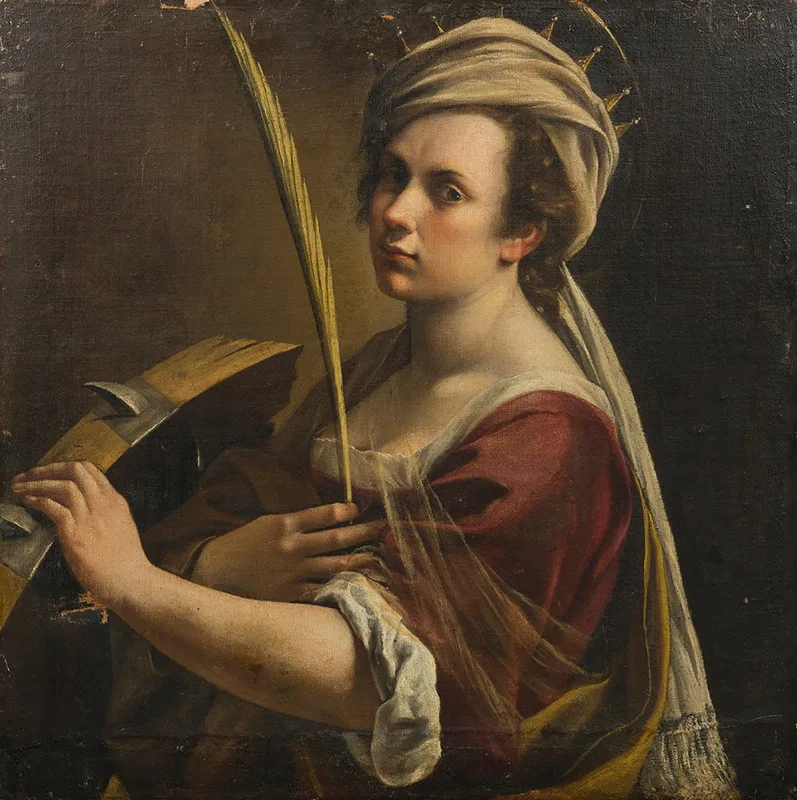
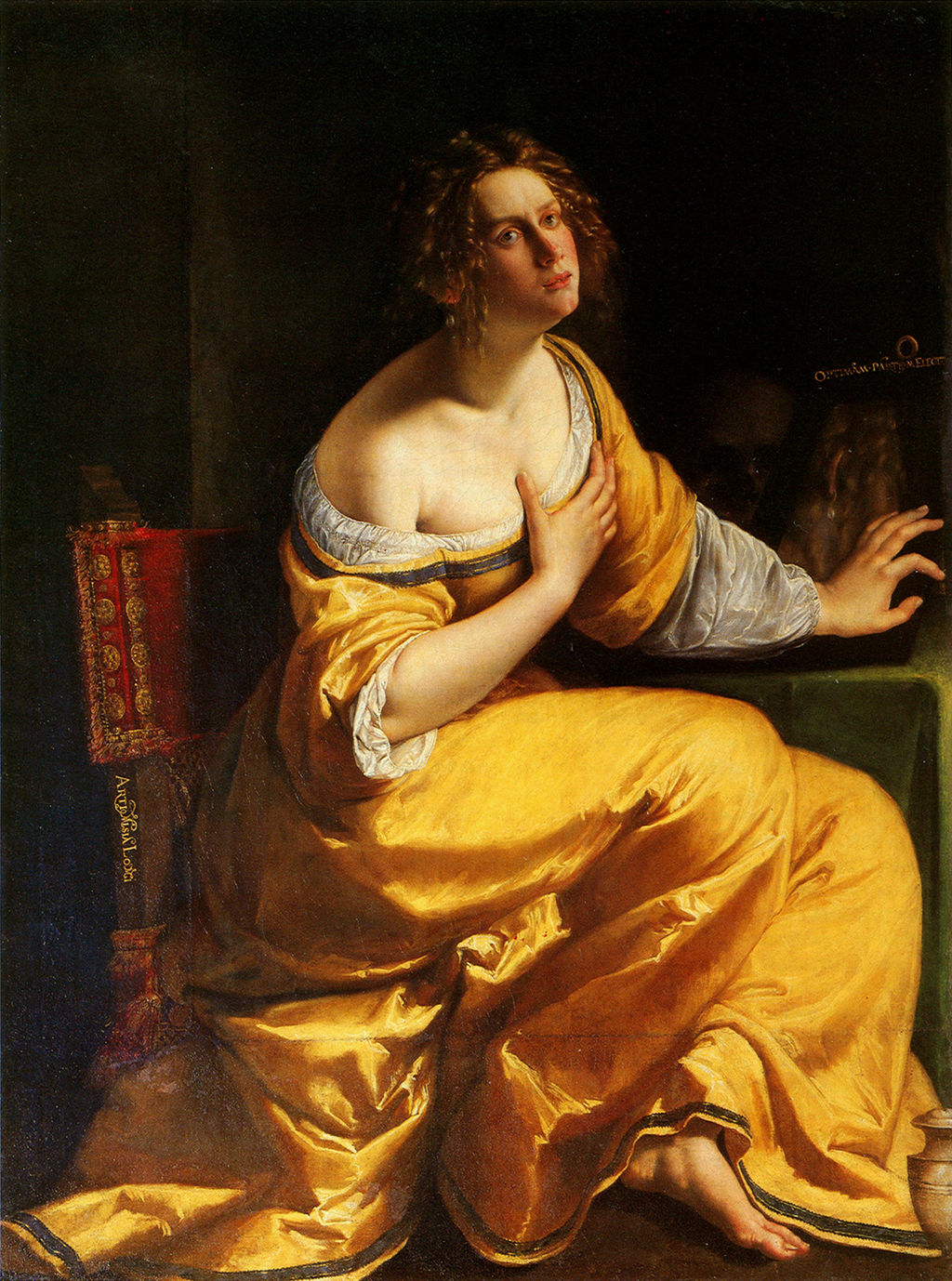
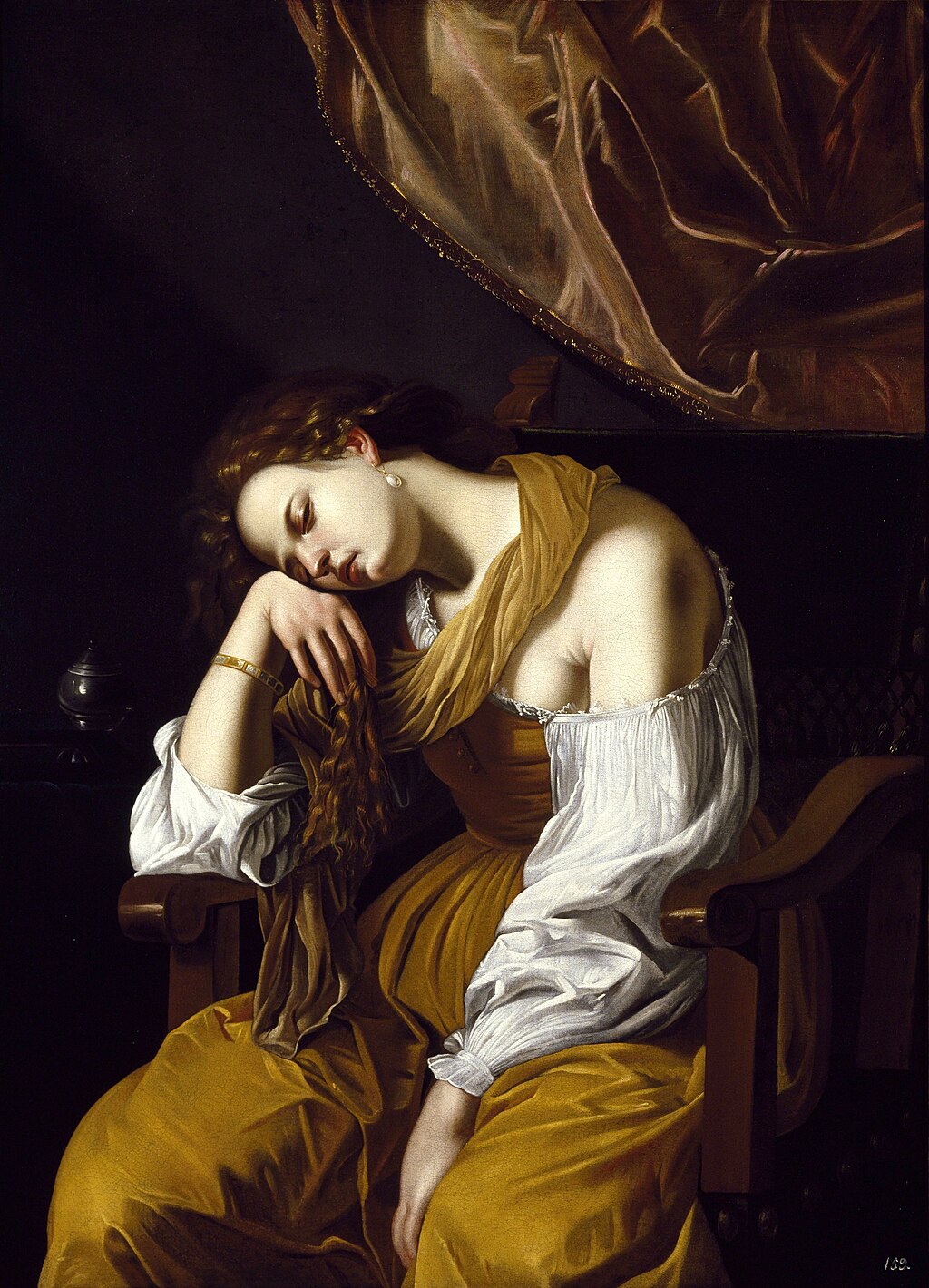
Her interest in women extended beyond Judith. She painted Lucretia, Cleopatra, Mary Magdalene, Bathsheba, Esther, Saint Catherine, Jael, and other historical, mythological, and biblical figures.
These subjects were familiar in European art, but Artemisia frequently concentrated on the moment when a woman makes a decision. Her figures resist, calculate, confront, suffer, or reclaim control.
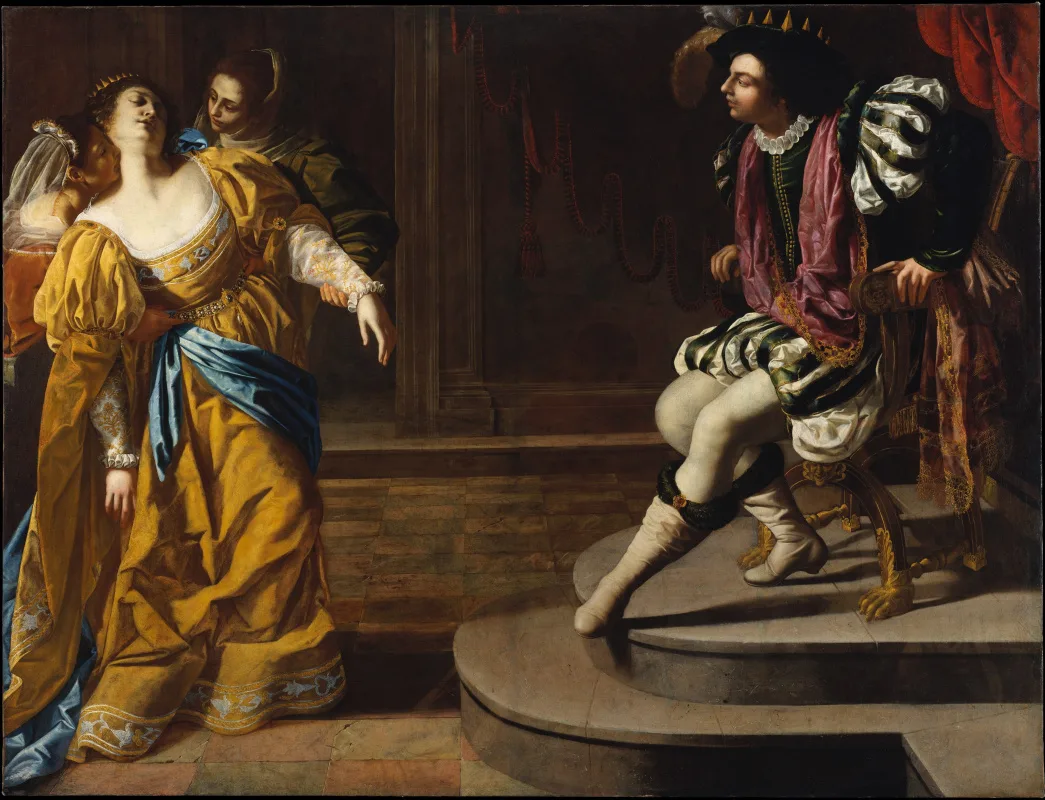
In Esther Before Ahasuerus, the Jewish queen risks her life by appearing before the king without permission. Artemisia depicts Esther collapsing under the emotional and physical pressure of the encounter, while the surrounding architecture and figures intensify the drama.
Her women are powerful, but they are not invulnerable. Their courage is meaningful because it exists alongside danger, fear, exhaustion, and social limitation.
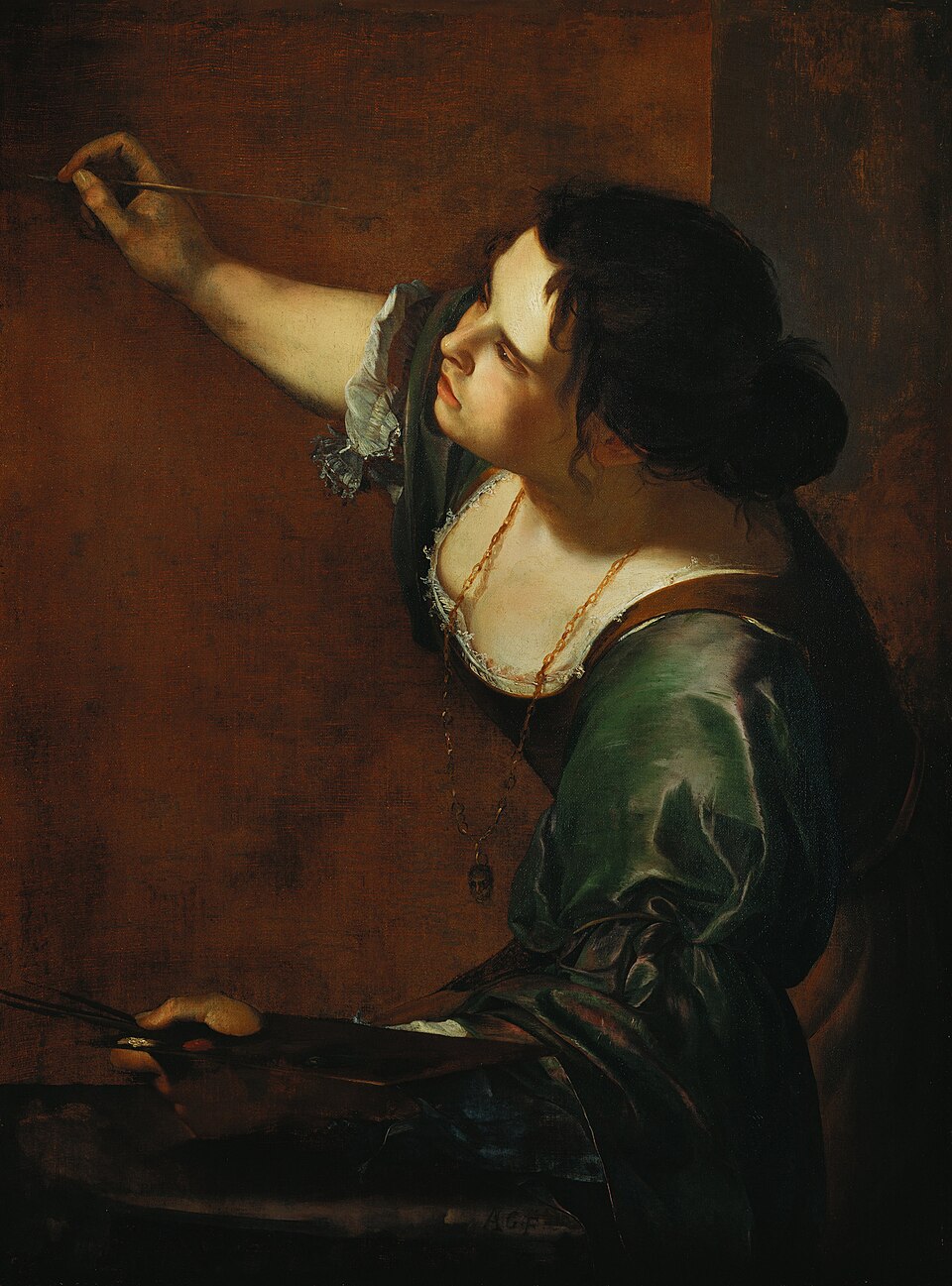
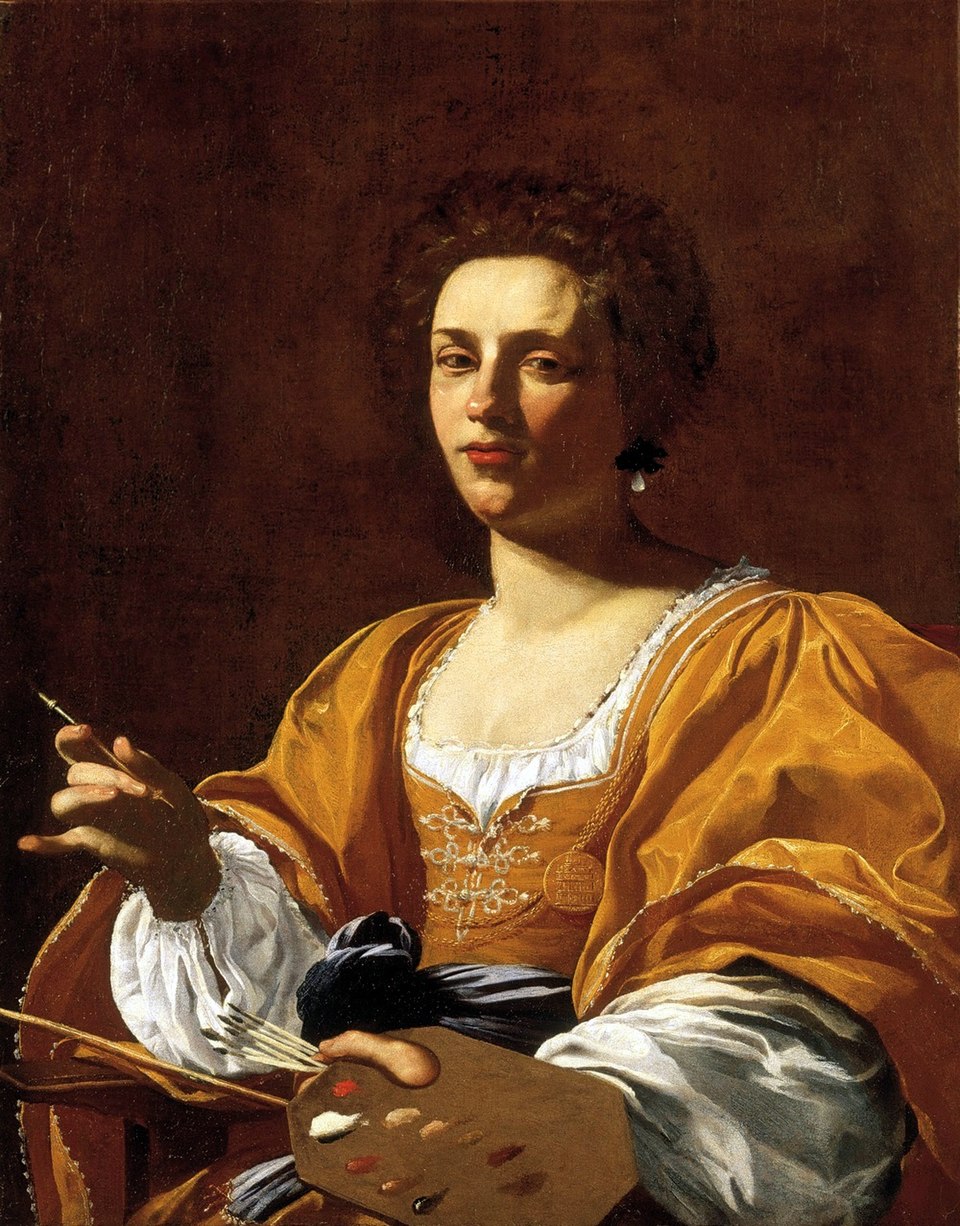
Artemisia’s self-portraits were equally significant. Self-Portrait as the Allegory of Painting presents the artist actively working, with one arm raised and her body leaning toward an unseen canvas.
According to the artistic traditions of the period, Painting was personified as a woman. A male artist could portray the allegorical figure but could not literally embody it. Artemisia could represent herself simultaneously as a professional painter and as Painting itself.
The image therefore makes an ambitious claim. She is not shown as a passive muse, elegant aristocrat, or decorative female subject. She becomes the physical embodiment of artistic creation.
Artemisia worked in Rome, Florence, Venice, Naples, and London. This movement demonstrates the geographical reach of her reputation. She served elite patrons, including the Medici court and collectors connected with European royal households.
Naples became the main center of her later career. There she operated a successful workshop and produced large religious commissions as well as private paintings. She also spent time in London, where her father was working for the court of Charles I.
The precise date of Artemisia’s death remains uncertain. Evidence confirms that she was still living in Naples in 1654, and she may have survived for several more years.
Her reputation declined after her death, and many paintings were overlooked, misattributed to male artists, or discussed primarily in relation to her father and Caravaggio. Twentieth-century scholars gradually reconstructed her career.
Feminist art history played a major role in this recovery, recognizing Artemisia as both a significant Baroque painter and an exceptional woman who achieved professional independence within a restrictive society.
However, serious appreciation requires more than presenting her as a symbol of female resilience.
Artemisia deserves to be studied for her understanding of anatomy, fabric, color, narrative timing, theatrical gesture, and emotional psychology.
Her paintings transform familiar stories by changing where power is located. Secondary female characters become active collaborators. Heroic women occupy physical space. Victims are allowed psychological complexity, and beauty does not cancel danger.
At ArtExpoWorld, we consider Artemisia Gentileschi essential not because she was simply a successful woman in a male-dominated period, but because she was an exceptional painter who expanded the emotional and dramatic possibilities of Baroque art.
Her legacy lies in the authority she gave to female experience. Through light, movement, and uncompromising physical presence, Artemisia created women who do not merely appear inside history. They act upon it.