





Art Basel Hong Kong Buyer’s Guide: Artists at Every Price Level
Art Basel Hong Kong is often associated with major galleries and expensive masterpieces.
However, the fair also presents works across a wide range of prices.
Collectors can encounter emerging artists, historically important Asian figures, ceramics, textiles, paintings, sculptures and works on paper without entering the highest level of the market.
The Discoveries, Insights and Kabinett sectors are especially useful for buyers looking beyond the most obvious names.
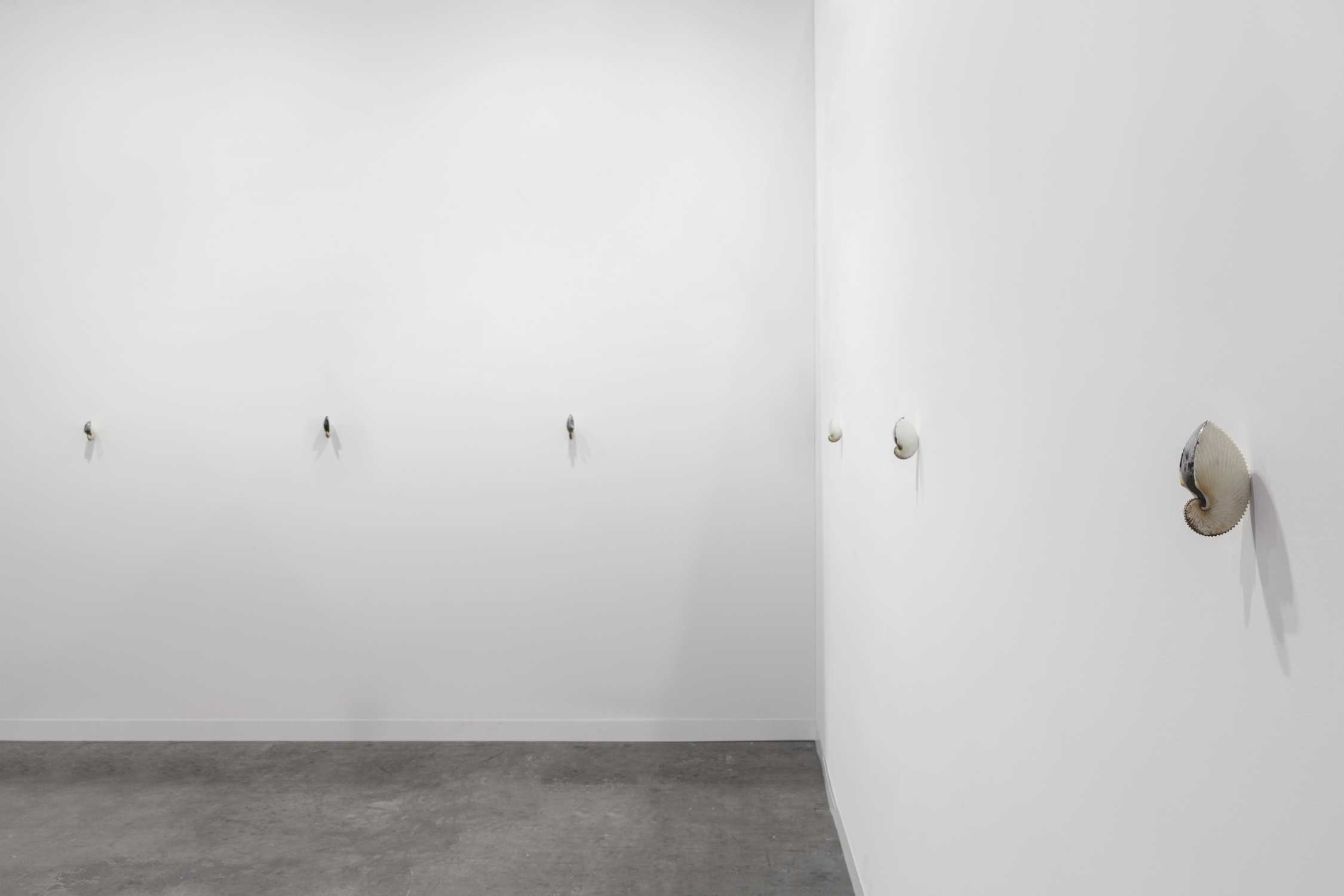
Discoveries introduces emerging artists through focused solo presentations.
Insights provides historical and regional context for art from Asia and the Pacific.
Kabinett allows galleries to develop thematic exhibitions within their booths.
The following artists from the 2025 fair demonstrate how collectors can approach different price categories while maintaining serious artistic standards.
Under USD 15,000: Hannah Quinlan and Rosie Hastings
British artists Hannah Quinlan and Rosie Hastings were presented by Arcadia Missa in London.
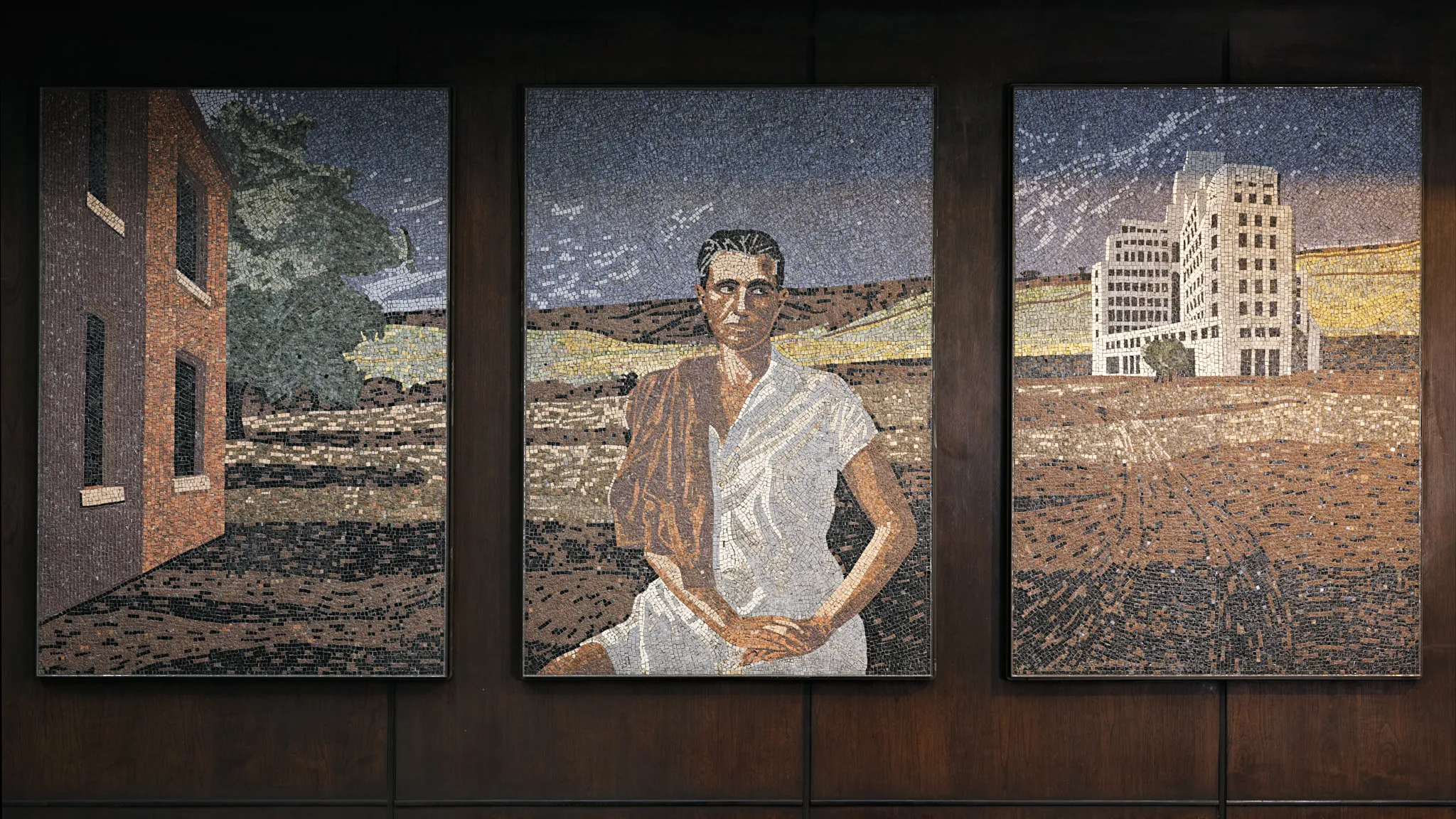
Their work Woman and child; reconstruction, created in 2024, belonged to a series of seven new egg tempera paintings.
The artists have developed a collaborative practice examining identity, public space, social history, architecture and representation.
Their research has included Walter Benjamin’s idea of the angel of history.
Benjamin imagined history not as a smooth progression but as an accumulating field of destruction and unresolved events.
Quinlan and Hastings connect this concept with contemporary bodies, monuments and public environments.
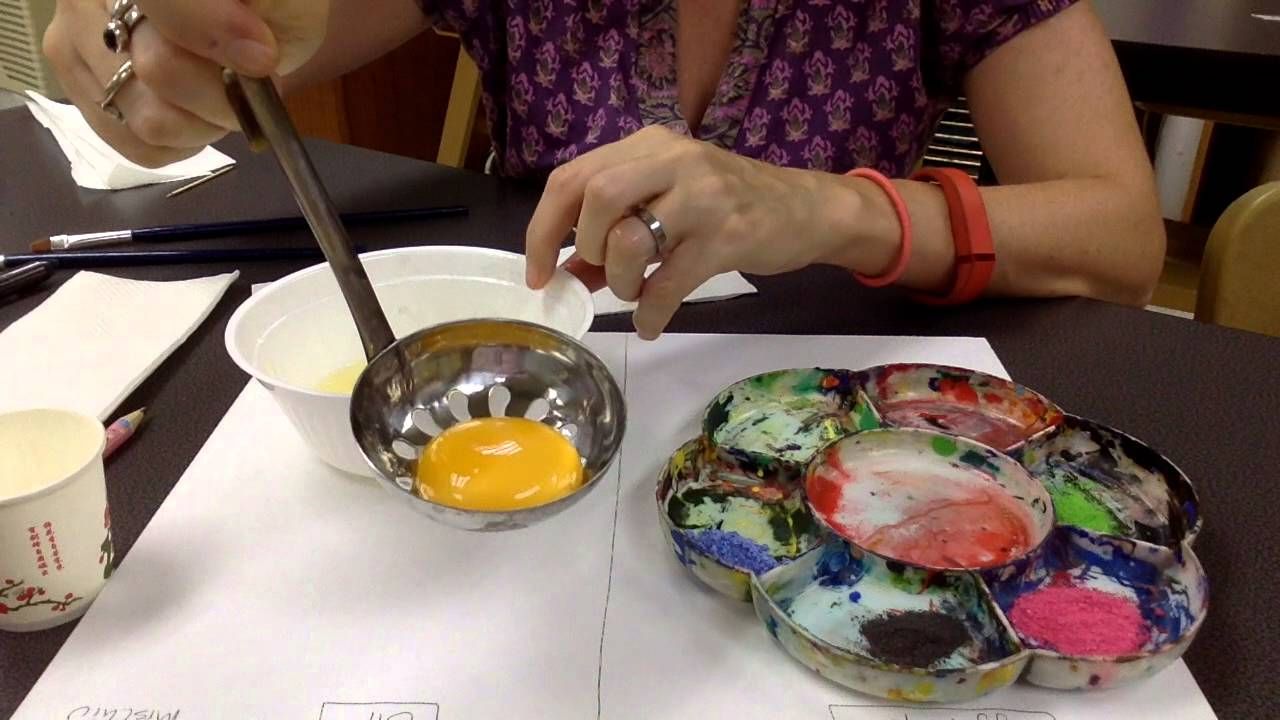
Woman and child; reconstruction was created through the labor-intensive process of egg tempera.
The artists built the image from hundreds of nearly transparent layers applied with small brushes.
This technique produces depth, luminosity and jewel-like color.
The work demonstrates that a lower price category does not necessarily mean a quickly produced or minor object.
Collectors should pay attention to materials and process as well as the artist’s current reputation.
Why Emerging-Artist Solo Presentations Matter
The Discoveries sector allows galleries to present one emerging artist in depth.
This format is valuable for collectors because it provides context.
Instead of seeing one work among unrelated objects, visitors can compare several pieces and identify recurring ideas.
A solo booth also shows how committed the gallery is to the artist.
The business has invested money, time and fair space into one practice.
That does not guarantee future success.
It does indicate that the gallery is prepared to support a focused presentation in front of international collectors and curators.
Daniel Correa Mejía: Spirituality and the Human Body
Daniel Correa Mejía’s Luminoso como la luna, created in 2025, was presented by mor charpentier in the Kabinett sector.
The Colombia-born, Berlin-based artist creates paintings filled with symbolic bodies, plants, water and mythological forms.
Luminoso como la luna centers on a nude male figure with luminous red skin.
Flowers, shining water and a strange creature attached to the figure’s back create a scene that feels both intimate and cosmic.
The title translates as bright as the moon.
The painting explores connections between the body, nature and the universe.
Themes of self-awareness, spirituality and interdependence appear throughout Correa Mejía’s work.
For collectors, the piece offers an example of contemporary figurative painting that combines personal imagery with broader mythological structures.
Researching Contemporary Figurative Painting
Figurative painting has experienced strong market demand.
This popularity creates both opportunity and risk.
Collectors should avoid buying a work simply because it includes a recognizable body or follows a fashionable style.
Study how the artist constructs space, color and narrative.
Ask whether the imagery develops across several years or appears suddenly in response to market demand.
Correa Mejía’s work can be considered through his recurring interest in spirituality, male identity, nature and transformation.
This continuity strengthens the case for examining the practice beyond one attractive painting.
Jennifer İpekel: Ceramics, Textiles and Ancient Myth
Jennifer İpekel was presented by Dirimart in the Kabinett sector.
The Istanbul-born, Paris-based artist works across ceramics and textiles.
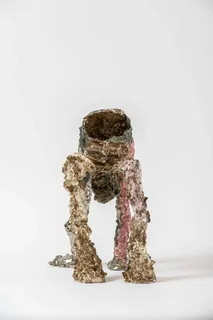
Her glazed sculpture Seal Folk, created in 2020, draws on animism, folklore and the natural world.
The creature appears to exist between earthly and divine realms.
It is neither an ordinary animal nor a completely invented decorative object.
Roots, created in 2024, uses Indigosol dyes and embroidery on cotton.
The textile contains abstracted forms resembling plants and unfamiliar organisms.
The work references the ancient Javanese concept of Tribawana.
This philosophy describes relationships among microcosm, macrocosm and a vivid or spiritual cosmos.
İpekel’s work demonstrates how contemporary artists can combine materials and belief systems from several cultural traditions without reducing them to illustration.
Why Collectors Are Looking Beyond Painting
Painting remains the largest category in the art market.
Ceramics, textiles and mixed-media works can offer different possibilities.
These objects often reveal direct relationships with craft, architecture and bodily experience.
A textile changes according to how it hangs and moves.

A ceramic sculpture carries evidence of firing, glaze and physical touch.
Collectors should understand conservation requirements.
Textiles may be sensitive to light, moisture and insects.
Ceramics can be fragile and difficult to transport.
The lower purchase price of an object does not remove the need for professional care.
Chen Hsing-Wan: A Rare Work From Taiwanese Art History
Going up smoothly by the late Taiwanese artist Chen Hsing-Wan was presented by PTT Space in the Insights sector.
The work depicts an abstracted female silhouette bending over a form resembling a swaddled child.
Strips of linen mounted on wood create a tactile, constructed surface.
Chen Hsing-Wan developed a practice that pushed abstraction beyond conventional painting.
Material, structure and philosophical reflection remained central.
The work offered at Art Basel Hong Kong was considered rare because many examples from the same period had already entered museum collections.
This scarcity changes the collecting context.
The buyer is not simply acquiring an aesthetically successful object.
The work may also represent an under-recognized chapter of Taiwanese Modernism.
Museum Holdings and Rarity
When researching a historical artist, collectors should ask where comparable works are located.
When museums hold most important examples, privately available pieces may become rare.
However, scarcity alone does not guarantee quality.
The collector should examine whether the available work belongs to an important period and whether it has strong documentation.
Insights presentations are particularly useful because they place historical Asian artists inside a curatorial framework.
This can help collectors look beyond auction records and understand why the artist matters.
Katsuhiro Yamaguchi and Postwar Japanese Experimentation
An untitled cloth sculpture by Katsuhiro Yamaguchi from the 1960s was presented by Annely Juda Fine Art in the Kabinett sector.
Yamaguchi was a founding member of Experimental Workshop.
The collective became one of the earliest avant-garde groups in postwar Japan.
Its members worked across visual art, music, technology, photography and performance.
Yamaguchi challenged the idea that an artwork should have one fixed viewpoint.
His wall-based sculpture combines metal and cloth.
The protruding orange geometric form changes as the viewer moves.
From one angle it may appear solid and architectural.
From another, it seems lighter and less stable.
The work transforms looking into a physical activity.
Historical Avant-Garde Work Requires Context
Collectors interested in postwar Asian art should research artistic groups and networks.
An individual artwork may become much more significant when connected with a pioneering collective such as Experimental Workshop.
Documentation is essential.
Ask about exhibition history, provenance and whether the work appears in scholarly publications.
Older mixed-media works may also contain fragile materials.
Cloth, adhesives and metal can age differently.
A specialist condition report should identify any restoration or deterioration.
Kim Yun Shin: Korea, Argentina and a Transnational Practice
Kim Yun Shin’s Song of My Soul 2011-9 was presented by Kukje Gallery.
Born in North Korea and based in South Korea, Kim developed a life shaped by movement.
She travelled through France, Mexico and Brazil and spent an extended period in Argentina.
Her sculptures and paintings combine influences from Korea and South American Indigenous cultures.
Song of My Soul contains multicolored lines and floating planes.
The composition appears energetic without becoming chaotic.
Color functions as a form of movement and memory.
Kim’s career challenges simple national categories.
She belongs to the histories of Korean art, migration and cultural exchange with Latin America.
Older Women Artists Are Receiving New Attention
Kim Yun Shin and Chen Hsing-Wan belong to a wider reassessment of women artists whose careers developed outside dominant Western market centers.
Collectors are increasingly researching artists who worked for decades without receiving equivalent international recognition.
This renewed interest can produce important exhibitions and scholarship.
It can also create sudden market excitement.
Buyers should distinguish between genuine historical reassessment and temporary fashion.
The strongest approach is to study museum holdings, catalogues and the full development of the artist’s work.
How to Compare Works Across Price Levels
A collector should not assume that the most expensive work is the best.
Different price levels reflect many factors:
career stage;
rarity;
medium;
size;
gallery representation;
institutional demand;
date;
historical importance;
production costs.
An emerging artist’s painting may cost less than a historical sculpture because the market is still developing.
A textile may be more affordable than a large canvas despite requiring substantial labor.
A museum-quality historical work may command a higher price because comparable examples rarely appear for sale.
The collector’s task is to determine whether the price makes sense within the specific artist’s market.
Look at the Gallery as Well as the Artwork
The gallery’s role is important.
Arcadia Missa has built a reputation around conceptually engaged contemporary practices.
mor charpentier works across Paris and Bogotá and presents artists with international and politically informed perspectives.
Dirimart has helped connect Turkish art with wider global conversations.
PTT Space contributes to the visibility of Taiwanese artists.
Annely Juda Fine Art brings deep historical expertise, particularly in European and international Modernism.
Kukje Gallery is a major force in South Korean contemporary art.
A gallery’s history does not replace judgment.
It provides information about how the work may be supported after the fair.
Buy the Best Work You Can Understand and Afford
A lower-priced work should not be purchased only because it is cheap.
A higher-priced work should not be purchased only because it appears prestigious.
Collectors should ask:
Is this a strong example of the artist’s practice?
Does the work have proper documentation?
Can I care for it?
Does the price fit the artist’s market?
Would I remain interested without the excitement of the fair?
These questions apply whether the work costs USD 5,000 or USD 100,000.
Editorial Note
ArtExpoWorld believes buyer guides are useful only when they help collectors look more carefully rather than shop more quickly.
Price categories can make a major fair feel accessible.
They can also encourage the false idea that artworks are interchangeable products arranged by budget.
The works of Hannah Quinlan and Rosie Hastings, Daniel Correa Mejía, Jennifer İpekel, Chen Hsing-Wan, Katsuhiro Yamaguchi and Kim Yun Shin belong to different histories, mediums and cultural contexts.
They should not be compared only through price.
The real opportunity at Art Basel Hong Kong is the chance to discover emerging practices alongside overlooked historical artists from Asia and beyond.
A collector should use price as a limit, not as the main reason for choosing.