




Alexander Rodchenko was one of the most influential figures of the Russian avant-garde and a decisive force in the development of Constructivism. Painter, sculptor, photographer, graphic designer, teacher, and experimental thinker, he rejected the traditional idea of the artist as a creator of decorative objects. Instead, he believed that art should participate directly in modern life, communication, education, industry, and the building of a new society.
Born in Saint Petersburg in 1891, Rodchenko studied at the Kazan School of Art before moving to Moscow, where he entered the rapidly changing world of experimental art. His early development was shaped by encounters with Futurism, geometric abstraction, Suprematism, and the work of Vladimir Tatlin. He also formed a lifelong personal and creative partnership with the artist and designer Varvara Stepanova. Together, they became central figures in the radical redefinition of Russian art after the Revolution.
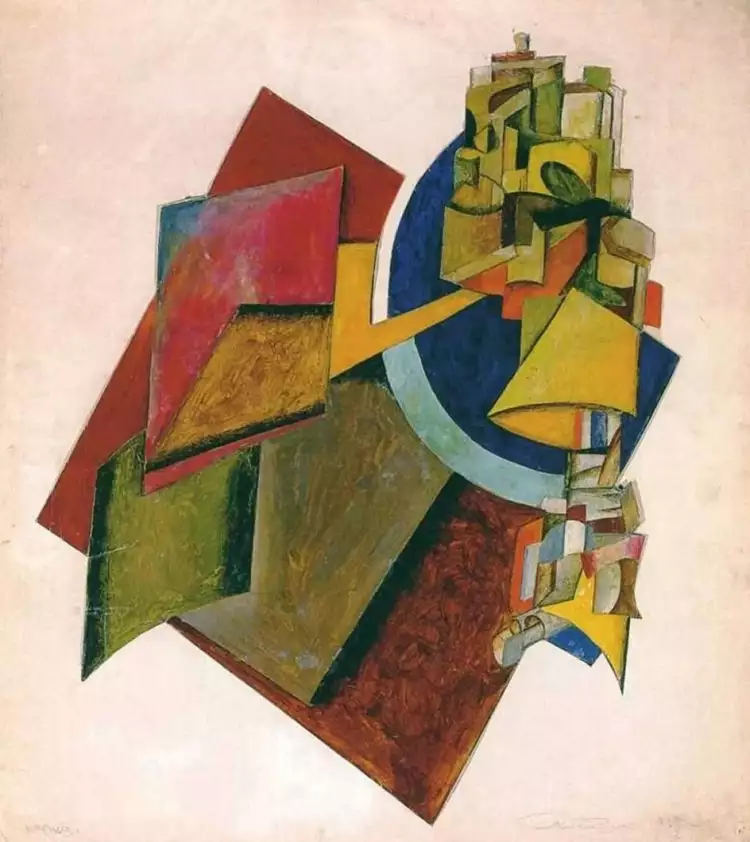
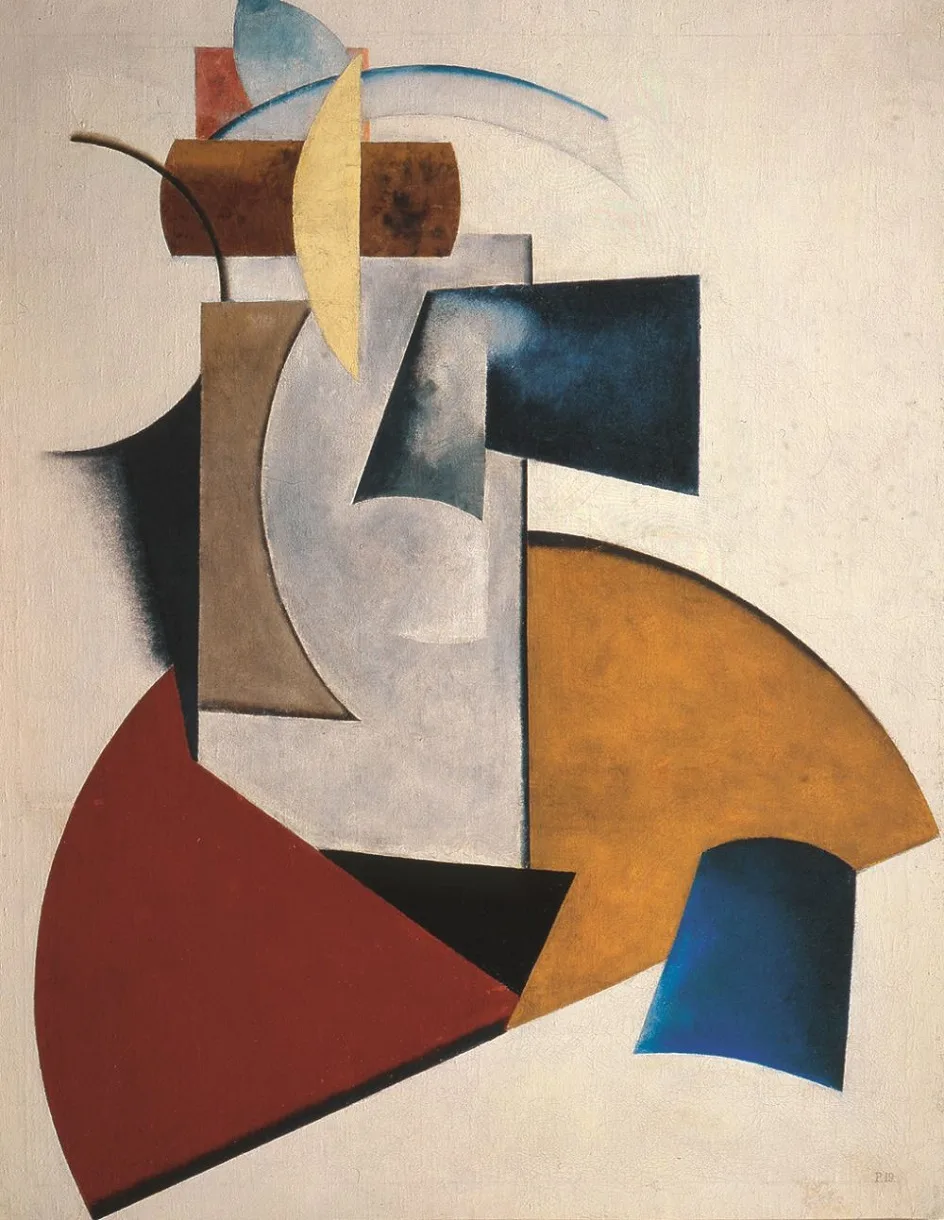
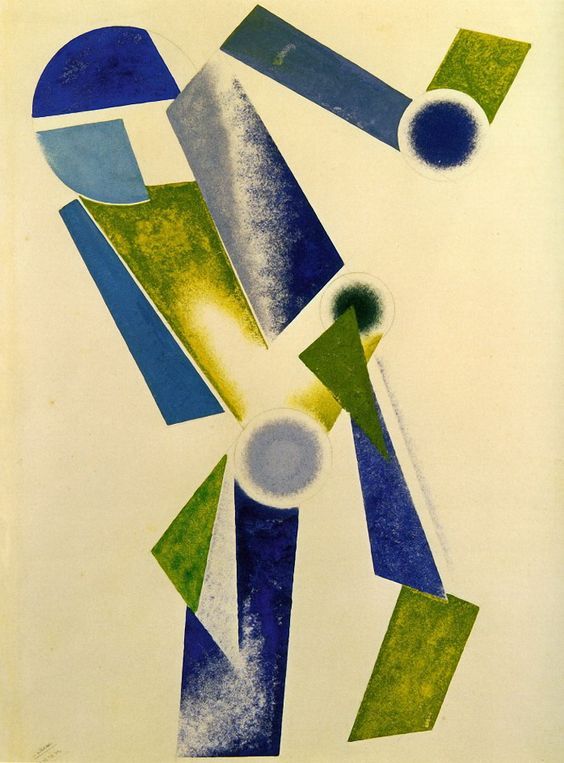
Rodchenko’s earliest abstract works reveal a fascination with line, geometry, construction, and the physical behavior of materials. Rather than treating painting as a window onto the visible world, he approached the surface as an independent field. Circles, grids, diagonals, and precisely arranged forms created compositions based on tension and structure rather than recognizable subjects.
For Rodchenko, experimentation was not simply a search for a personal style. It was a method of testing what art could become. He produced works using rulers, compasses, rollers, and other instruments that reduced the importance of expressive brushwork. These tools allowed him to replace the romantic image of spontaneous artistic inspiration with a disciplined process resembling engineering.
One of the most radical moments in his career came in 1921, when he presented three monochrome canvases painted entirely in red, yellow, and blue. These works were interpreted as an attempt to take painting to its logical conclusion. By reducing each canvas to one primary color, Rodchenko challenged the belief that painting needed illusion, narrative, individual expression, or even composition.
His declaration that painting had reached an endpoint did not mean that he abandoned creativity. Instead, he redirected his energy toward forms capable of functioning within everyday life. Graphic design, typography, posters, books, furniture, architecture, theatre, advertising, and photography offered new ways to connect artistic invention with a mass audience.
This transition placed Rodchenko at the center of Constructivism. The movement argued that artists should stop producing isolated luxury objects and begin designing practical forms for a modern society. Art was no longer expected merely to represent the world. It could help organize information, manufacture objects, communicate political ideas, and shape the environment.
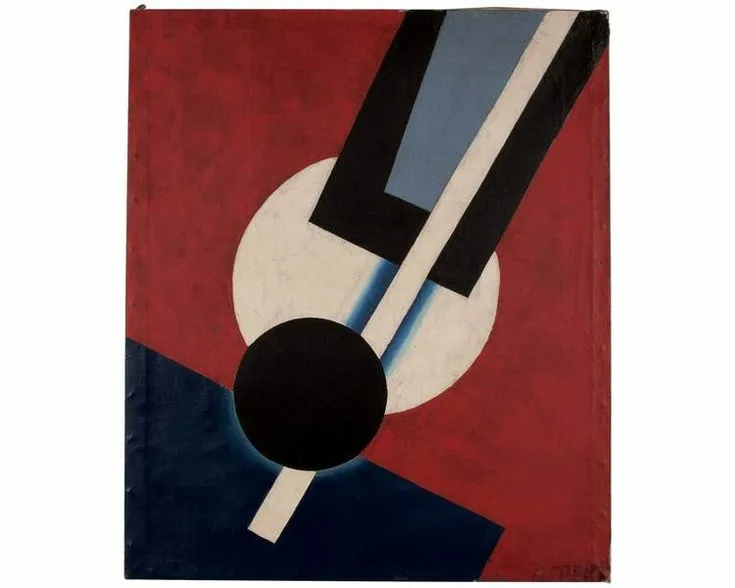
Rodchenko’s graphic designs transformed printed communication. He combined bold typography, sharp diagonals, geometric blocks, photographic fragments, and intense contrasts to create posters and book covers that could be understood quickly. His pages do not invite quiet, passive contemplation. They demand attention through scale, direction, rhythm, and visual impact.
His collaborations with the poet Vladimir Mayakovsky became particularly important. The two worked on advertisements, publications, slogans, and public campaigns in which words and images functioned as a unified construction. Text was no longer placed beneath an illustration. Letters themselves became active visual elements, capable of shouting, moving, and directing the viewer’s gaze.
The famous poster featuring Lilya Brik calling out the word «Books!» demonstrates this approach. A photographic portrait is combined with a triangular field of letters that appears to project her voice into public space.
The image remains one of the defining examples of Constructivist graphic design because it turns communication into visual architecture.
Rodchenko took up photography seriously during the 1920s and quickly began challenging conventional ways of seeing. He rejected the comfortable frontal viewpoint associated with traditional portraiture and documentary photography. Instead, he photographed from above, below, and at steep diagonal angles.
Staircases, balconies, towers, streets, factory equipment, athletes, workers, and public gatherings became dynamic geometric arrangements. An ordinary building could appear unfamiliar when viewed from the ground, while people crossing a courtyard became moving points within an abstract structure.
These unusual viewpoints were not visual tricks created only for novelty. Rodchenko believed that modern life required modern ways of looking. Cities were becoming faster, taller, more mechanized, and more densely organized. Photography needed to reflect this transformed experience rather than imitate the balanced compositions of academic painting.
The diagonal became one of his most recognizable devices. It disrupts stability and introduces direction, energy, and movement. A staircase rises across the frame, a human figure cuts through architectural space, or a line of shadows divides the image into opposing forces. Rodchenko used the camera to reveal abstract structures already present within everyday reality.
His portraits are equally innovative. Writers, artists, performers, and cultural figures were photographed from close range and unconventional positions. Faces may be cropped, tilted, or partly hidden by dramatic shadow. These images reject formal elegance in favor of immediacy and psychological intensity.
Rodchenko also experimented extensively with photomontage. By combining photographic fragments from different sources, he could construct images that did not exist in front of the camera. Photomontage became especially effective in posters and publications because it united the apparent truthfulness of photography with the freedom of collage.
Despite his commitment to revolutionary culture, Rodchenko eventually faced criticism from Soviet authorities and cultural institutions. His experimental viewpoints were sometimes condemned as formalist, meaning that they appeared to emphasize visual invention over approved ideological clarity. The political environment increasingly demanded accessible, heroic, and conventionally realistic images.
The growing dominance of Socialist Realism limited the possibilities available to avant-garde artists. Rodchenko continued working in photography, publishing, exhibition design, and other fields, but the radical optimism of the early Constructivist period became more difficult to sustain. He died in Moscow in 1956. His work nevertheless survived as a foundational influence on international photography and design.
Rodchenko’s legacy can be seen throughout modern visual culture. Editorial layouts, advertising campaigns, political posters, album covers, fashion photography, film titles, branding, and digital design continue to use techniques he helped establish. Cropped images, bold sans-serif lettering, diagonal structures, limited colors, and photographic montage have become so familiar that their original radicalism can easily be forgotten.
His photography also changed the relationship between the camera and the world. He showed that photography did not need to imitate normal eye-level vision. The photographer could reorganize reality through position, framing, sequence, and scale.
At ArtExpoWorld, we regard Alexander Rodchenko as an artist who did more than create an influential visual style. He redefined the role of the artist as an active participant in communication, technology, and public life.
His career demonstrates both the power and the danger of artistic utopianism.
Rodchenko believed that design could help transform society, but he also experienced the moment when political authority began restricting the freedom it had once seemed to encourage.
Alexander Rodchenko remains essential because his work continues to make vision feel active. His photographs, posters, and constructions do not allow viewers to remain passive. They ask us to change position, question familiar perspectives, and see the ordinary world as a field of dynamic visual possibilities.