







Edward Hopper was an American realist painter and printmaker whose quiet streets, empty rooms, isolated buildings, and emotionally distant figures became defining images of twentieth-century life. Born in Nyack, New York, in 1882, Hopper developed a visual language that appears simple at first glance but carries extraordinary psychological tension. His paintings rarely explain what has happened or what will happen next. Instead, they place viewers inside moments of waiting, separation, observation, and silence.
Hopper studied illustration before enrolling at the New York School of Art, where one of his most influential teachers was Robert Henri. Henri encouraged students to look beyond academic conventions and paint the realities of modern American life. Hopper absorbed this lesson, although his restrained compositions eventually differed from the energetic urban realism associated with many of Henri’s other students.
Between 1906 and 1910, Hopper travelled to Paris three times. He encountered European painting directly, but he did not join the avant-garde movements that were transforming the city. Cubism and abstraction had relatively little effect on his mature style. He was more deeply interested in the treatment of light, the organization of space, and the quiet observation of ordinary life.
Upon returning to the United States, Hopper struggled to establish himself as a painter. For many years, he supported himself through commercial illustration, a profession he disliked but continued until his fine-art career became financially sustainable. During this period, he painted, drew, and produced etchings that gradually clarified his distinctive subjects and methods.
Printmaking played an important role in Hopper’s artistic development. His etchings feature railways, streets, solitary figures, night interiors, and architectural structures. Working in black and white helped him understand the dramatic possibilities of illumination and shadow. These experiments later became fundamental to his paintings.
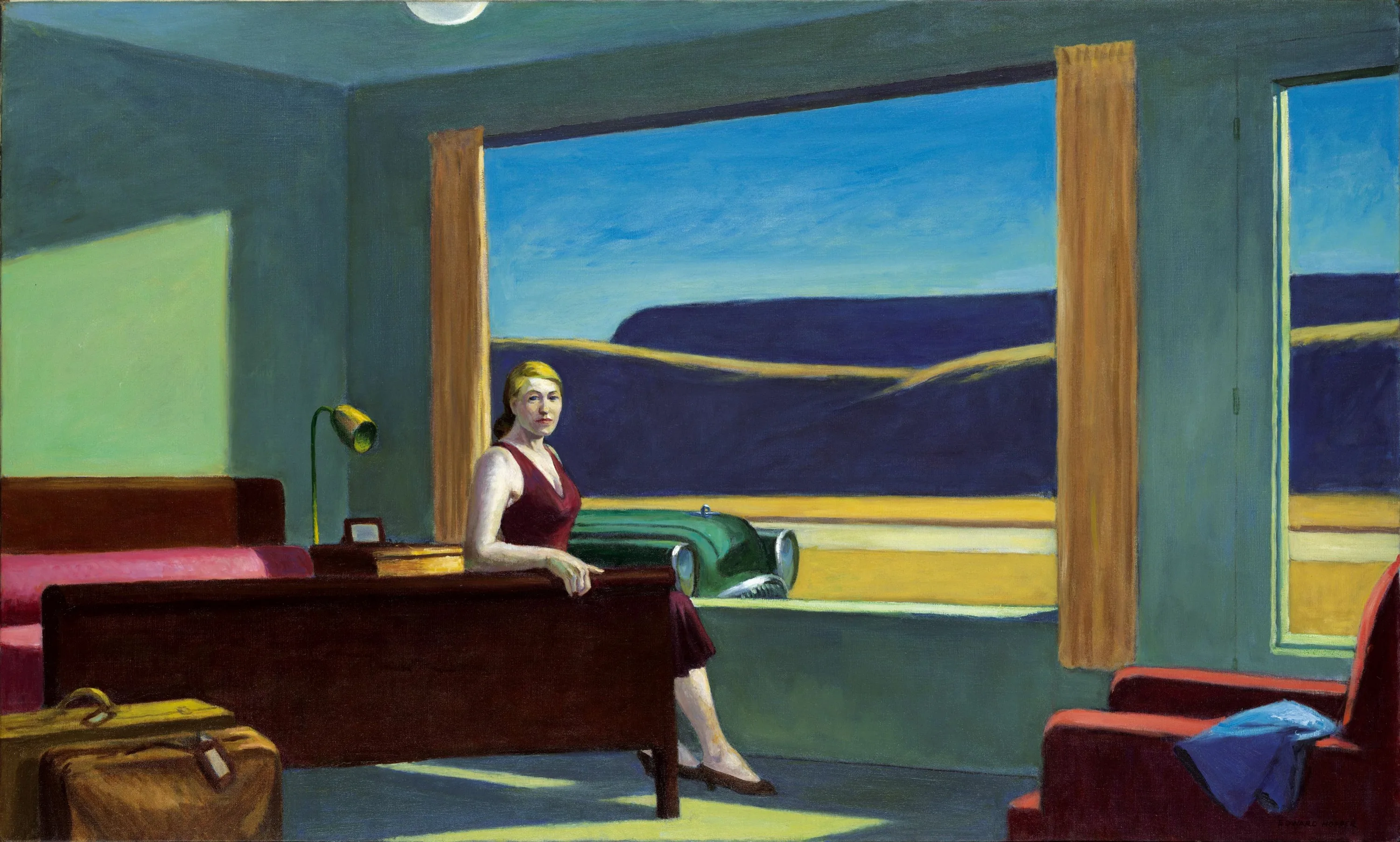
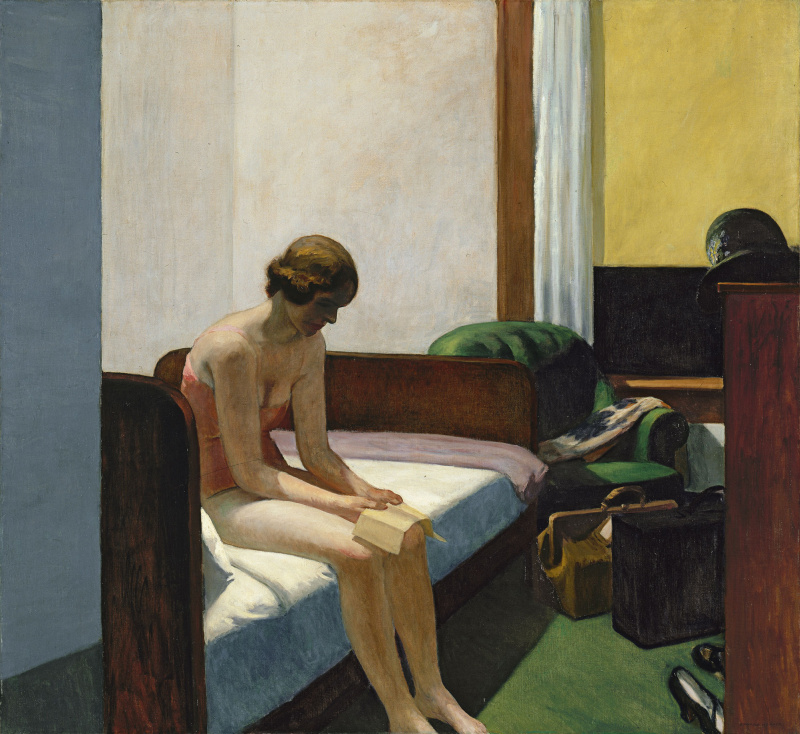
A defining feature of Edward Hopper’s work is his ability to turn familiar spaces into psychologically charged environments. Hotels, cinemas, offices, cafés, houses, gas stations, railway compartments, and city apartments become stages for human isolation. The locations are recognizable, yet they often feel detached from ordinary time.
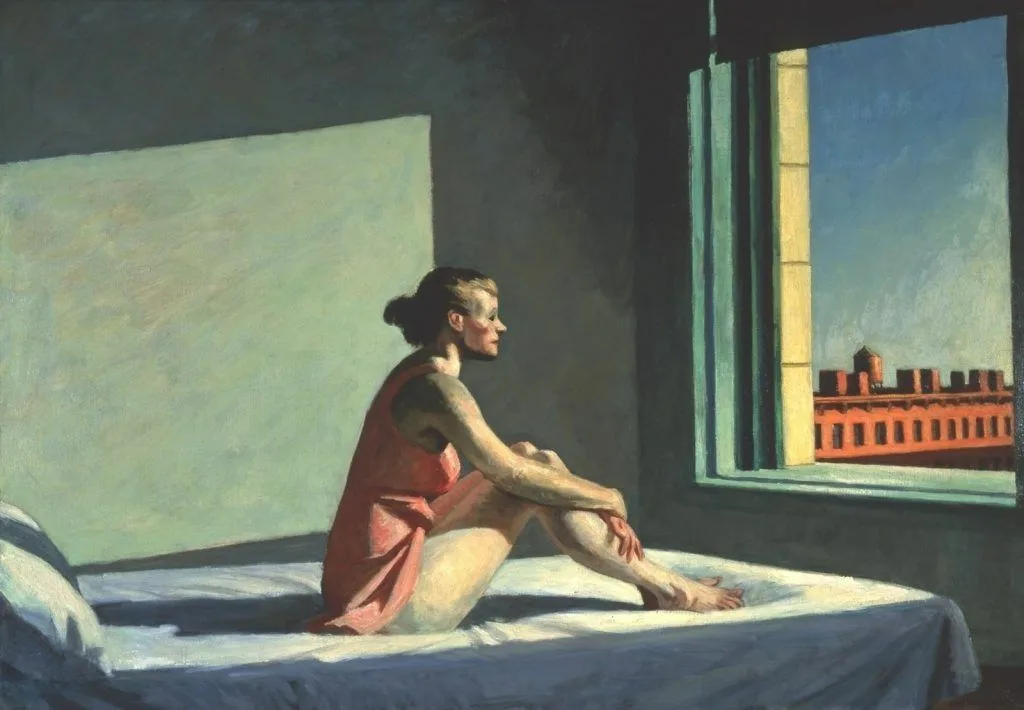
His figures rarely communicate openly. A woman sits alone on a bed, a couple occupies the same room without emotional closeness, or an office worker looks through a window after dark. Even when several people appear together, they may seem trapped inside separate internal worlds.
This emotional distance has made Hopper one of the artists most closely associated with modern loneliness. Yet his work is not simply an illustration of isolation. It also explores independence, privacy, anticipation, vulnerability, and the experience of being physically present while mentally elsewhere.
Windows are among Hopper’s most important compositional devices. They allow light to enter while creating boundaries between public and private space. Viewers may look into a room from outside or observe the city through the perspective of someone inside.
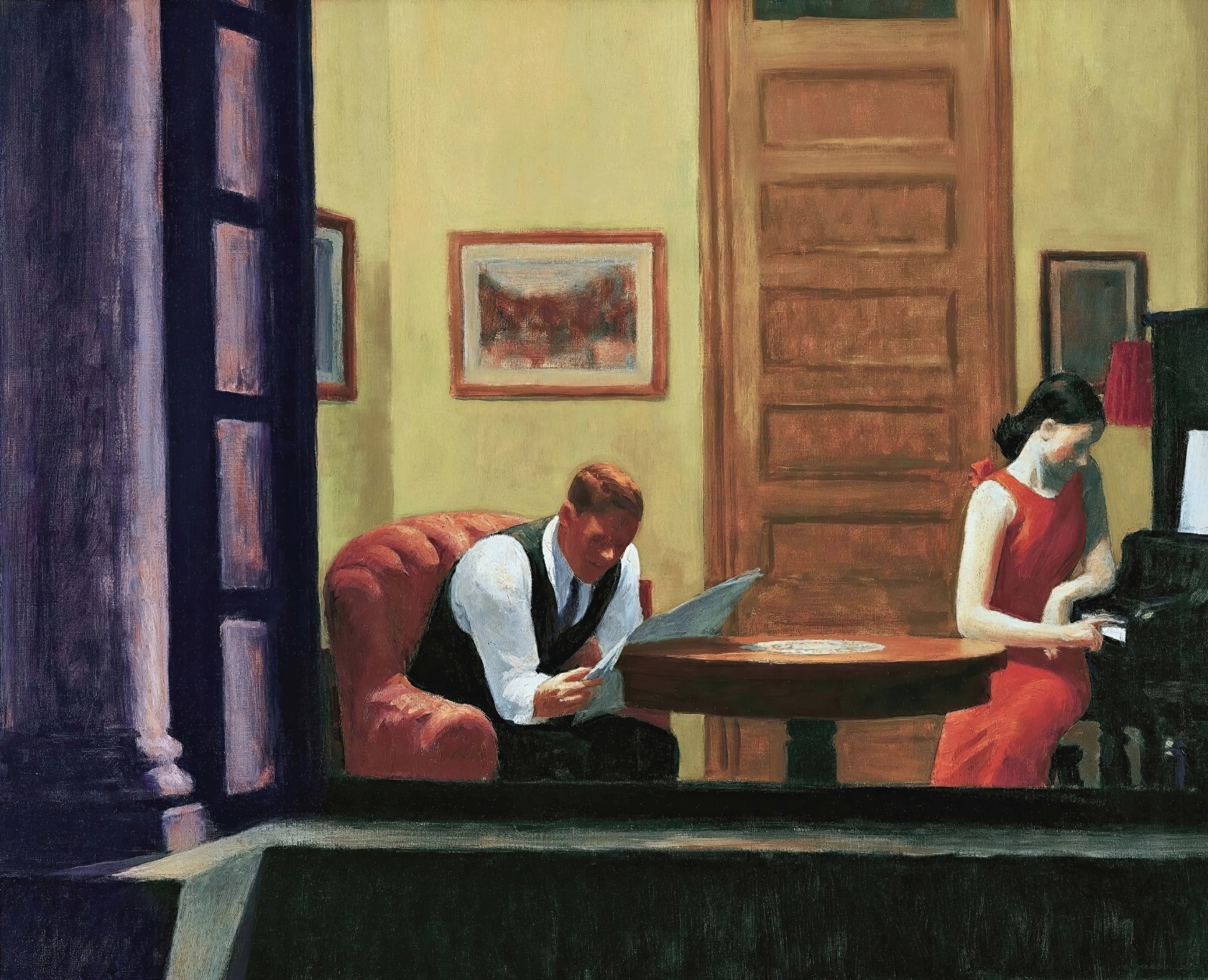
This structure frequently gives the act of looking an uncomfortable quality. The viewer becomes an unseen observer, close enough to witness an intimate moment but unable to participate in it.
Hopper’s artificial lighting is as important as natural sunlight. Electric light illuminates diners, offices, theatres, and windows against the darkness of the surrounding city. These bright interiors can appear inviting, but they also expose the figures inside them.
His most famous painting, Nighthawks, was completed in 1942. Four people occupy a brightly lit diner surrounded by deserted streets. The curved glass window makes the interior completely visible, yet no clear entrance can be seen.
The figures share the same space, but their relationships remain uncertain.
The painting’s power comes from this unresolved situation. It may represent loneliness, late-night companionship, urban alienation, or simply a moment suspended outside ordinary activity. Hopper provides the setting but allows viewers to construct the emotional story.
The diner’s strong geometry contributes to the atmosphere. Horizontal counters, empty sidewalks, glass walls, and sharply illuminated surfaces create a controlled structure. The city outside appears dark and inaccessible, while the interior offers visibility without genuine intimacy.
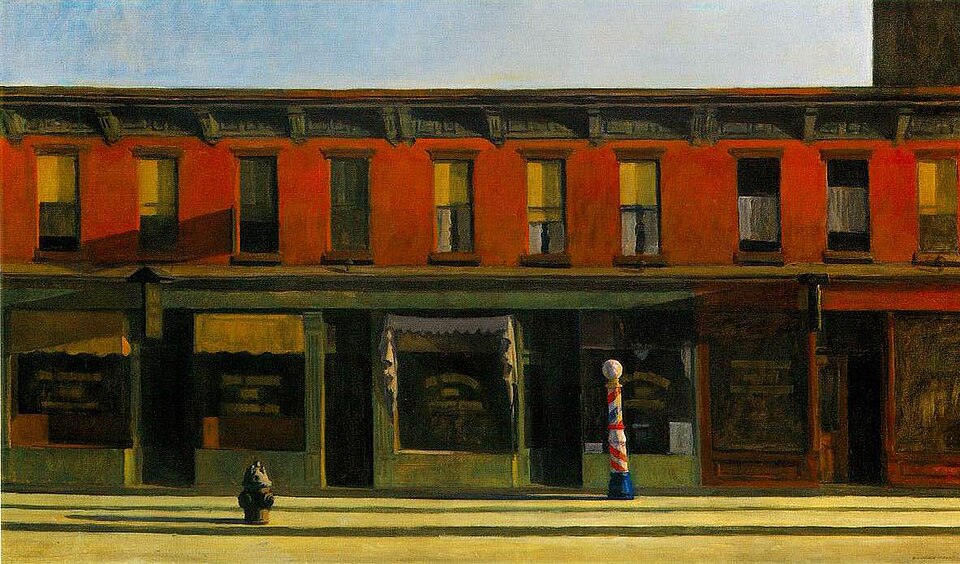
Hopper’s paintings of New York do not attempt to document the city comprehensively. He selected fragments: rooftops, bridges, theatres, apartment windows, elevated railways, streets, and isolated buildings. The Whitney Museum has described the city as a recurring backdrop for his distilled interpretations of urban experience.
He frequently altered architecture to strengthen a composition. Buildings were simplified, streets emptied, and visual distractions removed. His realism is therefore carefully constructed rather than photographic.
The resulting spaces feel believable while remaining strangely purified. Cities that should be crowded become almost silent, intensifying the emotional presence of the few people who remain.
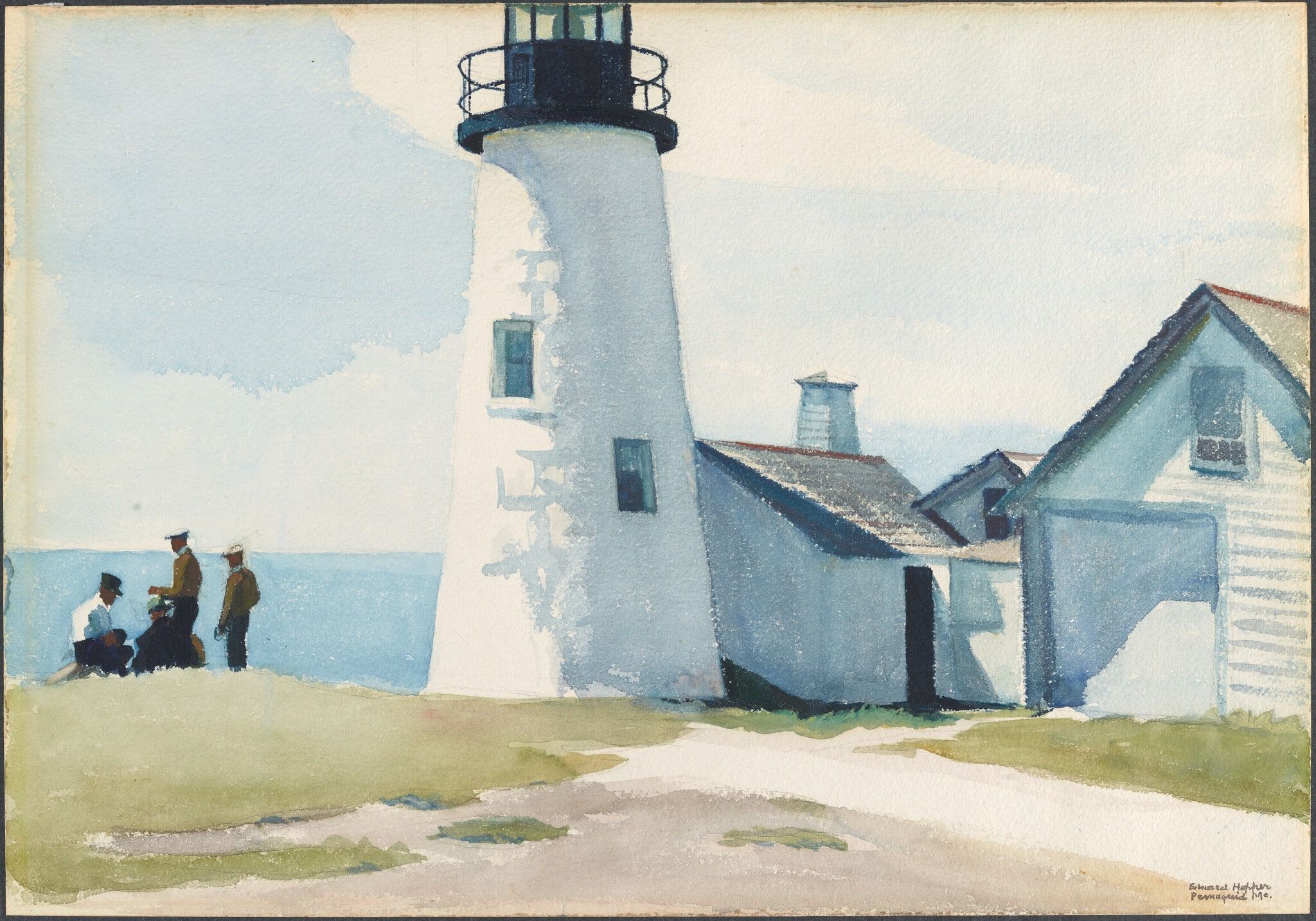
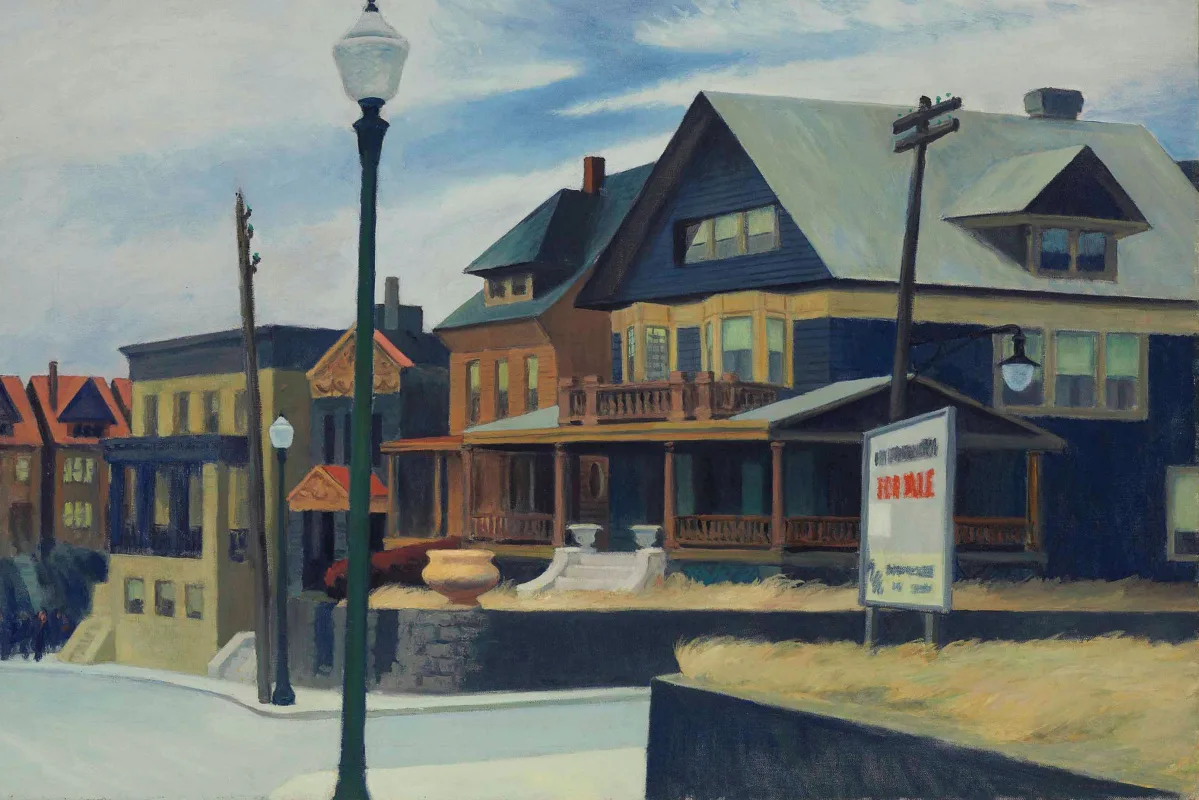
Hopper’s rural and coastal paintings share many qualities with his urban scenes. Houses, lighthouses, barns, roads, and railway tracks appear isolated within broad landscapes. The buildings often seem to possess personalities of their own.
A house may look defensive, abandoned, exposed, or watchful depending on the angle, light, and surrounding space. Architecture becomes a substitute for the human figure, communicating psychological states through walls, windows, roofs, and distance.
Hopper spent many summers in New England, particularly in Massachusetts and Maine. Coastal light, weathered architecture, and the meeting of land and sea gave him subjects that differed from New York while preserving his interest in solitude and structure.
Light in these paintings is often clear and unforgiving. Strong sunlight creates sharp divisions between illuminated surfaces and shadow. Rather than softening the scene, brightness can make it feel more exposed.
Hopper’s wife, Josephine Nivison Hopper, played a central role in his career. Also an artist, she encouraged him to work in watercolor and helped secure opportunities to exhibit. She served as the model for many female figures and kept detailed records of his paintings.
Their relationship was artistically productive but personally complicated. Josephine’s diaries became an important source for understanding Hopper’s working process, travels, subjects, and the creation of individual paintings.
The tension between observation and invention is essential to his method. Hopper often sketched locations directly but completed paintings in the studio. He combined visual memory with preparatory drawings, removing unnecessary information until the composition achieved emotional clarity.
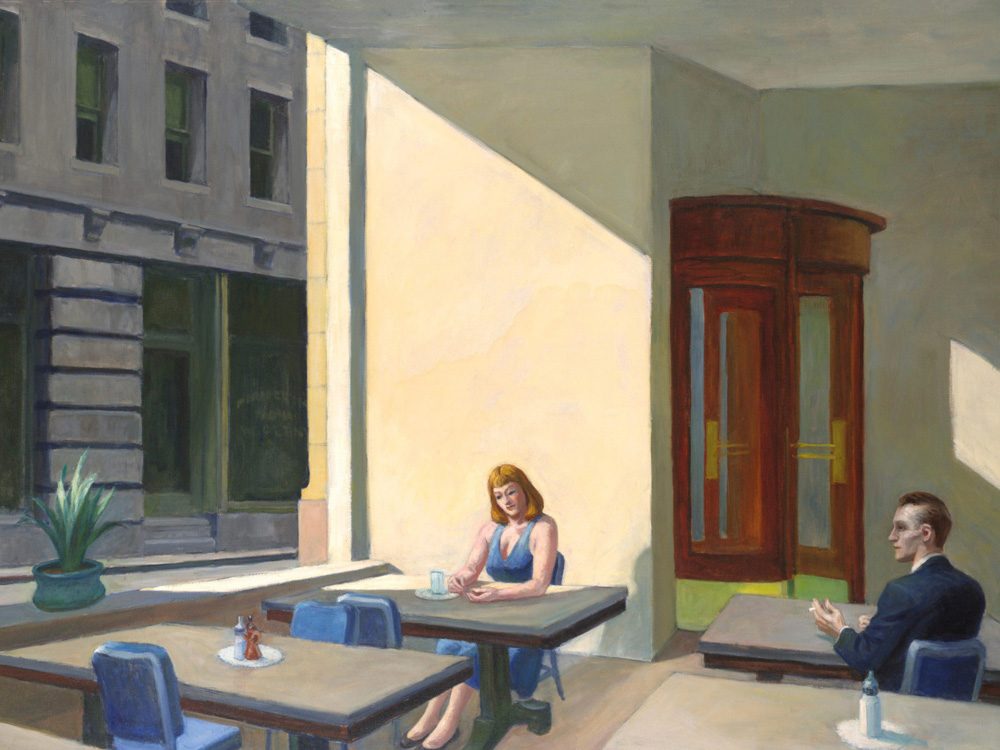
His paintings appear still, yet they often imply events beyond the frame. A train may arrive, a telephone may ring, someone may enter the room, or a conversation may have just ended. The absence of explanation gives each image cinematic potential.
Hopper’s influence on film is enormous. Directors and cinematographers repeatedly draw from his lighting, architecture, framing, and emotional atmosphere. His compositions resemble scenes from films that were never made, while many actual films have recreated the mood of his paintings.
Photography, literature, theatre, advertising, and contemporary painting also continue to engage with his imagery. The solitary diner, illuminated window, empty road, and isolated house have become part of a broader visual vocabulary of modern life.
Hopper remained committed to recognizable imagery during decades when abstraction became dominant in American art. This independence gave his work a distinctive position.
He was neither a traditional academic realist nor an avant-garde abstractionist.
His realism is modern because it investigates perception and psychological experience rather than simply reproducing appearances. The visible environment becomes a structure through which emotional distance can be understood.
At ArtExpoWorld, we consider Edward Hopper one of the greatest painters of modern silence. He understood that a nearly empty room, an illuminated window, or two people avoiding each other’s gaze could reveal the emotional structure of an entire era.
Hopper’s work remains relevant because the conditions he painted have not disappeared. Cities remain crowded but emotionally isolating. People continue to share physical spaces while inhabiting private realities. Architecture and artificial light continue to shape how individuals experience themselves and one another.
Edward Hopper transformed ordinary American environments into universal images of waiting, distance, and attention. His paintings do not tell viewers what to feel. They create enough silence for viewers to discover their own emotions inside them.