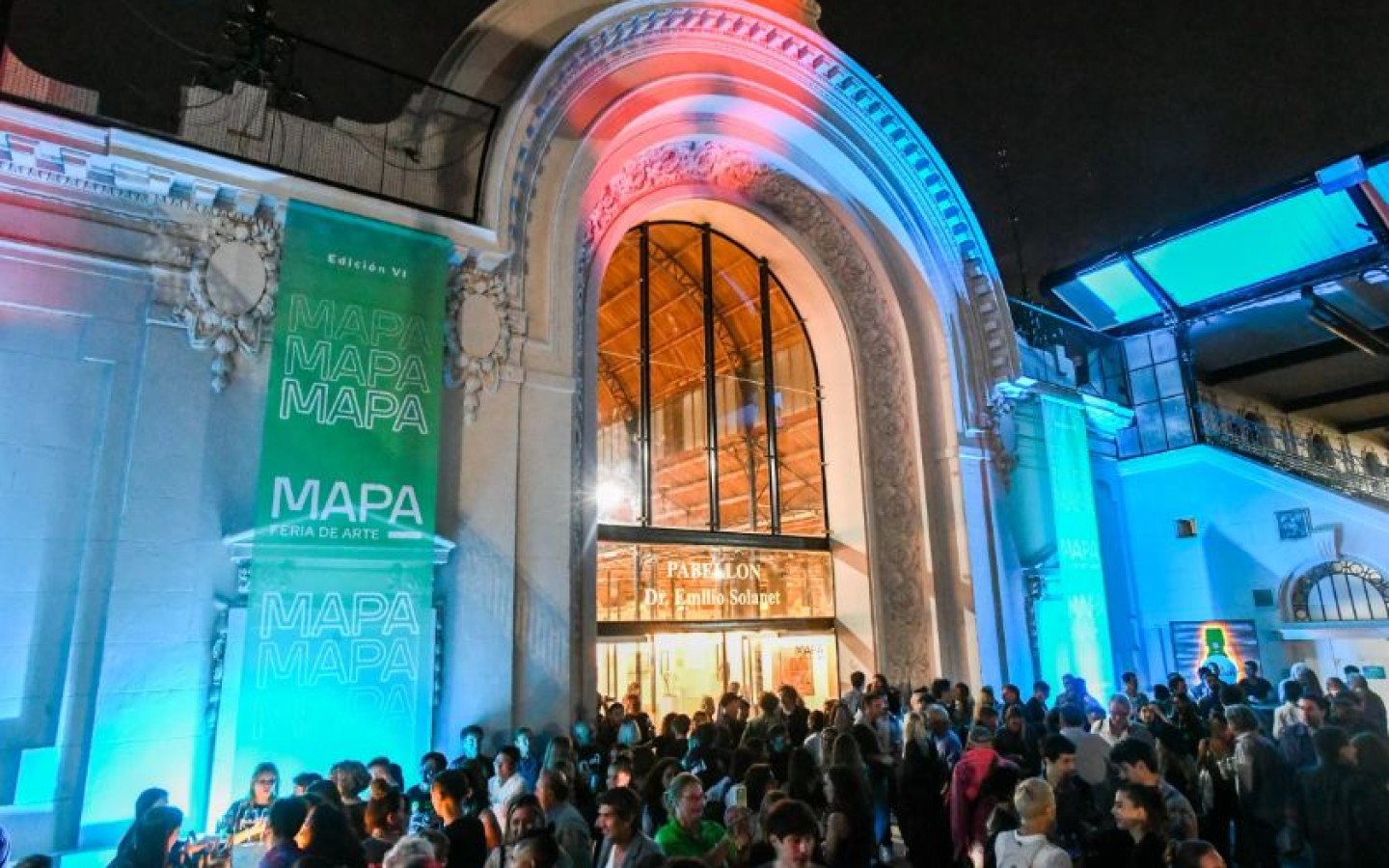
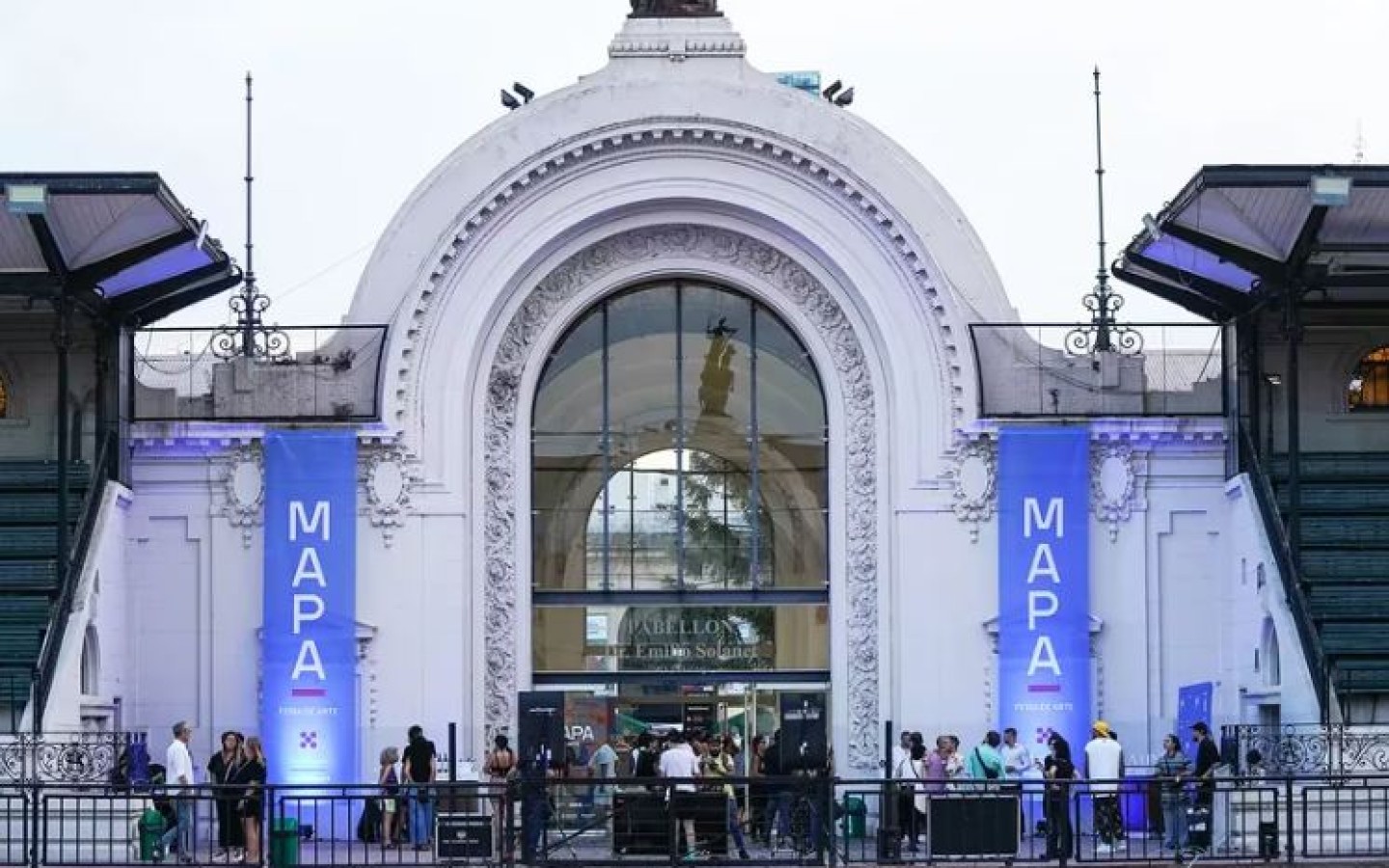
Buenos Aires can be difficult to read through its most internationally visible galleries alone. MAPA offers another entry point: an art and design fair where gallery presentations, curatorial projects and objects can meet without being forced into a single category. Its ninth edition is announced for 3–6 June 2027 in Pavilion 8 at La Rural. For visitors interested in how a scene actually produces and circulates ideas, that mixed structure is a reason to pay attention.

The announced framework has three sections: Galleries, Curatorial Projects and Design. Clara Ríos leads the general curatorial work, with María Boggiano responsible for Design. Applications will shape the final selection; the fair has not yet published a complete 2027 exhibitor list, gallery total or timetable of talks. A section announcement tells us how the fair intends to organise its material, rather than which artists will finally occupy every stand.

Hybrid proposals and collaborations between two projects are explicitly welcome. This could make the boundaries between display, furniture, sculpture and exhibition-making particularly productive. Look for presentations in which the relationship between works has been thought through. A compelling stand should explain something that no individual object could communicate alone.

MAPA 2027 Event Overview

MAPA 2027: Dates, Tickets & Visitor Guide

Dates:

3 June 2027 - 6 June 2027

Location:

MAPA takes place in Pavilion 8, La Rural, Buenos Aires, Argentina.

Mission:

MAPA's value lies in widening the channels through which contemporary work reaches an audience. Its combination of galleries, curatorial initiatives and design recognises that cultural production does not arrive in neatly separated professional boxes. The useful question is whether the encounter lets each practice become more legible, while retaining the differences between an editioned object, a unique artwork and a collaborative installation.

Organizer:

The fair is presented by MAPA. The 2027 announcement identifies Ríos and Boggiano as the curatorial committee working with the MAPA team on the selection. La Rural is the venue, rather than a substitute name for the fair's artistic organisers.

Why attend to MAPA 2027?

Attend if you want to examine contemporary Argentine production alongside a deliberately mixed exhibition structure. The fair should particularly interest visitors who follow artist-run initiatives, small galleries or the movement between functional objects and visual art. It is also an opportunity to compare different ways of presenting a body of work: a concentrated project can reveal an artist's thinking more clearly than a wall crowded with unrelated pictures.

Ticket Information

General admission costs

The 2027 admission price, concessions, public opening hours, and preview arrangements have not yet been announced. No previous peso tariff should be considered the current price. For assistance with a potential visit, please use the enquiry form on this page and specify the dates, number of visitors, and whether public admission or professional access is required. Submitting an enquiry does not itself confirm an invitation.

Getting There:

Plaza Italia on Subte Line D is a convenient access point to the La Rural complex. Confirm the operating service and the designated Pavilion 8 entrance shortly before your trip. When taking a taxi, provide both the fair name and the pavilion, rather than just the broader Palermo neighborhood. Allow enough time between arriving at the complex and actually entering the exhibition.

Accommodation

For a stay focused on the fair, compare accommodations in Palermo with those connected to Plaza Italia by a simple journey. Choose based on the final entrance and your broader gallery appointments, rather than a hotel's claimed distance from La Rural's perimeter. Buenos Aires is a large city: two addresses described as central can still result in a complicated daily route.

Don't Miss an Exhibition

Follow us on X to get the latest art events from around the world first

Follow

Gallery: MAPA 2027

Secure Your Spot at MAPA 2027 — Before It's Too Late

Tickets are limited and sell out fast.
Get instant access to the MAPA 2027 registration page and be the first to know about exclusive events, VIP passes, and travel perks.

Early access. Limited availability. Global art at your fingertips.

History & Context of a MAPA 2027

MAPA traces its activity to 2017. Its 2027 announcement presents design as part of an expanded field of artistic production and circulation. This is a useful distinction from treating design as a decorative annex to the art stands. For a wider regional comparison, South American art fairs from April to June 2027 sets Buenos Aires beside São Paulo and Lima without implying that the three events occur in the same week.

What Changed

The next edition is now fixed for early June, and the announced ninth-edition selection explicitly includes the three named sections and collaborative proposals. A completed 2027 programme is still to come. It would be premature to describe a newly expanded gallery count, a new prize or a changed proportion of international exhibitors. Those comparisons require the final roster and a genuinely comparable earlier edition.

Interesting Fact

MAPA's invitation permits a proposal shared by two projects. This small organisational detail can have an unusually visible effect on what a visitor sees: it allows an exhibition to be built around a relationship rather than a single trading identity. Two spaces might share a question, a material or a method while keeping separate programmes. We would look for whether such a collaboration produces a coherent argument; sharing a booth becomes interesting when it changes the reading of the work.


Tips for Visitors of MAPA 2027

Photograph a work's label as well as the work, where permitted. Record the artist, title, year, material, dimensions and exhibiting project. In a mixed art and design fair, also establish whether a displayed object is unique, part of a numbered edition or a prototype for a commission. Similar-looking objects can involve very different rights, production times and replacement possibilities.

For furniture or lighting, ask about the usable specification, installation and aftercare. For works on paper, ask about mounting and any framing included in the quoted price. These questions need not turn the visit into a purchasing exercise; they often reveal the maker's priorities and the relationship between an object's appearance and its construction.

Tips from the ArtExpoWorld

Build the first circuit around the three sections, then return to the presentations that create meaningful connections between them. If your South American plans fall earlier in the season, Pinta Lima 2027 provides a separate April option in Peru. It is a regional comparison, not a neighbouring Buenos Aires event or a reason to assume that one ticket covers both fairs.

Be the First to Access Official "MAPA 2027" Tickets

Don’t miss your chance to attend one of the world’s leading art fairs. Get direct access to the official ticketing page, exclusive updates, and important visitor information.

Early access. Limited availability. Global art at your fingertips.

Editor’s Note

We find MAPA's proposed mixture promising because it brings a familiar art-historical problem into a commercial setting: when does an object invite use, and when does it ask to be contemplated? The distinction has never been as tidy as museum departments make it appear. A fair that places these practices within sight of one another can expose shared decisions about surface, structure, labour and domestic space.

The danger is that the word interdisciplinary becomes permission for an attractive but intellectually loose collection of things. We would judge this edition by the precision of its presentations: whether the design section has a visible position, whether a curatorial project sustains a line of thought, and whether shared proposals make their collaboration necessary. More categories will mean little unless the relationships between them can be seen.

Our reason to follow MAPA is therefore specific. It offers the possibility of encountering Buenos Aires through the working scale of its projects, rather than through a ranking of internationally familiar names. The strongest discoveries may be modest in size and exact in their thinking. That is the kind of encounter for which a less predictable fair can justify a place on a regional itinerary.

Current and Upcoming Art Expos