

Pieter Bruegel the Elder was one of the most original painters of the Northern Renaissance, celebrated for his panoramic landscapes, densely populated scenes, and profound allegorical insight. Bruegel transformed everyday life into a stage for moral reflection, revealing both the dignity and absurdity of human behavior.
Bruegel’s paintings are remarkable for their narrative complexity. Works such as The Hunters in the Snow and The Peasant Wedding depict ordinary people engaged in seasonal labor or communal celebration. Yet beneath the surface realism lies layered symbolism. Each figure, gesture, and interaction contributes to a broader meditation on human nature.

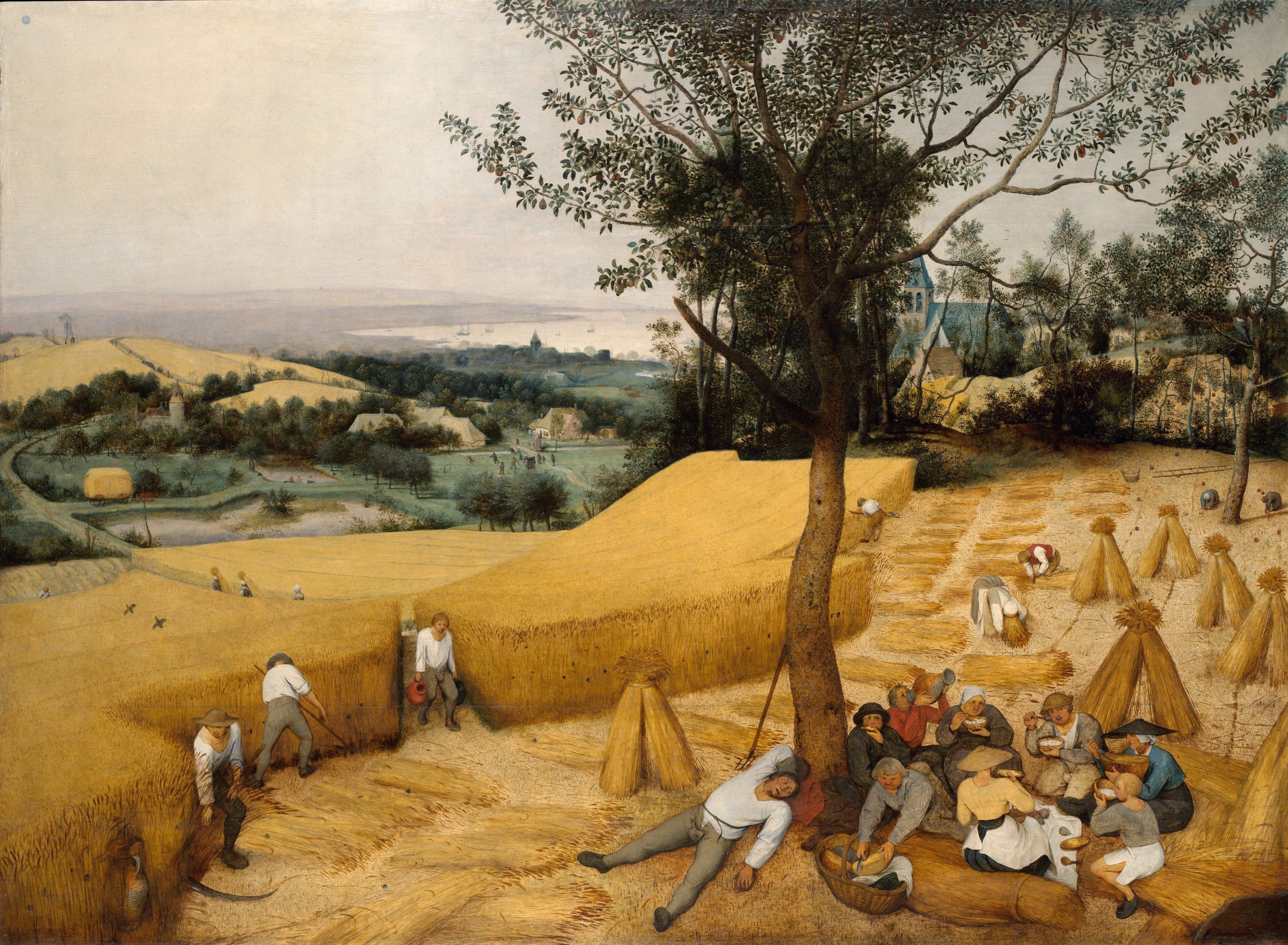
A defining feature of Bruegel’s practice is his ability to combine landscape and storytelling. Expansive natural settings frame intimate human dramas, situating individuals within vast environments that dwarf their ambitions. This interplay between scale and detail creates visual tension and philosophical depth.
Bruegel’s approach to peasant life was revolutionary. Rather than idealizing nobility or mythological subjects, he elevated common people as worthy protagonists. His peasants are neither caricatures nor heroes; they are complex participants in communal existence. Through humor and subtle critique, Bruegel exposed folly, greed, and vulnerability.

Color and composition in Bruegel’s work are meticulously structured. Earthy tones and balanced contrasts reinforce realism while guiding the viewer’s eye across crowded scenes. Despite the density of figures, each composition maintains clarity and spatial coherence.
Allegory plays a central role in Bruegel’s art. Paintings such as The Tower of Babel and The Triumph of Death extend beyond narrative into moral commentary. These works confront themes of pride, mortality, and chaos, presenting humanity as both ambitious and fragile.
Within the broader context of Renaissance art, Bruegel occupies a unique position. While influenced by Italian developments, he remained committed to Northern traditions of detail and symbolism. His work bridges realism and satire, observation and philosophy.
For contemporary audiences in Europe and the United States, Bruegel’s paintings remain strikingly relevant. His depictions of collective behavior, social hierarchy, and human contradiction resonate across centuries. At artexpoworld, we view Bruegel as a foundational figure whose exploration of society through art continues to inform modern visual culture.

Bruegel’s legacy lies in his panoramic vision. He saw humanity as part of a larger cycle of nature and history, neither glorified nor condemned, but observed with clarity and wit.
At artexpoworld, we consider Pieter Bruegel the Elder a master of narrative complexity and social insight, whose art demonstrates how landscape and allegory can merge to create enduring reflections on the human condition.