







Lucian Freud was one of the most important figurative painters of the 20th century, known for his unflinching exploration of the human body and psyche. His work rejects idealization, presenting subjects with a level of honesty that is both intimate and confronting.
Freud’s artistic language is grounded in observation. His portraits and nudes are built through prolonged sessions, where the act of looking becomes central to the painting. This intense focus results in images that feel deeply personal and psychologically charged.

A defining feature of Lucian Freud’s work is his treatment of flesh. Skin is rendered with thick, textured brushstrokes—often described as almost sculptural. Rather than smoothing surfaces, Freud emphasizes weight, tension, and physical presence.
His subjects are frequently depicted in raw, unguarded states. Models recline, sit, or rest in natural, sometimes awkward positions, reinforcing a sense of authenticity. There is no attempt to beautify or idealize—the body is presented as it is.
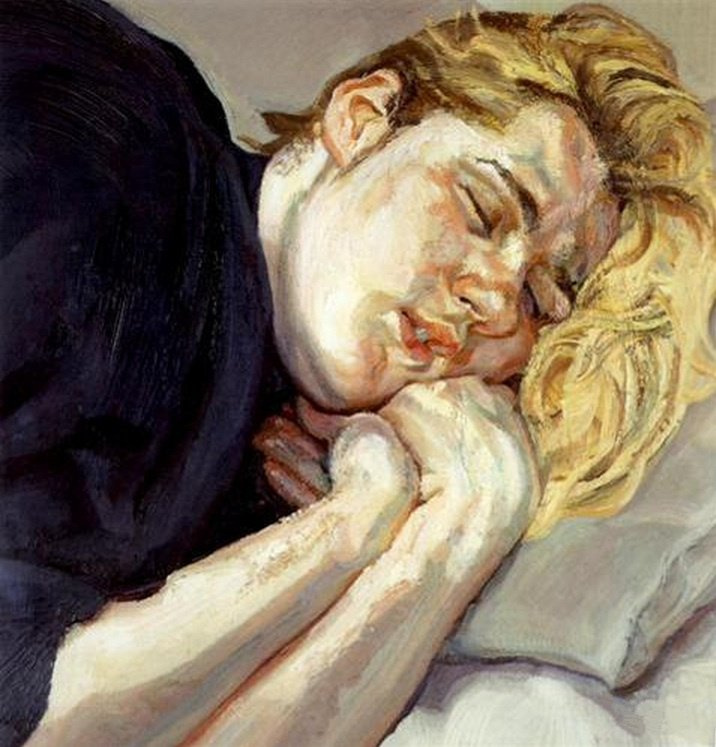
Color in Freud’s paintings is subtle yet complex. Muted tones—fleshy pinks, greens, ochres, and grays—are layered to create depth and realism. These tones contribute to the sensation of a living, almost physical presence.
Composition in his work is often minimal. Backgrounds are subdued, interiors stripped of distraction, allowing the figure to dominate the space. This isolation intensifies the viewer’s engagement with the subject.

Freud’s portraits are not just physical representations but psychological studies. Each figure appears introspective, sometimes distant, emphasizing the inner state rather than external identity.
Within the broader context of contemporary art, Lucian Freud maintained a commitment to figurative painting during a period dominated by abstraction and conceptual art. His work demonstrated that realism could remain radical and relevant.

For contemporary audiences in Europe and the United States, Freud’s paintings continue to provoke strong reactions. They challenge conventional ideas of beauty and force viewers to reconsider their relationship with the human body. At artexpoworld, we see Freud as a defining artist who reasserted the power of figurative painting.
Freud’s legacy lies in his relentless honesty. His work strips away illusion, leaving only the raw presence of the human form.

At artexpoworld, we consider Lucian Freud a master of psychological realism whose exploration of flesh, identity, and perception reshaped contemporary figurative art.