









Sightseeing in Yaroslavl: The Ultimate Must-See List
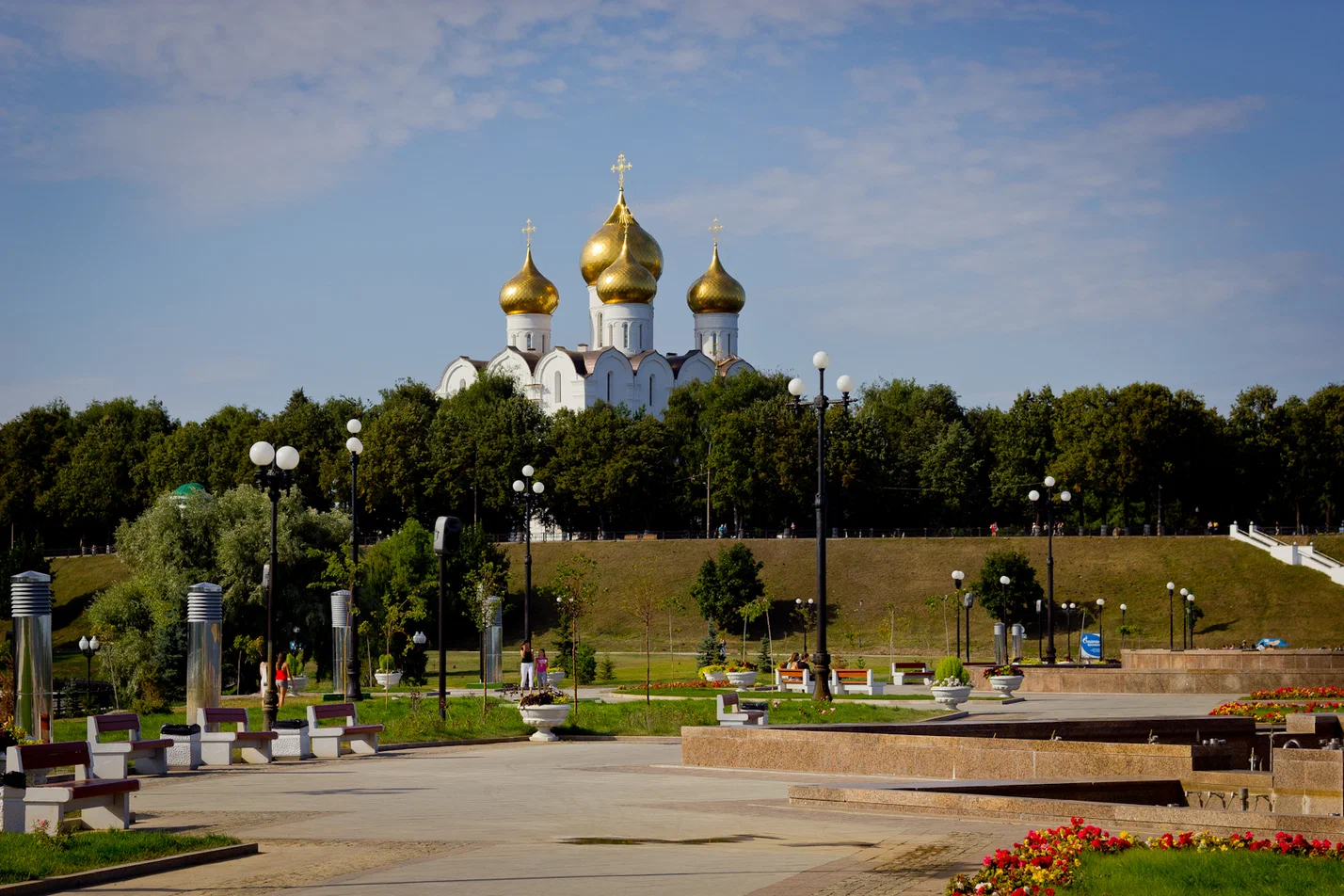
Yaroslavl is one of the most important historic cities of Russia’s Golden Ring and one of the most rewarding destinations for travelers interested in traditional Russian architecture, Orthodox art, and Volga River landscapes. Sightseeing in Yaroslavl reveals a remarkably preserved historic center filled with churches, monasteries, merchant houses, public squares, and elegant embankments.
Founded in the early eleventh century, Yaroslavl developed into a major commercial center on the Volga. Its prosperity encouraged the construction of numerous churches and civic buildings, many of which survive today. The historic center is recognized as a UNESCO World Heritage Site and provides an exceptional example of Russian urban development.
A strong Must-See Yaroslavl itinerary should combine its historic churches, monastery complex, Volga waterfront, Strelka park, museums, and streets preserving the atmosphere of an old Russian trading city.
Transfiguration Monastery – The Essential Historic Landmark
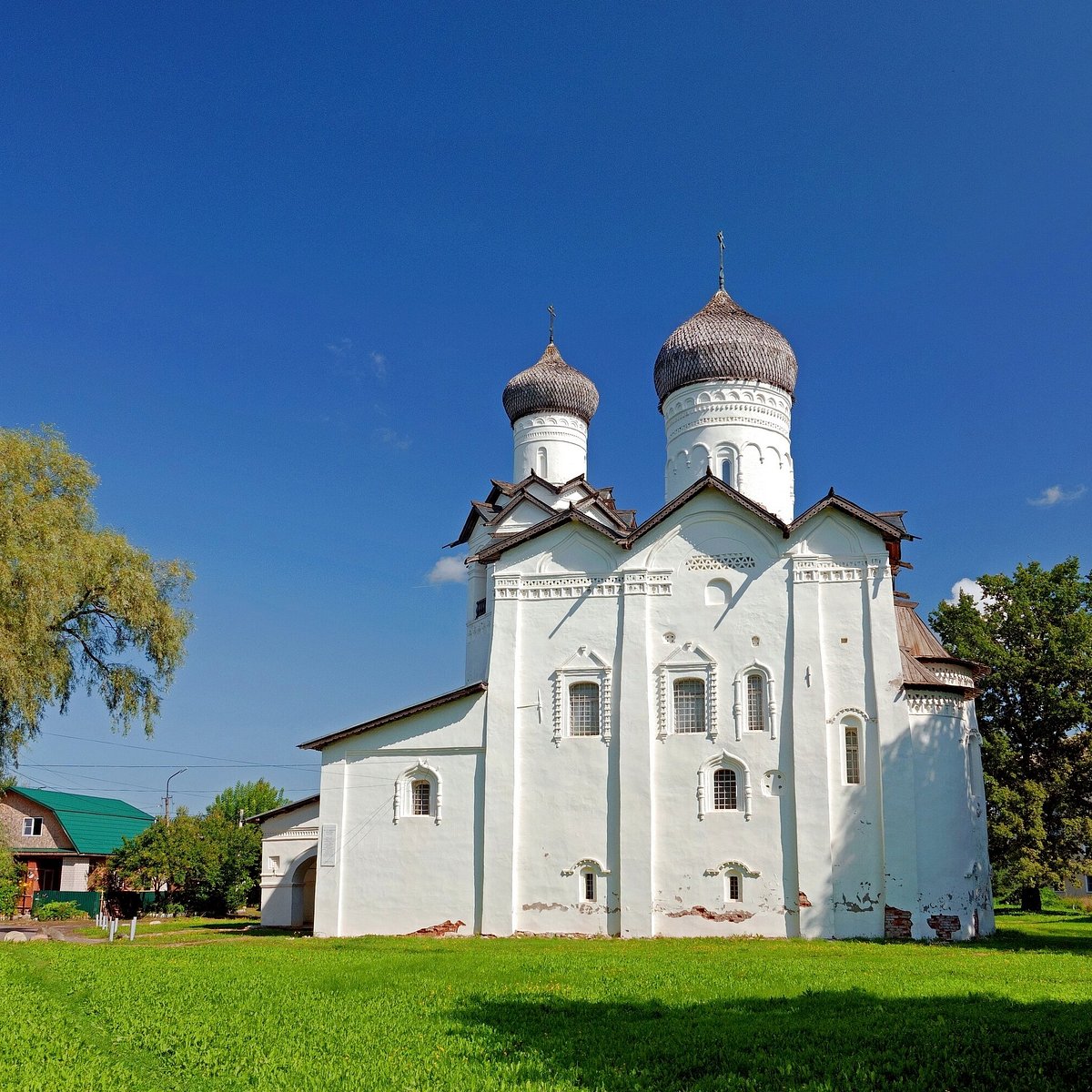
The Transfiguration Monastery is one of the most important architectural complexes in Yaroslavl and an ideal starting point for sightseeing in the city. Surrounded by substantial walls and towers, the complex resembles a fortress and preserves several significant religious and historic buildings.
The Transfiguration Cathedral is among the oldest surviving structures in Yaroslavl. Its architecture and interior decoration provide insight into the artistic traditions that shaped the city before its great seventeenth-century building boom.
The monastery also has an important place in Russian literary history. A manuscript of The Tale of Igor’s Campaign, one of the best-known works of medieval Russian literature, was discovered in the monastery collection in the eighteenth century.
Visitors can explore museum exhibitions, religious architecture, defensive structures, and elevated viewpoints within the complex.
Why visit:
To experience one of Yaroslavl’s most important historic sites and explore medieval architecture, museums, and Russian cultural heritage.
Church of Elijah the Prophet and Yaroslavl’s Religious Architecture
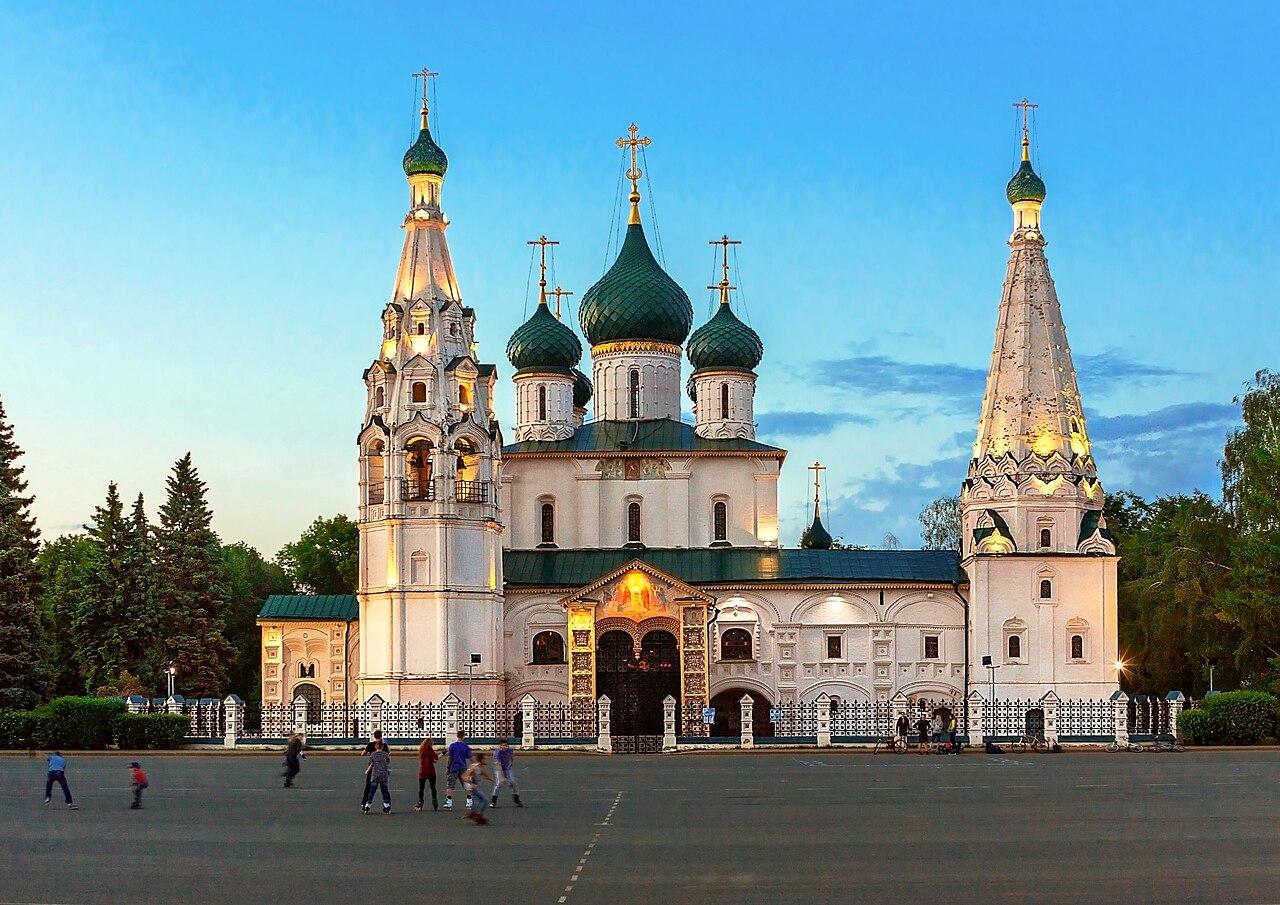
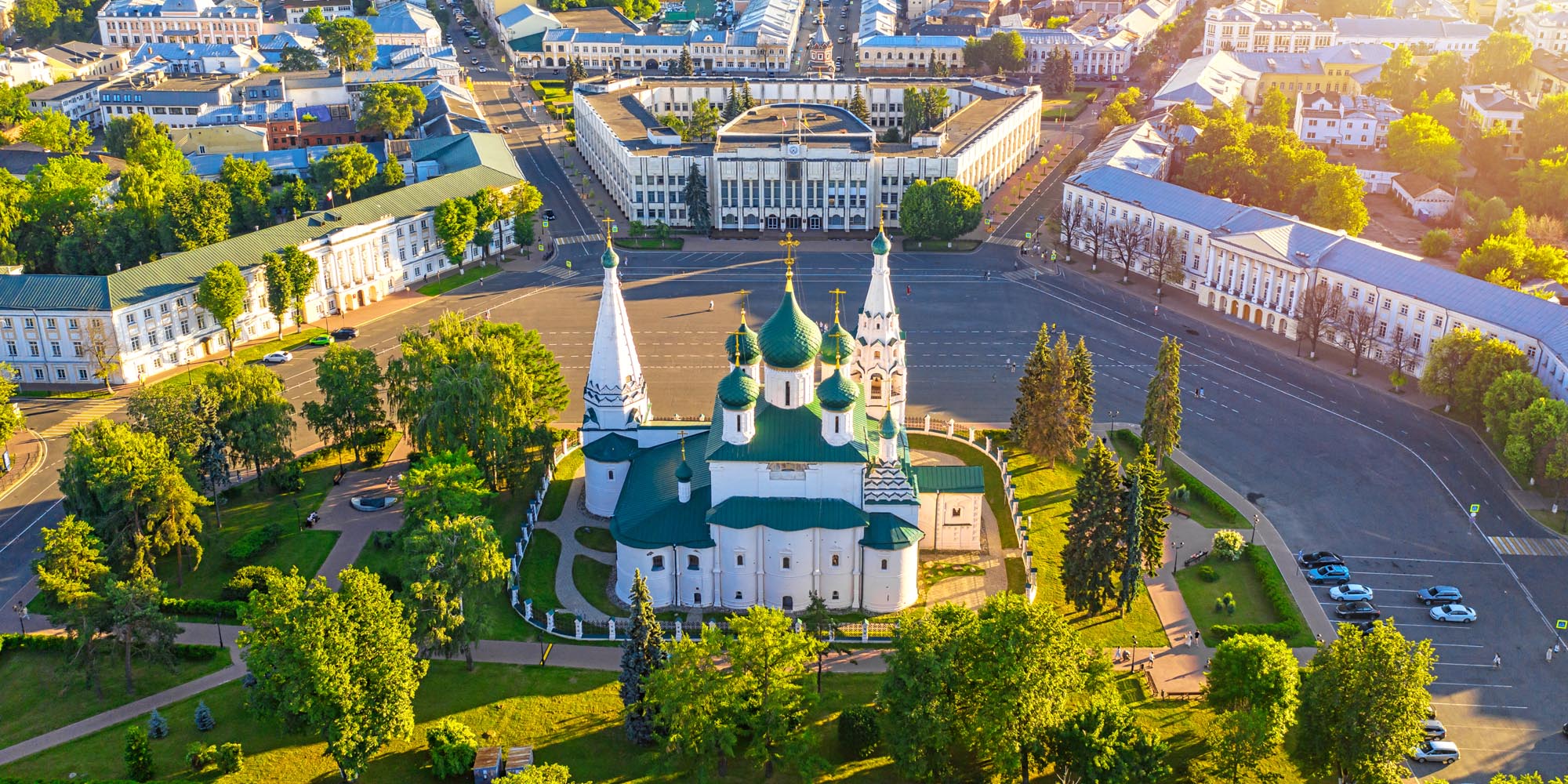
The Church of Elijah the Prophet is one of the defining monuments of sightseeing in Yaroslavl. Standing near Sovetskaya Square, it represents the extraordinary flowering of church architecture that took place when wealthy merchants financed religious construction throughout the city.
Its exterior is recognizable for green domes, decorative façades, and carefully balanced proportions. The interior is particularly important for its extensive fresco decoration.
Yaroslavl contains numerous additional churches that make the city exceptionally rewarding for travelers interested in architecture and religious art.
The Church of the Epiphany stands out for its decorative brickwork and colorful details. The Church of St. John the Baptist in Tolchkovo is famous for its complex silhouette and multiple domes, while the Church of St. Nicholas Nadein represents another important example of seventeenth-century architecture.
Rather than viewing these buildings only as individual attractions, visitors should consider them part of a broader artistic movement. Together they reveal how local merchants, craftsmen, painters, and architects created a distinctive Yaroslavl architectural tradition.
Why visit:
To discover some of the finest examples of traditional Russian church architecture and monumental religious painting.
Strelka and the Volga Embankment – Scenic Sightseeing Yaroslavl
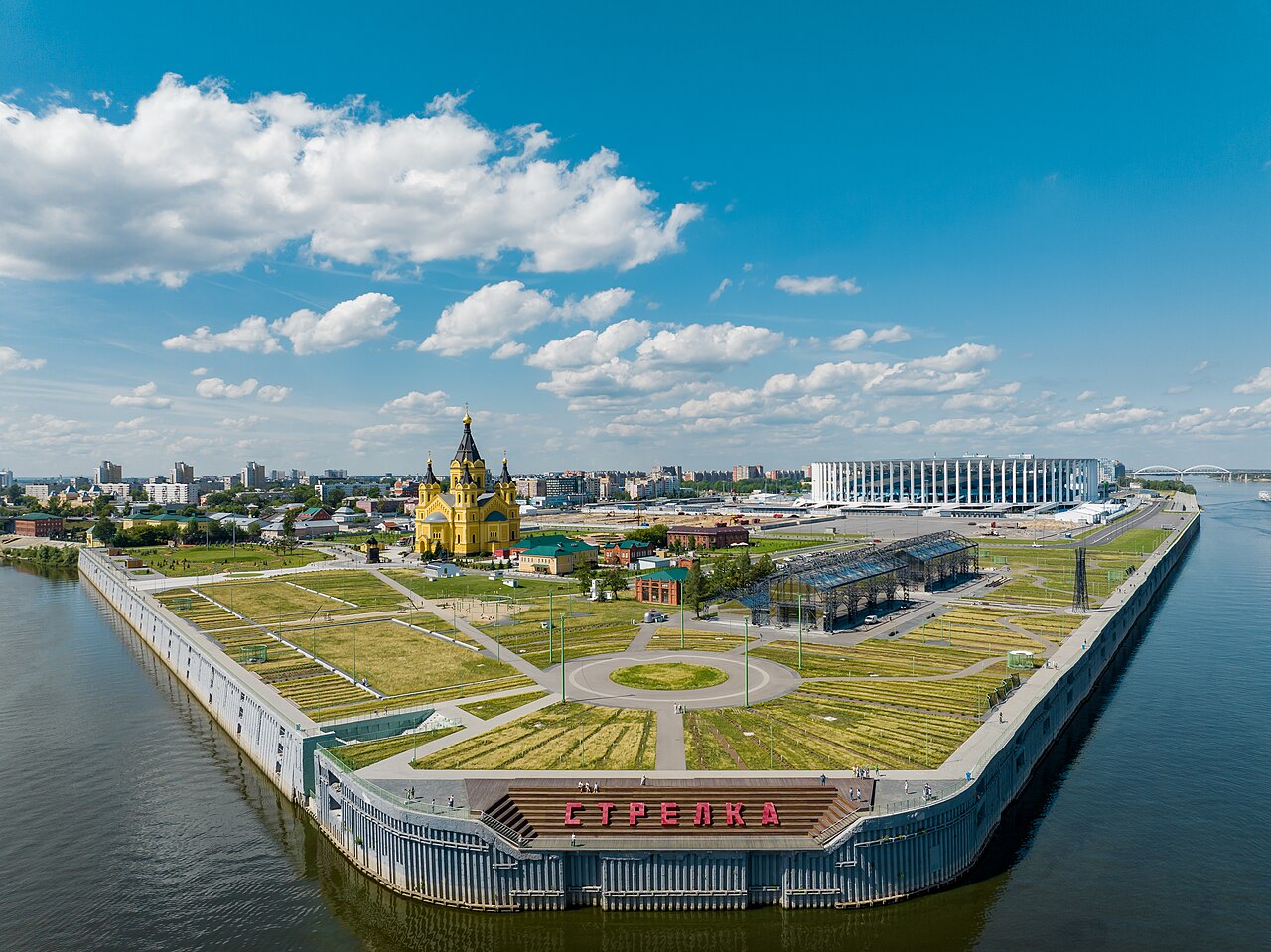
Yaroslavl stands where the Kotorosl River meets the Volga, and this geography has shaped the city throughout its history. Strelka occupies the area near the confluence and has become one of Yaroslavl’s most attractive public spaces.
Landscaped paths, fountains, lawns, and open viewpoints create broad perspectives across the rivers.
The Monument to the 1000th Anniversary of Yaroslavl marks the city’s long history and provides another recognizable landmark.
Nearby stands the Assumption Cathedral. Its prominent position above the river makes it an important element of the modern cityscape.
From Strelka, travelers can continue along the Volga Embankment. Historic buildings, museums, gazebos, trees, and river views make this one of the most enjoyable walking routes in the city.
Morning brings softer light and quieter paths, while evening offers atmospheric views across the Volga. The riverfront is especially important because it shows how closely Yaroslavl’s history is connected with trade and transportation.
Why visit:
To enjoy panoramic Volga views, landscaped public spaces, monumental architecture, and one of the city’s best walking routes.
Historic Center and UNESCO Heritage
The historic center of Yaroslavl is notable not only for individual monuments but also for its overall urban structure. Streets, squares, churches, merchant houses, and public buildings create a coherent historic environment that earned UNESCO World Heritage recognition.
Sovetskaya Square provides one of the clearest examples of this planned urban landscape. The Church of Elijah the Prophet forms its architectural focus, while surrounding streets extend outward through the center.
Walking through Yaroslavl reveals Classical façades beside older religious buildings and later commercial architecture. This mixture reflects the city’s development across several centuries.
Historic merchant houses provide another important layer. Their scale and decoration demonstrate the wealth generated by trade along the Volga and help explain why Yaroslavl became such an important artistic center.
Visitors should explore beyond the main tourist routes. Quieter streets often contain wooden houses, decorative windows, small churches, and architectural details that reveal another side of the city.
Why visit:
To experience one of Russia’s best-preserved historic urban landscapes and understand why central Yaroslavl became a UNESCO World Heritage Site.
Museums, Volga Culture, and More Yaroslavl Attractions
Yaroslavl offers several museums that complement its architectural attractions. The Yaroslavl Art Museum presents Russian painting, decorative arts, and regional collections within historic buildings.
The Metropolitan Chambers are particularly interesting for travelers focused on ancient Russian art and icon painting.
The Museum of the History of Yaroslavl provides broader context about the city’s development, while smaller museums explore subjects ranging from music and literature to local traditions.
Travelers with additional time can visit the Tolga Monastery north of the city center. Located near the Volga, the monastery combines religious architecture with a quieter landscape and remains an active spiritual center.
Another interesting excursion is the village of Vyatskoye in the Yaroslavl region, known for preserved historic architecture and museums.
Food can also become part of the cultural experience. Traditional Russian dishes, regional products, cafés in historic buildings, and restaurants overlooking the Volga provide opportunities to experience Yaroslavl beyond its monuments.
Why visit:
To combine art collections, regional history, monastery architecture, local traditions, and the cultural landscape of the Upper Volga.
Why Sightseeing in Yaroslavl Is Worth the Trip
Yaroslavl is particularly valuable because it offers the monumental architecture associated with the Golden Ring while still functioning as a substantial modern city. Visitors can explore major historic sites without feeling that they have entered an artificial museum environment.
Two days provide a comfortable introduction. The first can focus on the monastery, historic center, Church of Elijah the Prophet, Strelka, and Volga Embankment. The second allows time for additional churches, museums, residential streets, or Tolga Monastery.
The city also works naturally as part of a longer Golden Ring route connecting Moscow with destinations such as Rostov Veliky, Kostroma, Vladimir, and Suzdal.
ArtExpoWorld Editorial View
Yaroslavl demonstrates how commercial prosperity can produce extraordinary artistic heritage. Wealth generated by Volga trade financed churches, frescoes, icons, civic buildings, and urban development that continue to define the city centuries later.
For ArtExpoWorld readers, Yaroslavl is particularly compelling because architecture and painting are inseparable. Church exteriors create distinctive silhouettes, while their interiors preserve complex visual narratives created by generations of artists.
The Volga adds another layer to this cultural landscape. It was a transportation route, economic engine, geographic boundary, and source of visual identity.
Yaroslavl therefore deserves to be experienced not as a collection of isolated monuments but as a complete historic city where architecture, art, commerce, religion, and landscape developed together.