









Sightseeing in Nizhny Novgorod: The Ultimate Must-See List
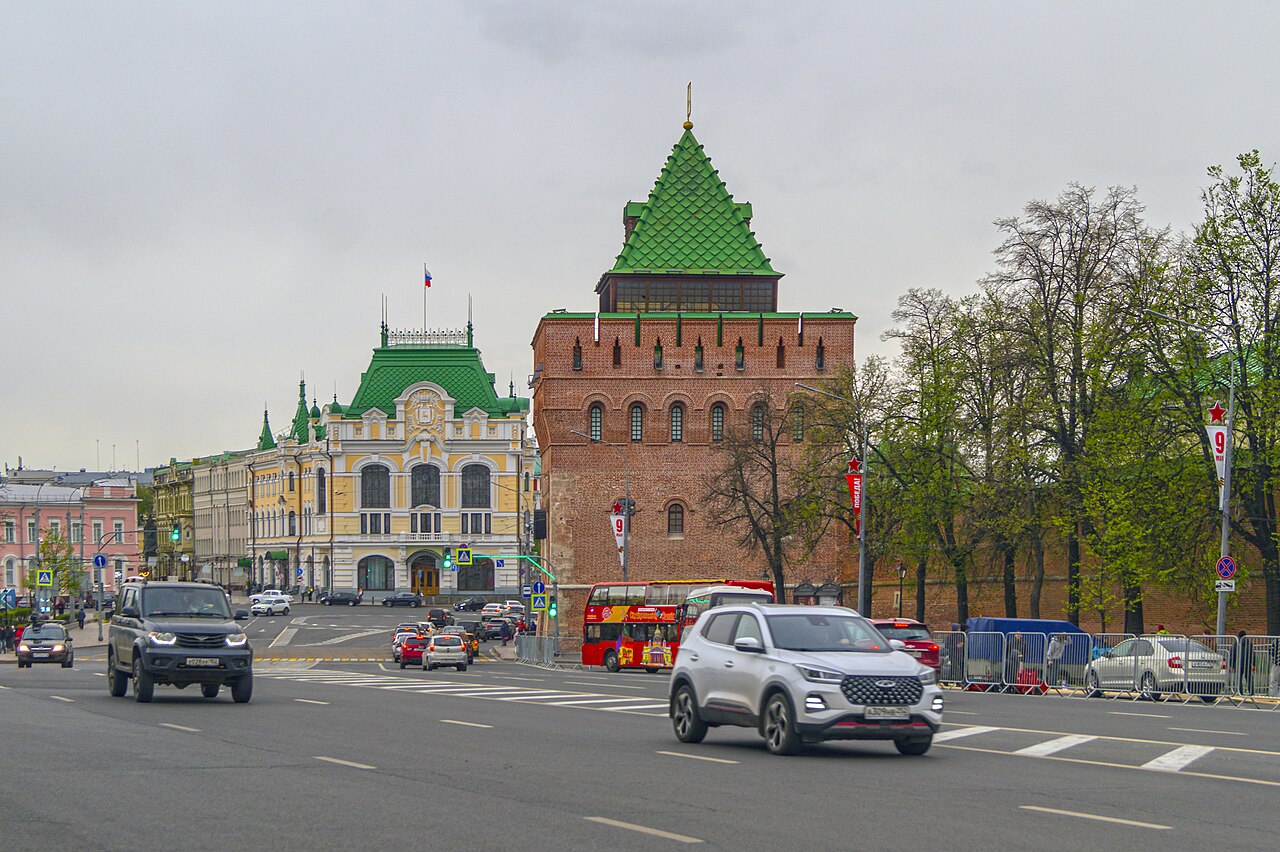
Nizhny Novgorod is one of Russia’s most impressive historic cities, dramatically positioned at the confluence of the Volga and Oka rivers. Sightseeing in Nizhny Novgorod combines medieval fortifications, panoramic river views, merchant architecture, historic streets, museums, churches, and a distinctive landscape shaped by steep hills and enormous waterways.
Founded in the thirteenth century, the city later became one of Russia’s most important centers of trade. That commercial history remains visible in grand nineteenth-century buildings, former merchant houses, churches, and the legacy of the famous Nizhny Novgorod Fair.
A well-planned Must-See Nizhny Novgorod itinerary should combine the Kremlin, historic center, river embankments, viewpoints, cultural institutions, and neighborhoods connected with the city’s trading past.
Nizhny Novgorod Kremlin – The Essential Must-See Landmark
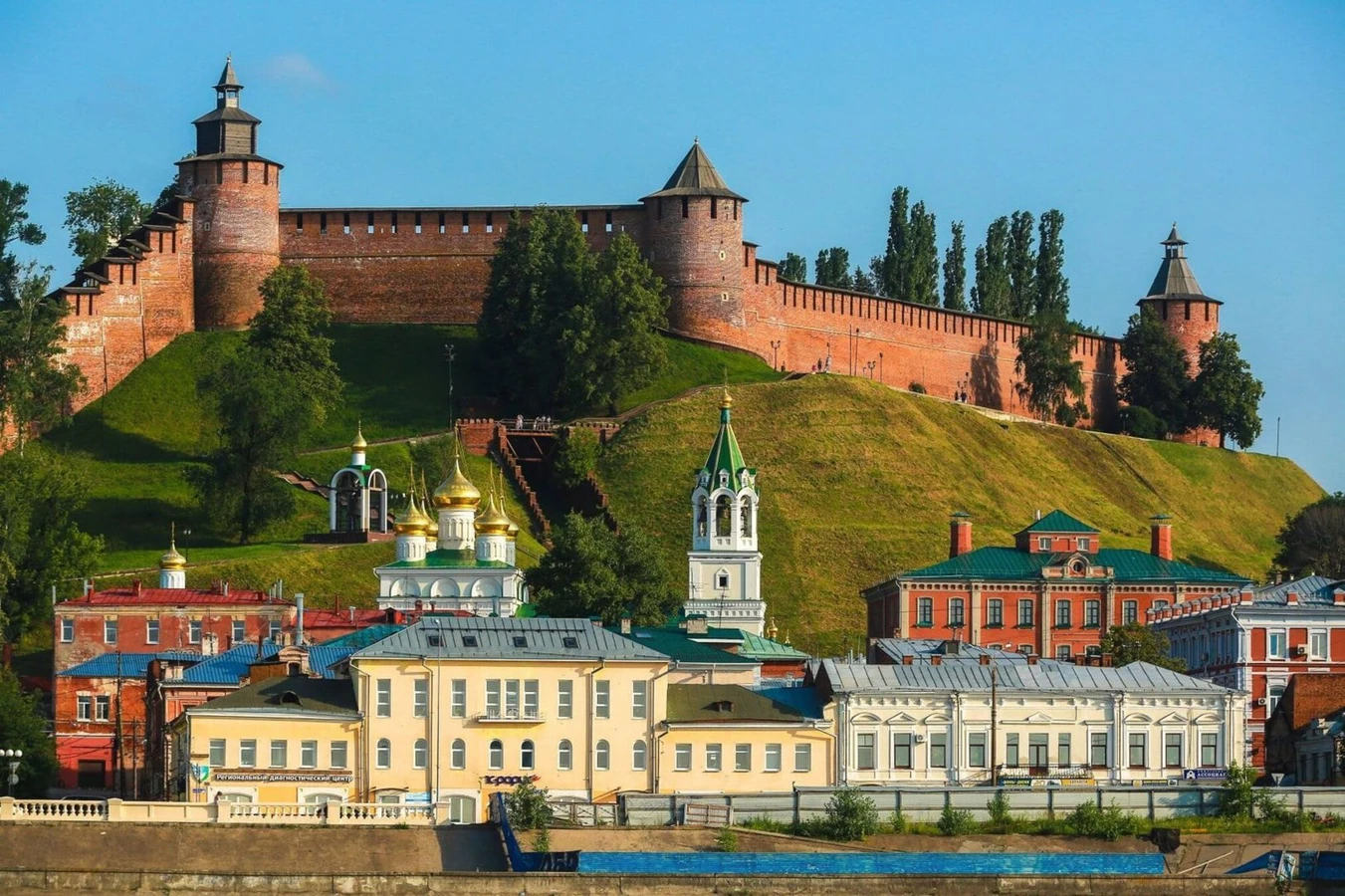
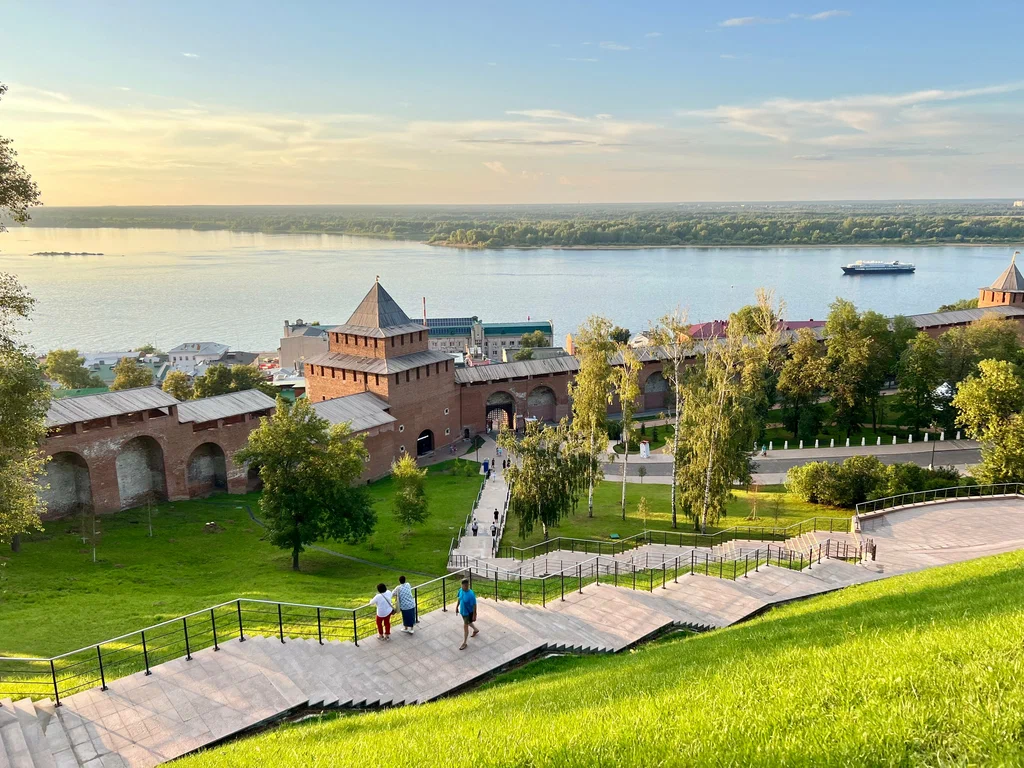
The Nizhny Novgorod Kremlin is the historic heart of the city and the natural starting point for sightseeing in Nizhny Novgorod. Standing on a hill above the Volga and Oka rivers, the fortress is surrounded by massive brick walls and towers that create one of the city’s most recognizable architectural silhouettes.
Walking through the Kremlin grounds reveals government buildings, monuments, churches, museums, landscaped areas, and impressive viewpoints. The elevated location makes the complex particularly memorable because the historical architecture is constantly framed by enormous expanses of water and the opposite riverbanks.
The Cathedral of the Archangel Michael is one of the important historic buildings within the Kremlin. The monument to Kuzma Minin and Dmitry Pozharsky also connects the city with major events in Russian history.
Visitors should allow enough time to walk around the complex rather than simply entering through one gate and leaving. Different sections provide changing views across the rivers and lower parts of the city.
Why visit:
To experience Nizhny Novgorod’s defining fortress, historic architecture, monuments, and spectacular panoramic views.
Chkalov Stairs and the Volga Embankment
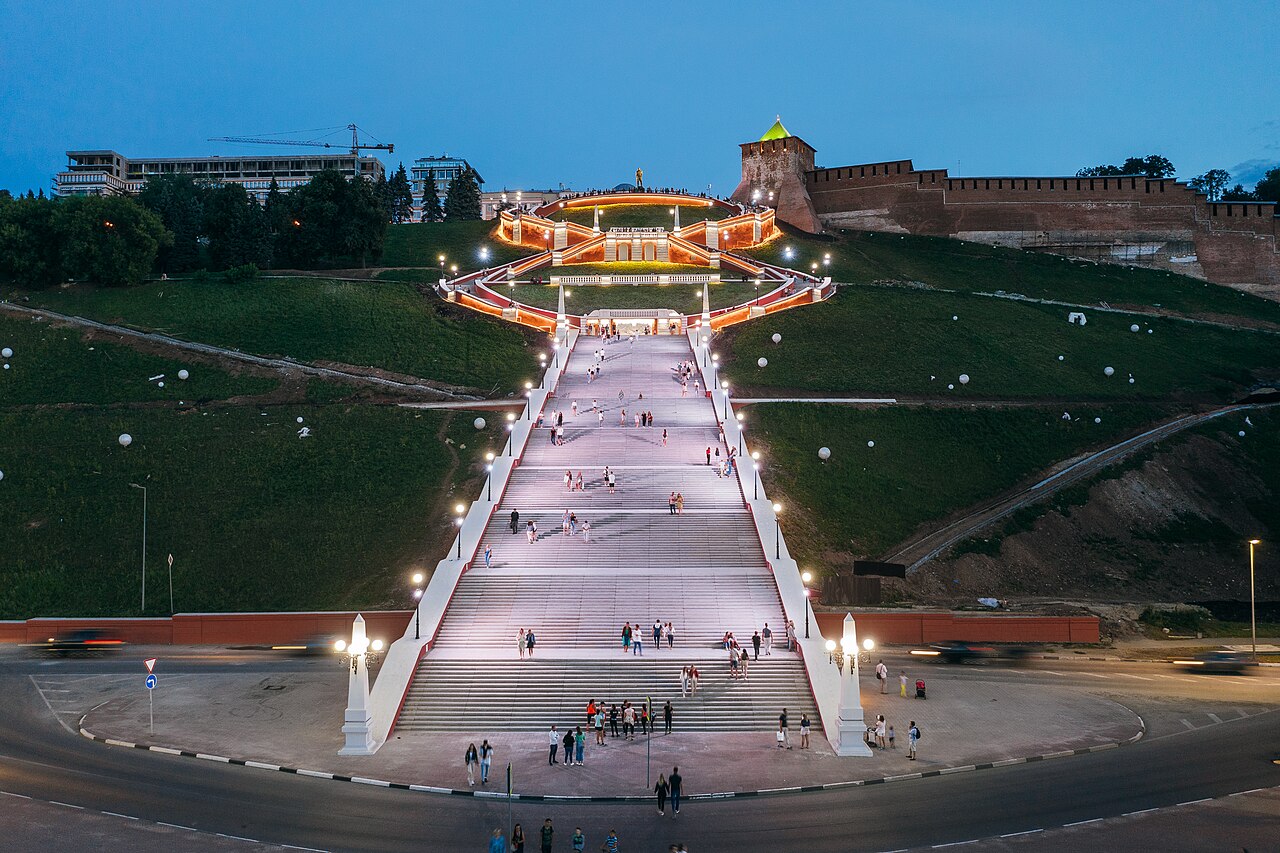
The Chkalov Stairs are among the most photographed attractions in Nizhny Novgorod. The monumental staircase descends from the upper part of the city toward the Volga River and creates a dramatic connection between the historic center and waterfront.
From the upper observation areas, visitors can see the river stretching toward the horizon. The landscape immediately explains why geography has played such an important role in the city’s history.
The nearby Verkhne-Volzhskaya Embankment is one of the best walking areas in Nizhny Novgorod. Historic mansions line parts of the route, while open viewpoints provide broad panoramas across the Volga.
Walking here around sunset is especially rewarding. The changing light emphasizes the scale of the river and creates excellent conditions for photography.
The combination of stairs, hills, architecture, and water gives Sightseeing Nizhny Novgorod a visual character very different from flatter Russian cities.
Why visit:
To enjoy monumental urban design, river panoramas, historic architecture, and some of the best viewpoints in the city.
Bolshaya Pokrovskaya Street – The Cultural Heart of the City
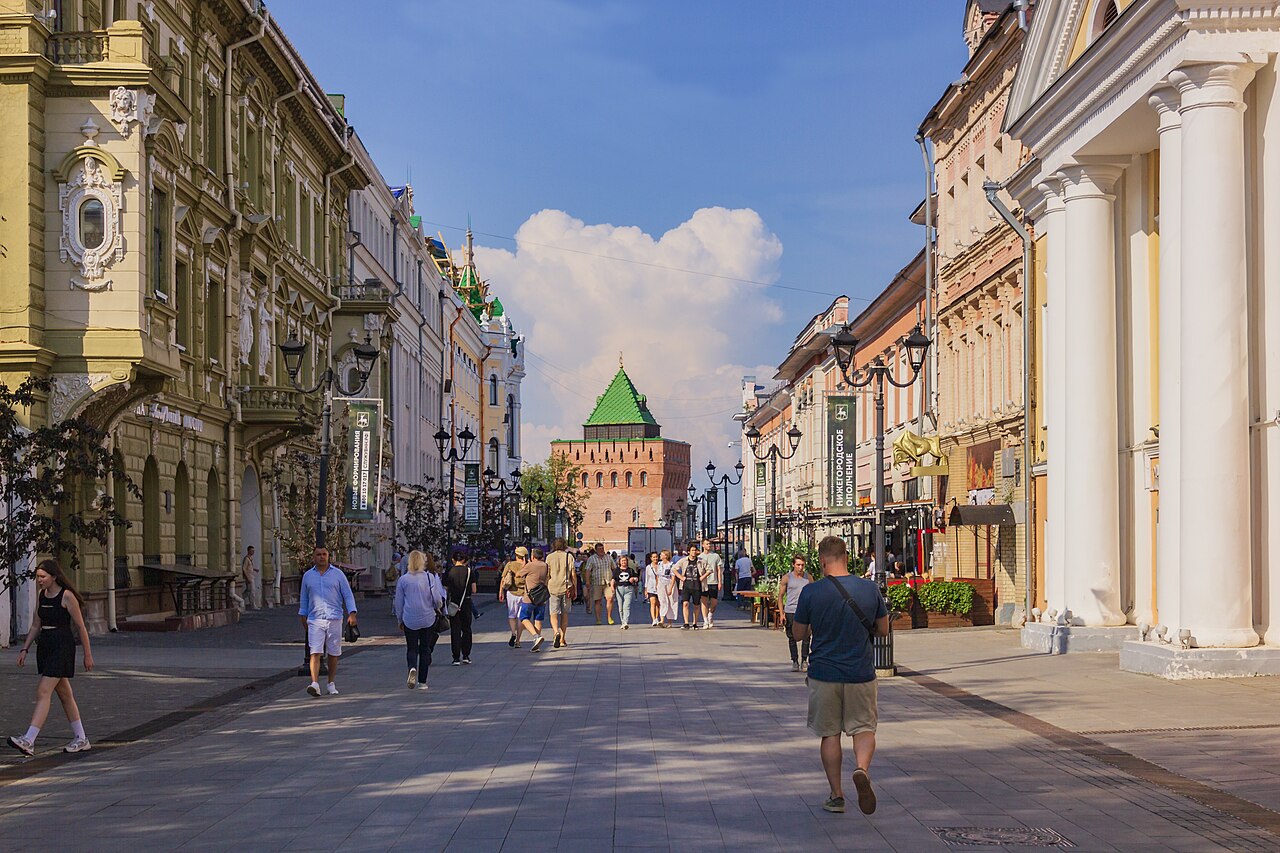
Bolshaya Pokrovskaya Street is one of the main pedestrian routes through central Nizhny Novgorod. Historic façades, theaters, cafés, restaurants, shops, sculptures, and cultural institutions make it an ideal place for exploring the city on foot.
The street contains architecture from different periods, including elegant nineteenth-century buildings associated with the city’s wealthy merchant era. Rather than focusing on one monument, visitors should pay attention to façades, balconies, decorative details, courtyards, and side streets.
The Nizhny Novgorod State Academic Drama Theatre is one of the architectural highlights along the route. Nearby streets lead toward additional museums, churches, and historic buildings.
Evening brings a livelier atmosphere as restaurants and cafés fill with visitors. Bolshaya Pokrovskaya also works as a convenient connection between several central attractions.
Why visit:
To experience historic architecture, pedestrian city life, theaters, restaurants, and the everyday atmosphere of central Nizhny Novgorod.
Nizhny Novgorod Fair and Alexander Nevsky Cathedral
The Nizhny Novgorod Fair represents another important chapter of the city’s history. During the nineteenth century, the fair developed into one of the Russian Empire’s great commercial centers, attracting merchants and goods from different regions and countries.
The surviving Main Fair Building recalls the enormous economic importance of this district. Exploring the surrounding area helps visitors understand why Nizhny Novgorod became associated with trade, entrepreneurship, and cultural exchange.
Nearby stands the Alexander Nevsky Cathedral, one of the city’s most recognizable religious landmarks. Its monumental architecture is especially striking against the open landscape near the rivers.
The district also provides access to Strelka, the famous point where the Oka flows into the Volga. This geographical meeting point creates one of the most impressive views in the city.
The contrast between cathedral architecture, modern development, historic trade infrastructure, and enormous rivers makes this area essential for any Must-See Nizhny Novgorod itinerary.
Why visit:
To discover the city’s merchant heritage, monumental religious architecture, and the spectacular confluence of the Volga and Oka rivers.
Museums, Cable Car, and More Nizhny Novgorod Attractions
Art lovers should include the Nizhny Novgorod State Art Museum in their itinerary. Its collections introduce visitors to Russian and European artistic traditions while adding an important cultural dimension to a city often explored primarily for architecture and landscapes.
The Maxim Gorky connection is another important part of local identity. The writer was born in Nizhny Novgorod, and several museums and historic locations preserve the memory of his life and work.
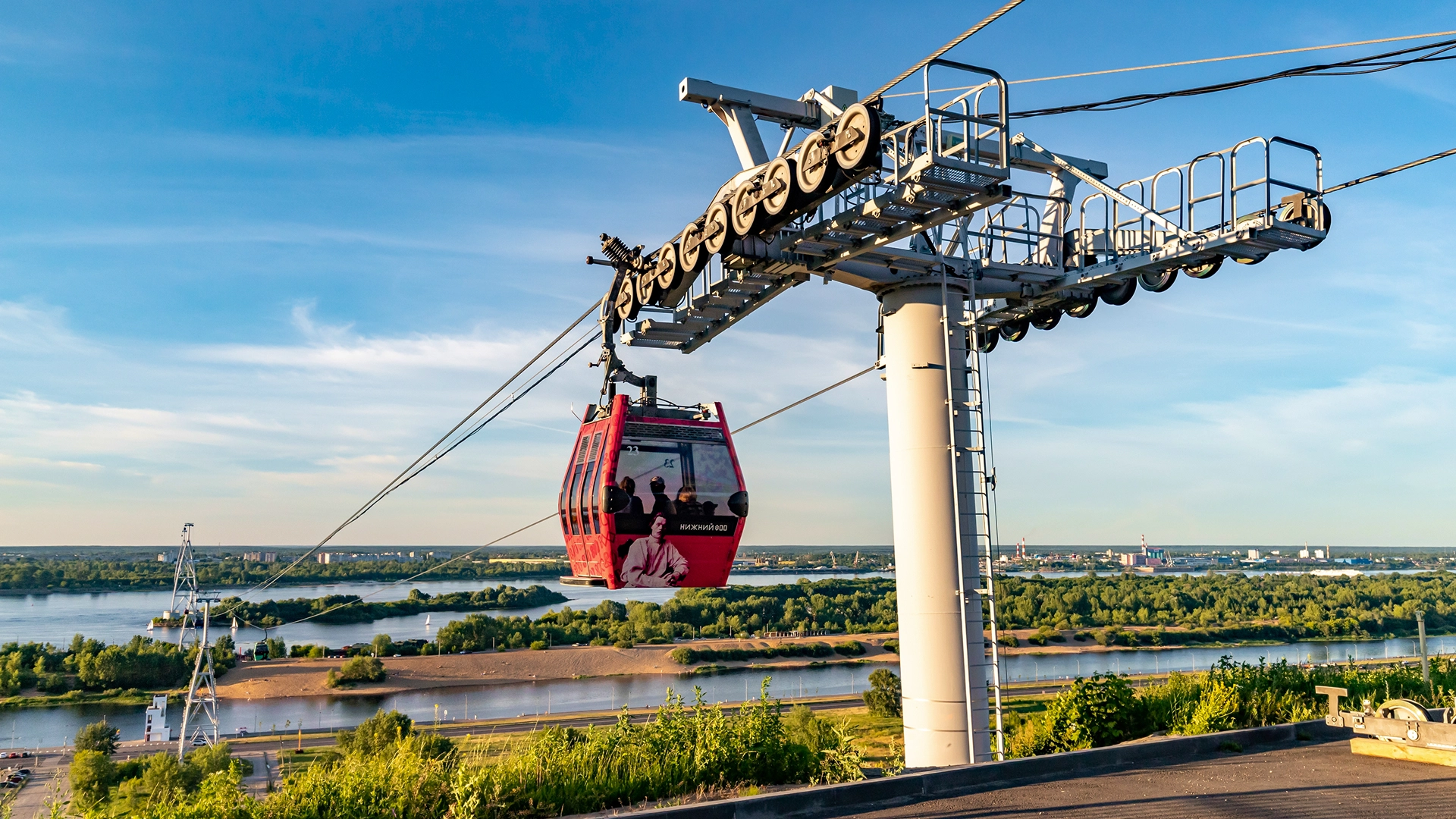
One of the city’s most unusual modern experiences is the cable car across the Volga between Nizhny Novgorod and Bor. Unlike a conventional tourist attraction, the route functions as public transport while offering extraordinary aerial views of the river.
The journey reveals the sheer scale of the Volga and provides a perspective impossible to experience from the embankments.
Travelers with additional time can explore Rozhdestvenskaya Street, famous for historic merchant architecture and churches. The Church of the Nativity of the Blessed Virgin Mary is particularly notable for its richly decorated Russian Baroque design.
Other worthwhile locations include Fedorovsky Embankment, Pechersky Ascension Monastery, historic wooden houses, and smaller museums throughout the center.
Why visit:
To combine art, literature, religious architecture, aerial river views, and lesser-known historic neighborhoods.
Why Sightseeing in Nizhny Novgorod Feels Different
Nizhny Novgorod’s greatest advantage is its geography. Hills rise above two enormous rivers, creating viewpoints throughout the historic center. Architecture frequently appears against water and distant landscapes rather than dense urban backgrounds.
Two or three days provide a strong introduction. One day can focus on the Kremlin, Chkalov Stairs, and central streets. Another can explore the Fair district, Strelka, churches, museums, and the cable car.
Visitors should also leave time simply to walk along the embankments. Some of the city’s most memorable experiences come from unexpected viewpoints rather than individual attractions.
ArtExpoWorld Editorial View
Nizhny Novgorod demonstrates how geography can shape architecture, commerce, and cultural identity.
The meeting of the Volga and Oka rivers helped transform the city into a major trading center, while its steep terrain produced an urban landscape filled with dramatic perspectives.
For ArtExpoWorld readers, the city offers an interesting dialogue between medieval fortifications, merchant architecture, religious buildings, Soviet development, and contemporary public spaces.
The Kremlin provides historical weight, but the rivers provide the composition. Almost every major sightseeing route eventually returns to water, elevation, or a panoramic viewpoint.
That relationship makes Nizhny Novgorod one of Russia’s most visually rewarding destinations and a city that deserves far more international attention.