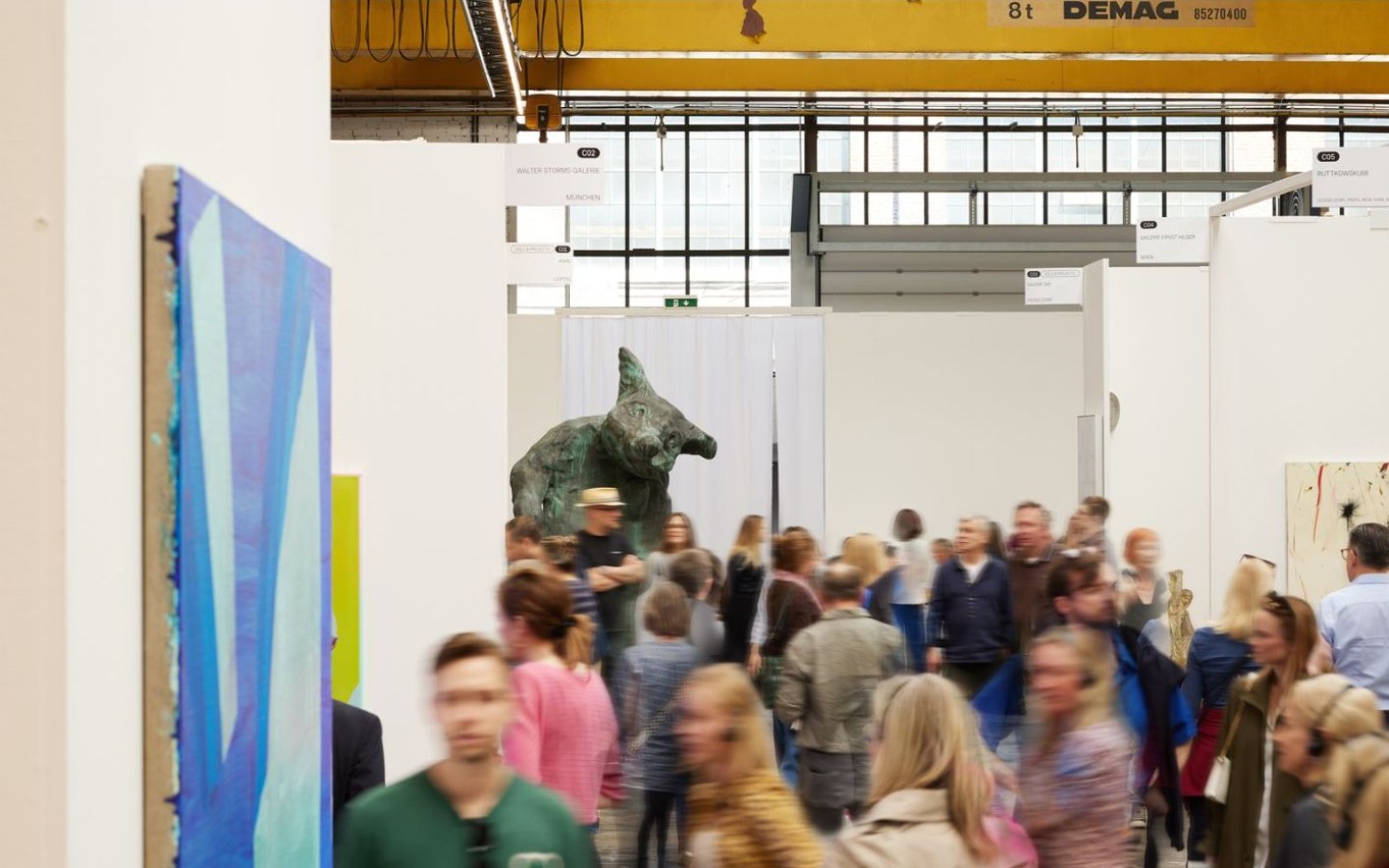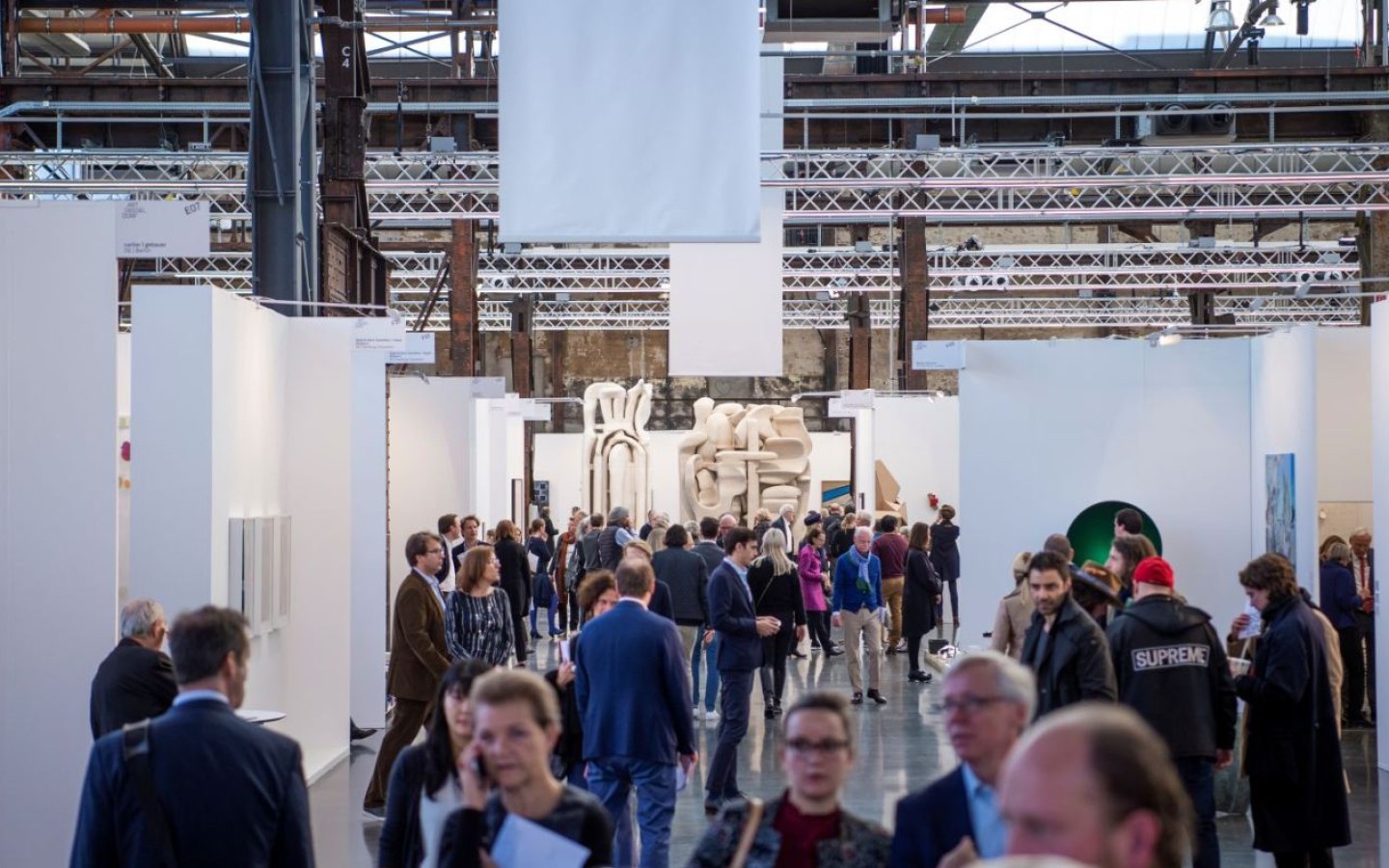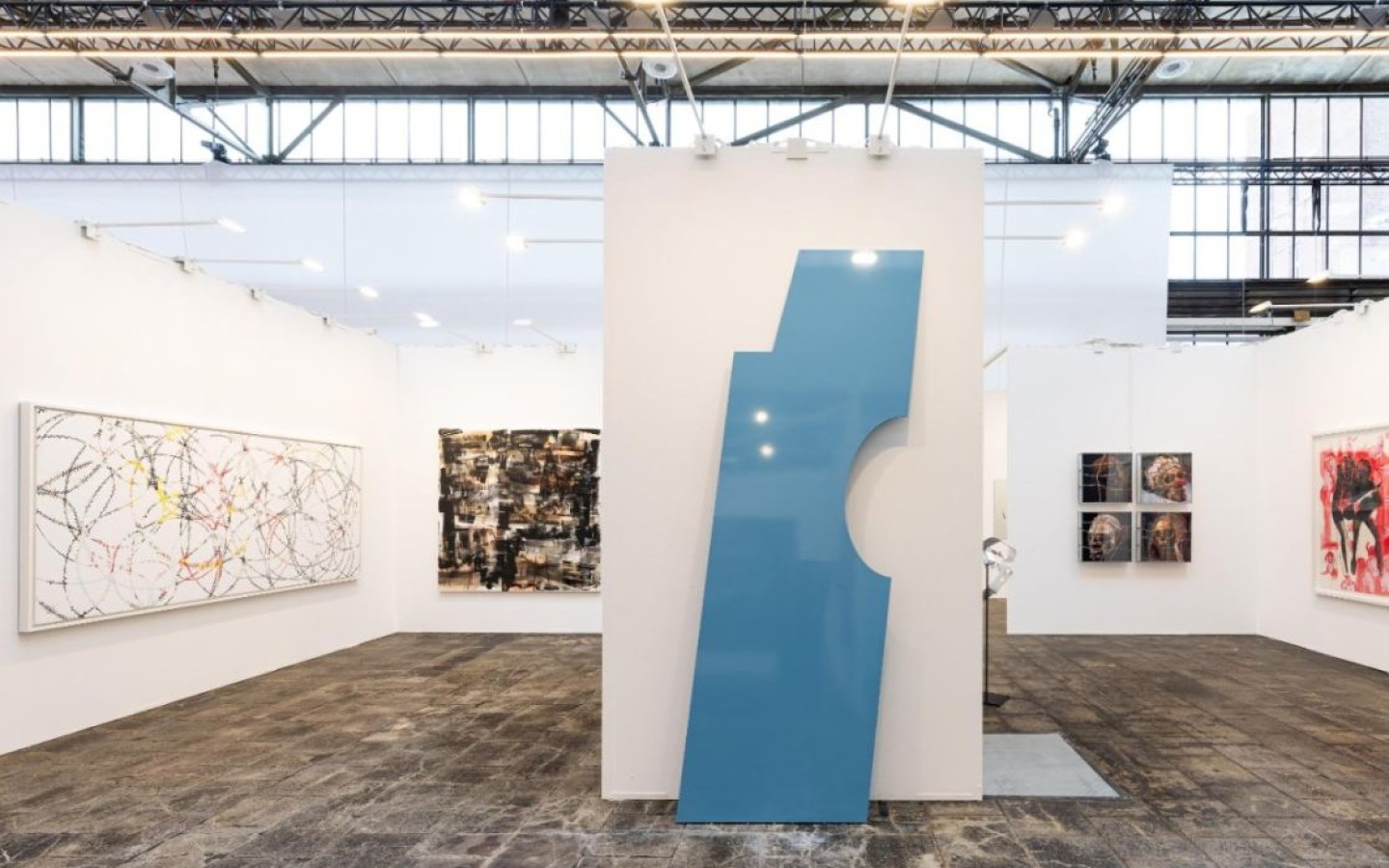


A fair can reveal its priorities before the final gallery list appears. Art Düsseldorf’s 2027 announcement adds an intermediate section for galleries moving beyond their earliest years and offers three optional curatorial themes. Those choices describe how the organiser wants presentations to develop, rather than simply promising a larger edition.

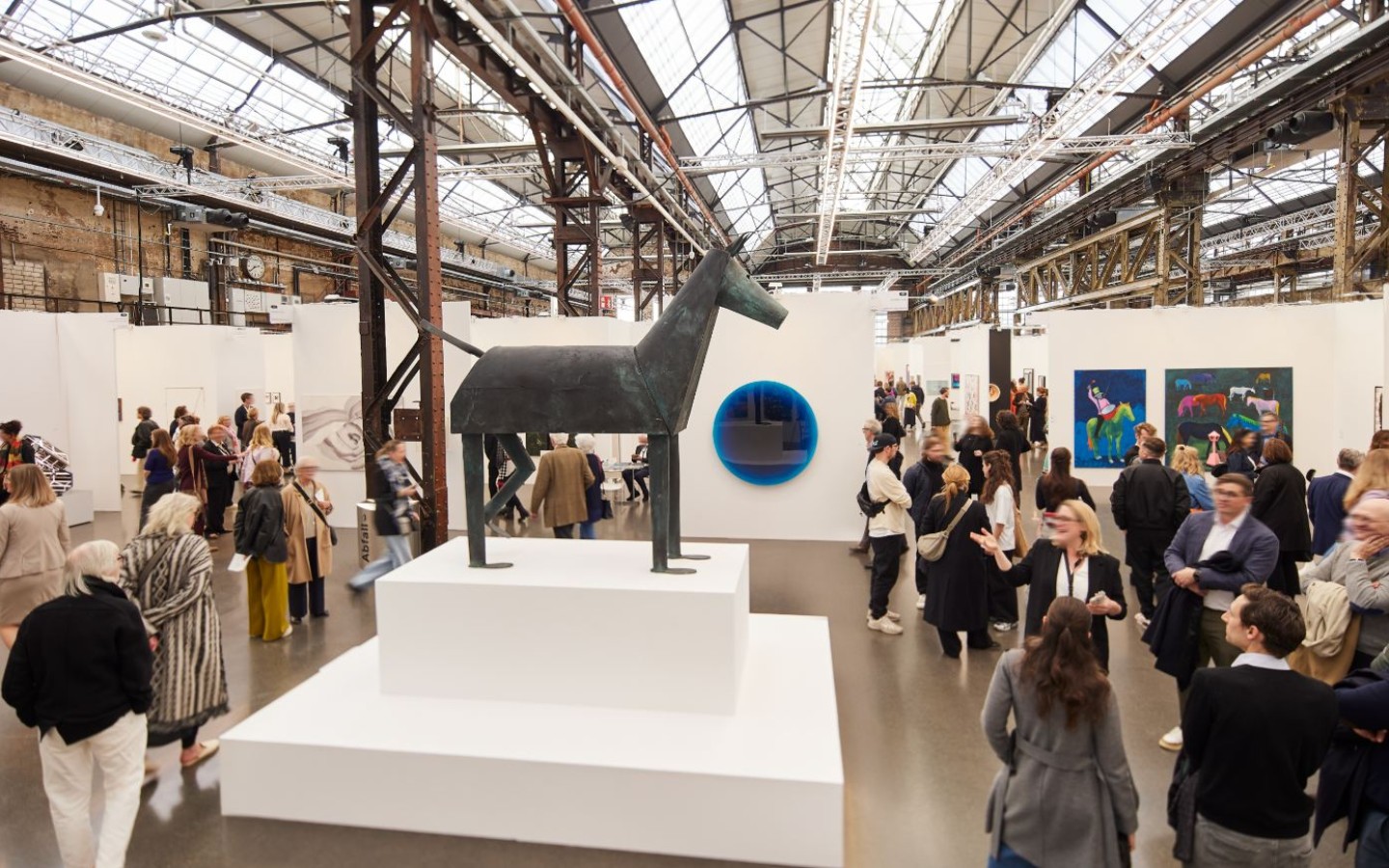
The fair opens publicly on 9–11 April 2027 at Areal Böhler, following a preview and opening on 8 April. The industrial halls provide a distinctive setting within the Rhineland’s wider gallery and museum landscape. The strongest visit follows a few artistic questions through that structure, giving each presentation time to make its case.
The announced sections are Main, Solo, Paper, Next and the new Next+. Next concerns galleries under ten years old, while Next+ addresses the following stage, described as galleries between ten and thirteen years. These thresholds concern the gallery’s development, not the age of every artist it represents.

The optional curatorial themes are The Power of Words, Material Revisited, and Roots and Identities. They create possible starting points around language, material processes and belonging. Galleries are not required to adopt a theme, and those that do may select one. The fair should therefore be approached as a combination of distinct proposals rather than a single tightly unified exhibition.

Gilles Neiens is identified as artistic director. The published jury includes institutional and gallery representatives, among them Leonie Chelsea Lang, Thomas Krinzinger, Linn Lühn, Max Mayer and Alexander Sies. Jury membership does not confirm an exhibiting gallery. The final selected roster and 2027 total remain to be established after the application process.

Art Düsseldorf 2027 Event Overview

Art Düsseldorf 2027: Dates, Tickets & Visitor Guide

Dates:

9 April 2027 - 11 April 2027

Location:

Areal Böhler, Hansaallee 321, 40549 Düsseldorf, Germany. Use the fair’s announced visitor address. The wider industrial site has other addresses and entrances, so a general Areal Böhler search may not identify the correct arrival point for the exhibition.

Mission:

Art Düsseldorf connects contemporary gallery activity with the Rhineland’s collecting and institutional environment. Its sectional structure can help galleries present at different stages of development. The curatorial opportunity lies in allowing each proposal to become more precise, rather than turning an institutional theme into decorative branding around unrelated works.

Organizer:

art.fair International GmbH, together with Art Düsseldorf’s organizing and artistic team. The company’s office address in Cologne is not the exhibition venue. The event takes place at Areal Böhler in the Düsseldorf area.

Why attend to Art Düsseldorf 2027?

The three themes offer several concrete ways to compare works. A visitor can follow how language becomes a visual form, how an inherited technique acquires a new purpose, or how a personal history enters an object without becoming a simple illustration. The comparison becomes useful when it draws attention back to the choices made within each work.

The gallery sections also provide a way to examine continuity. An established gallery and a younger space may support similar artistic questions through different programmes. Consider the coherence of the proposal and the history behind it. A section’s age threshold tells the visitor something about eligibility, while the presentation still has to earn its authority.

Ticket Information

General admission costs

A verified 2027 general admission range and complete concession terms are not yet established in the checked visitor information. The gallery registration and stand fees published elsewhere are exhibitor costs, not entrance tickets. Use the enquiry form on this page for the intended public day or an eligible preview category.

Getting There:

The organiser identifies Düsseldorf-Lörick as the closest listed tram and light-rail stop, served by U70, U74, and U76. The signed walk to the entrance is approximately four minutes. From Düsseldorf main station, U74 or U76 towards Meerbusch or Krefeld provides the published approach; allow for the current timetable and final walk.

From the airport, the listed rail route uses S11 to the main station and then the light-rail connection. Limited free parking is announced on site, with alternatives at the BÖ69 garage and Strandbad Lörick. Check the operating arrangements before relying on a shuttle or a particular parking space.

For another contemporary gallery encounter later that month, Art Brussels 2027 takes place on 15–18 April. The Belgian fair is a separate journey and selection, with its own public and preview arrangements. The timing permits a longer European itinerary without suggesting the two events can be treated as one continuous admission.

Accommodation

Compare access to Lörick with your wider Düsseldorf programme before choosing a base. A main-station connection may serve a regional itinerary, while another district may better suit gallery appointments. Our spring art fairs in Europe 2027 selection provides a broader comparison of the season’s presentation models and cities.

Don't Miss an Exhibition

Follow us on X to get the latest art events from around the world first

Follow

Gallery: Art Düsseldorf 2027

Secure Your Spot at Art Düsseldorf 2027 — Before It's Too Late

Tickets are limited and sell out fast.
Get instant access to the Art Düsseldorf 2027 registration page and be the first to know about exclusive events, VIP passes, and travel perks.

Early access. Limited availability. Global art at your fingertips.

History & Context of a Art Düsseldorf 2027

Founded in 2017, the fair has developed within a region containing museums, art academies, galleries, and private collections. Its venue’s industrial scale and natural light distinguish the exhibition environment. These qualities create opportunities for sculpture and installation, while also raising the question of how smaller or quieter works can maintain attention.

What Has Changed Since 2026

Next+ is explicitly introduced as a new intermediate section. The 2027 edition also presents its three named themes and a dedicated application portal with an integrated three-dimensional stand planner. The latter is a planning tool for galleries; the final exhibition must still be evaluated through the physical relationships between works.

Interesting Fact

The new Next+ category addresses an institutional threshold that visitors rarely notice. A gallery can become too old for a young-gallery section before it has reached the resources or status associated with a fully established one. The organiser has created a section for that transitional stage instead of assuming development happens in one step.

This matters because a gallery’s timeline and an artist’s timeline do not align neatly. A young space can represent a long-established practice, while an older gallery can support a first exhibition. The section tells a story about the organisation sustaining the work; it should not be mistaken for a judgement on the artist’s age or maturity.

Tips for Visitors of Art Düsseldorf 2027

Choose one theme to test across several presentations, then look at a stand that does not use it. The contrast may clarify whether a thematic reading reveals something in the work or merely supplies a convenient label. Keep the artist and gallery details together so the enquiry can continue after the fair.

Tips from the ArtExpoWorld

Give the quieter work a second visit. Large industrial spaces can reward scale immediately, while a drawing, text or small material intervention may need a slower adjustment of attention. The most lasting discovery may be the presentation whose logic becomes clear only after that adjustment.

Be the First to Access Official "Art Düsseldorf 2027" Tickets

Don’t miss your chance to attend one of the world’s leading art fairs. Get direct access to the official ticketing page, exclusive updates, and important visitor information.

Early access. Limited availability. Global art at your fingertips.

Editor’s Note

Art Düsseldorf’s 2027 structure is interesting because it incorporates the conditions of gallery development into the fair’s concept. Next+ recognizes an intermediate stage that a simple division between young and established spaces tends to overlook. We would assess its success based on whether galleries use this opportunity to present a more sustained artistic argument.

The three themes are most promising when they introduce complexity. A text work does not need to directly explain its politics, and a recycled material does not become compelling solely because of its origin. The work must transform these starting points into an experience whose form cannot be substituted by the program statement.

We recommend Düsseldorf for readers willing to compare the gallery’s proposition with what the objects actually do in space. The framework is substantial enough to support that examination, and the venue makes the physical encounter meaningful. Its value will lie in precise proposals that remain convincing after the fair’s labels have been set aside.

Current and Upcoming Art Expos